
I have a 10bar pressure transducer with a 4-20mA output which is showing a random variation across a span of 0.3mA (+/- 1.5mA) at a fixed pressure. This seems to me to be very large and it doesn’t seem related to electrical noise. What is the possible cause of this output fluctuation and what would you expect the variation to be for a pressure transducer with a high accuracy current output?
Even a low grade accuracy pressure transducer should produce a more stable output signal. The variation you are experiencing equates to a total variation of 0.375% FS which is not acceptable for most types of sensors. The pressure transducer maybe faulty if the variation is truly random, but first you will need to eliminate any application variations that might be causing the drift in output:
- Is there any correlation with temperature change? Even with high accuracy pressure transducers, the errors can be quite significant with changes in temperature. The actual variation can vary depending on the manufacturer and type of sensor.
- Is the power supply adequate? Running the sensor near the minimum supply voltage limit can sometimes lead to problems especially if there is additional load resistance in series with the sensor.
- Is there a nearby source of electrical interference? A 4-20mA output signal is a robust signal, but if the electronics inside the transducer are not adequately protected some of the active solid state components may be susceptible to interference, especially if the EMC levels are exceptionally high.
- Is the pressure really fixed? If the vessel / pipe is a sealed system, the pressure will vary with changes in volume or temperature, are there any moving parts or heat sources that could cause the pressure to fluctuate?
- Have you checked the wiring connections? Poor electrical contacts could lead to fluctuations in output signal.
If the transducer does not improve after checking through the possible causes of output signal fluctuations outlined above, we would suggest you return the transducer to where you sourced it from and ask them to investigate the fault.
Featured 4-20ma output pressure transducer products
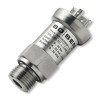 SIL2 approved 10 bar pressure transducer with 4 to 20 mA output - Pressure transducer with SIL 2 approved electronics that provide a 4-20mA output over a 0-10bar working range.
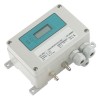 DPS Low Differential Pressure Transmitter - Ultra low differential pressure transmitter for HVAC applications with 4-20mA current loop or amplified voltage output signal in pressure ranges from 0.1 mb up to 1 bar differential.
Related Help Guides
- How to get a 10 volt signal from a 4-20mA output pressure sensor
- What is the difference between zero offset and zero drift?
- Why use 4-20mA and 3-15 psi rather than 0-20mA & 0-15psi
- Supply voltage and load resistance considerations for pressure transmitters
- Transforming a 2 wire Current Loop into a Voltage Output Signal
- What is the difference between a pressure transducer and a transmitter
- What are the advantages of using Wired Sensors instead of Wireless Sensors
- Output signal orientation for a negative gauge pressure range
Related Technical Terms
- 2 Wire
- 3 Wire
- 4 to 20 mA Current Loop Output Signal
- 4 Wire
- Amplified Voltage Output
- BFSG – Bonded Foil Strain Gauge
- Deadband
- FSO – Full Scale Output
- HART®
- mV/V – Millivolts per Volt Output Signal
- NC – Normally Closed
- NO – Normally Open
- Piezoresistive Strain Gauges
- Ratiometric
- Span
- Span Offset
- Span Sensitivity
- Square Root Extraction
- Threshold
- Totalizer
- Transducer
- Transmitter
- TSL – Terminal Straight Line
- TSS – Thermal Span or Sensitivity Shift
- Turndown Ratio
- USB
- Vented Cable
- Wheatstone Bridge Strain Gauge
- Zero Offset
- Zero Tare
Related Online Tools
- Input to Output Measurement Reading Converter
- Pressure Transmitter 4-20mA Current Output Calculator
- Pressure Sensor Calculator
- Temperature Sensor Calculator
- Flow Transmitter 4-20mA Current Output Calculator
- DP Flow Transmitter Output Calculator
- Linear Input to Square Root Extraction Output Converter
- Square Root Extraction Input to Linear Output Converter
- Load Cell Millivolt (mV) Output Calculator
- Pressure Transducer Millivolt (mV) Output Calculator
- Strain Gauge Transducer Millivolt (mV) Output Calculator
- Liquid Level Transmitter 4-20mA Current Output Calculator
- Temperature Transmitter 4-20mA Current Output Calculator
- Torque Transducer Millivolt (mV) Output Calculator
- 0.5-4.5V Signal to Measurement Reading Converter
- Pressure Transducer 0-5V Voltage Output Calculator
- Pressure Transducer 0-10V Voltage Output Calculator
- Ratiometric V/V Signal to Measurement Converter
- Ratiometric mV/V Signal to Measurement Converter
- 0-20mA Signal to Measurement Reading Converter
- 0-10V Signal to Measurement Reading Converter
- 0-5V Signal to Measurement Reading Converter
- 1-5V Signal to Measurement Reading Converter
- Pressure Transducer 1-5V Voltage Output Calculator
- Pressure Transducer 0.5-4.5V Voltage Output Calculator
- Bit to Measurement Resolution Converter
- Measurement to Digital Reading Converter
- Calibration Error Calculator
- 4 to 20 mA Supply, Load, Shunt and Signal Calculator
- Pressure Transmitter 0-20mA Current Output Calculator
Related Application Questions and Answers
Contact us about this What can cause random variation in pressure transducer output page to request more information, or to discuss your application requirements.