
When the accuracy of your pressure measurements is paramount, these digitally compensated voltage output pressure transducers deliver laboratory-grade performance. Ideal for critical research and testing environments, these transducers boast exceptional linearity, hysteresis, and repeatability, alongside minimal thermal errors. Their digitally compensated design and amplified voltage output ensure reliable and precise pressure measurements in even the most demanding applications.
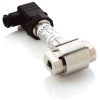 PD33X High Accuracy Differential Pressure Transmitter - High precision compact wet wet differential pressure transmitter with digitally corrected output signal in ranges from 0.3 to 30 bar
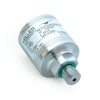 41X High Precision Low Range Pressure Transmitter - High precision pressure transmitter for measuring very low vented gauge reference or differential air pressures. Rangeable 4-20mA or 0-10 volt output.
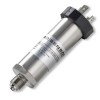 DMP333i Rangeable High Pressure Precision Transducer - High performance transducer with adjustable scaling for modifying the pressure range for different applications. Ranges from 0-60 bar up to 0-600 bar.
- DMP331i High Accuracy Pressure Transmitter - High precision pressure transmitter with an accuracy of 0.1%FS BSL NLHR and digitally adjustable pressure ranges from 400mb up to 40 bar gauge & absolute.
- 1000 mbar absolute vacuum range 0-10Vdc output air pressure sensor for research use
- 5 to 30 psi abs range 0-10Vdc output air pressure sensor for air compression use
- 500-1100 mbar absolute 0-10Vdc out air pressure sensor for meteorological use
- 3000 psia high accuracy 0-10Vdc out pressure sensor for leak checking pressurized tanks
Send us your enquiry to discuss your High Accuracy and Precision, Voltage Signal Output Pressure Transducers application with a product specialist, and they will help you select the best option to suit your specific requirements.
In critical research and testing environments, where even the slightest deviation in pressure readings can impact your outcomes, high-accuracy voltage output pressure transducers are indispensable. These meticulously engineered sensors offer a combination of advanced digital compensation, robust design, and superior performance characteristics, guaranteeing the utmost precision and reliability.
Product Advantages
These high-accuracy voltage signal output pressure transducers combine laboratory-grade accuracy, digital compensation, and amplified voltage output with versatile pressure measurement capabilities, superior performance characteristics, and minimal thermal errors to deliver exceptional, reliable results across demanding applications.
Laboratory-Grade Accuracy
These transducers are engineered to achieve exceptional accuracy levels ranging from 0.01% to 0.1% full scale (FS). This high level of measurement fidelity makes them an essential component in critical research and laboratory settings where the integrity of data is paramount, ensuring that even the most subtle pressure changes are captured with confidence.
Digital Compensation
The inclusion of advanced built-in digital compensation technology actively minimizes errors associated with temperature fluctuations, non-linearity, and hysteresis. By continuously adjusting for these variables, the transducer maintains consistent, reliable, and highly accurate pressure readings across its entire operating range, even in challenging environmental conditions.
Amplified Voltage Output
Designed for seamless integration, these transducers offer a standard and user-friendly 0 to 5 or 0 to 10 volt output signal. This amplified signal simplifies connectivity with a wide array of data acquisition systems, PLC controllers, and other essential measurement devices, significantly reducing the complexity of system setup and data logging.
Versatile Pressure Measurement
These transducers provide remarkable versatility by supporting gauge, absolute, and differential pressure measurement capabilities within a single design. This multi-functional approach caters to a diverse range of application requirements, allowing users to standardize their equipment across different types of pressure monitoring tasks.
Superior Performance Characteristics
Beyond their impressive accuracy, these sensors are built for excellence, boasting superior linearity, hysteresis, and repeatability metrics. This high-performance profile ensures that the output signal remains true to the input pressure, minimizing potential drift and contributing to the overall stability and long-term reliability of the measurement system.
Minimal Thermal Errors
The sophisticated sensor design specifically targets and minimizes the influence of temperature variations on measurement accuracy. By significantly reducing thermal sensitivity, the transducers ensure stable and consistent performance, preventing inaccuracies that could otherwise arise in environments characterized by frequent or extreme temperature changes.
Product Applications
These high-accuracy pressure transducers are deployed across a vast spectrum of advanced sectors, providing the essential precision required for rigorous scientific experimentation, critical industrial automation, and complex environmental analysis. Their versatility and reliability make them an indispensable tool in any application where precise pressure monitoring and control are fundamental to operational success and data integrity.
Research and Development
These transducers are an ideal choice for scientific research and development, where the ability to capture precise pressure data is essential for breakthrough discoveries. By providing high-fidelity measurements in laboratory experiments and material testing, they enable researchers to collect accurate data, validate hypotheses with confidence, and significantly reduce the margin of error in complex experimental setups.
Calibration and Testing
Serving as reliable reference instruments, these transducers are widely utilized for the calibration and verification of other pressure measurement devices. Their exceptional linearity and repeatability ensure that they can be trusted to maintain the performance standards of other critical equipment, guaranteeing that entire measurement systems remain accurate and within specified tolerances during routine testing.
Process Control
In industries such as pharmaceuticals, semiconductor manufacturing, and chemical processing, maintaining strict control over pressure parameters is vital for product quality and safety. These transducers provide the continuous, high-accuracy monitoring necessary to manage process stability, helping to prevent deviations, optimize output efficiency, and ensure that stringent industry-specific regulations are consistently met.
Material Testing
When characterizing materials, measuring minute stresses and strains is critical to understanding structural integrity and performance limits. These transducers offer the sensitivity and reliability required to monitor these subtle changes during rigorous structural analysis, providing the detailed data needed to evaluate material behavior under various loading conditions.
Fluid Dynamics
Monitoring pressure distributions and flow characteristics is fundamental to the study and optimization of fluid systems. These transducers provide the accuracy needed to map pressure profiles and detect flow irregularities, allowing engineers to better understand system dynamics, identify potential bottlenecks, and improve the overall efficiency of hydraulic or pneumatic operations.
Environmental Monitoring
Designed to perform reliably even when exposed to varying environmental conditions, these transducers are well-suited for long-term meteorological studies and atmospheric research. Their stable output ensures that pressure data captured during field monitoring is consistent and accurate, providing essential insights for environmental modeling and climate observation projects.
Aerospace and Automotive Testing
The rigorous demands of wind tunnel experiments and engine test benches require sensors that can withstand dynamic conditions while maintaining precision. These transducers are built for such challenges, delivering the robust performance and reliable data needed to test vehicle components and aerodynamic surfaces under real-world-simulated, high-stress environments.
High-Precision Industrial Applications
For mission-critical operations where equipment failure or measurement drift is not an option, these transducers serve as the go-to solution. Whether managing complex assembly lines or controlling high-stakes industrial machinery, they provide the consistent, dependable pressure measurement fidelity required to ensure safe operation and superior performance across the most demanding industrial environments.
Product Selection
Selecting the right high-accuracy, voltage-output pressure transducer is essential to ensuring optimal performance and reliable data in critical applications. By carefully evaluating specific operational requirements—such as pressure range, output signal type, environmental conditions, and material compatibility—you can select a sensor that perfectly aligns with your system’s demands and maintains the precision required for your measurements.
Defining Pressure Range and Measurement Type
Choosing the correct full-scale pressure range is vital for maximizing measurement resolution. For high-precision applications, select a range that encompasses your maximum expected operating pressure while providing enough overhead for potential spikes. Additionally, determine if your application requires gauge, absolute, or differential pressure measurement, as specifying the correct reference type ensures the baseline accuracy is maintained relative to your specific test or environmental parameters.
Evaluating Output Signal and Compatibility
Select the amplified voltage output (e.g., 0-5V or 0-10V) that matches the input requirements of your data acquisition system or controller. Consider whether your control system benefits from a “live zero” or “offset” signal, which can provide enhanced diagnostic capabilities by distinguishing between a zero-pressure reading and a loss of power or signal wire breakage, thereby ensuring safer and more robust system operation.
Assessing Thermal and Environmental Stability
In high-accuracy applications, even minor temperature variations can induce measurement drift. Prioritize transducers with advanced digital temperature compensation to minimize these errors. Furthermore, consider the environmental conditions of your setup, such as exposure to vibration, shock, or moisture, and ensure the selected model has the appropriate housing and ingress protection ratings to maintain sensor integrity and consistent output over the long term.
Ensuring Material and Process Compatibility
The wetted parts of the transducer must be chemically compatible with the media being measured to prevent degradation, corrosion, or contamination. Verify that the diaphragm and seal materials are suitable for your specific fluids. Additionally, ensure the process connection type is compatible with your installation setup, providing a secure, leak-free integration that preserves the mechanical stability necessary for high-precision pressure monitoring.