
Find out how to use a differential pressure sensor (dp sensor) to measure a partial vacuum as a positive pressure relative to full vacuum.
- Vacuum pressure is any pressure lower than the current atmospheric pressure.
- Standard atmospheric pressure is assumed as 101325 Pa or 1 bar.
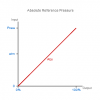
- Absolute pressure sensors have a trapped, full vacuum reference and their signal increases as the vacuum decreases (increasing pressure).
- Differential pressure sensors can be adapted for absolute pressure measurement in a vacuum by creating a vacuum reference on the negative side.
- A vacuum reference can be created using a continuous vacuum pump or by sealing a created vacuum with a leak-tight valve.
- The measured vacuum pressure is relative to the created full vacuum reference.
Featured differential pressure sensor products
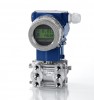 Ethylene glycol antifreeze compatible 300 pascal dp sensor - 300 pascal differential pressure sensor for measuring ethylene glycol 50/50 antifreeze coolant.
 Air Replacement Plant (ARP) 100 mm H2O differential pressure transmitter - Differential pressure transmitters for instant monitoring of the air flow going through the painting booth interior
The vacuum range is any pressure that is lower than the current atmospheric pressure. If no atmospheric pressure is specified then an average at sea level is used, typically 1 standard atmosphere 101325 Pa, or 1 bar for convenience, since it is very close to the value of 1 atmosphere.
In the scientific world where experiments are often conducted inside evacuated vacuum chambers, the vacuum is measured using a absolute referenced pressure sensor which has full vacuum trapped on the reverse side of the sensing diaphragm. The output signal increases as the vacuum diminishes, with zero output at full vacuum, and full range output set at any pressure. Typically there is no need to set full range higher than the highest expected atmospheric pressure.
A differential pressure sensor is designed for pressure to be applied to both sides, and the mechanical design and fittings are designed to be used over a wide range of pressures including the vacuum range. It is therefore possible to apply full vacuum to the negative side of a dp sensor, to create an absolute reference, and then apply the vacuum to be measured to the positive side.
The vacuum on the negative side can be created by connecting a vacuum source from a pump to continuously maintain an absolute reference during operation, or a vacuum can be applied and then sealed off, using a suitable isolation valve able to provide a leak tight vacuum seal.
The partial vacuum pressure applied to the positive side connection of the dp sensor, will now be measured relative to full vacuum, in the same way as an absolute pressure sensor measures over the vacuum range.
Featured differential pressure sensor products
- 4 inch water column range 4-20mA differential pressure sensor for liquids - Low range wet/wet dp sensor for measuring differential pressure of a liquid from 0 to 4 inches of water column.
- Low range ATEX approved 100 Pascal range DP transmitter - The DPT200 is a robust ATEX approved differential pressure transmitter which has a very low range of 100Pa.
Here are the steps to measure vacuum as an absolute pressure using a dp sensor:
- Choose a Suitable DP Sensor: Select a differential pressure sensor with a measurement range that covers the expected vacuum pressures you will encounter.
- Create a Vacuum Reference:
- Option 1 – Vacuum Pump: Connect a vacuum pump to the negative side of the dp sensor to continuously maintain an absolute reference.
- Option 2 – Sealed Vacuum: Apply a vacuum to the negative side of the dp sensor and then seal it with a leak-tight isolation valve.
- Connect the Vacuum Source: Apply the partial vacuum pressure you want to measure to the positive side of the dp sensor.
- Read the Sensor Output: The output of the dp sensor will represent the difference between the full vacuum on the negative side (your absolute reference) and the vacuum being measured. Since your reference is a full vacuum, the sensor’s output directly indicates the absolute pressure of the vacuum you are measuring.
Related Help Guides
- Measuring vacuum with negative gauge or absolute ranges
- Measuring the difference in air pressure between rooms
- Measuring liquid level in a sealed tank with a hydrostatic pressure sensor
- What is the difference between gauge and absolute pressure measurement
- What is the difference between vacuum and absolute pressure
- What does negative and positive gauge pressure mean
- Measuring negative pressure using a positive differential pressure range
- Measuring vacuum as a negative gauge pressure using a dp sensor
- Measuring liquid level in a tank using a dp sensor
- Measuring density of a liquid using a dp sensor
Related Technical Terms
- Dry/Dry
- MSL – Mean Sea Level
- Negative Gauge Pressure
- Reference Pressure
- Static Line Pressure
- Wet/Dry
- Wet/Wet
Related Online Tools
- DP Flow Transmitter Output Calculator
- High and Low Side Pressure to Differential Pressure Calculator
- Suction Pressure to Vacuum Calculator
- Gauge + Barometric to Absolute Pressure Calculator
Related Product and Application Guides
Related Application Questions and Answers
- Air Replacement Plant (ARP) 100 mm H2O differential pressure transmitter
- Ex rated ambient pressure sensor with 800-1100 mbar range
- 20 bar absolute steam pressure transducer
- Vacuum drying pressure data logger
- Low range vacuum pressure logger for 0 to -60 inH2O g
- 180 degC pressure sensor for saturated steam up to 10 bar
- High reading rate for measuring dynamic pressures to -200psf
- 1013 to 1400 mbar barometric pressure transmitter & readout
- Using 25 mbar DP sensor on vacuum below 0.2 bar absolute
- Measuring steam pressure up to 10bar with analog/digital output
- Low range ATEX approved 100 Pascal range DP transmitter
- Wind turbine USB PC logging pressure & temperature sensor
Contact us about this Measuring vacuum as an absolute range using a dp sensor page to request more information, or to discuss your application requirements.