
Absolute pressure sensors are essential tools for engineers and scientists who need to measure pressures relative to a perfect vacuum.
Their versatility makes them ideal for a wide range of industrial and research settings, including leak testing, barometric pressure monitoring, and gas systems. Explore our comprehensive selection of absolute pressure measurement devices, offering a variety of output signals to suit your specific needs.
Choose from a variety of output options, including millivolt, amplified voltage, current loop, and digital, to seamlessly integrate with your existing systems.
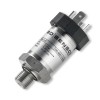 DMK457 Marine Approved Pressure Transmitter - Marine approved pressure transmitter with 4-20mA current loop output for shipbuilding with optional CuNiFe housing for sea-water compatibility
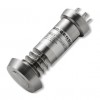 DMP331P Hygienic Flush Pressure Transmitter - Sanitary pressure sensor wth exposed diaphragm with no crevices for high temperatures up to 300 Degrees Celsius in ranges from 100mb up to 40 bar gauge or absolute
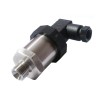 IMP Low Cost Pressure Sensor - Versatile low price pressure sensor with a wide selection of electrical and mechanical options for customisation.
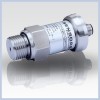 DCT 531 Modbus RTU RS485 Pressure Sensor - The DCT 531 digital pressure sensor has a Modbus RTU RS485 interface for transmitting pressure readings over a digital sensor network.
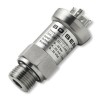 DMP331 Precision Pressure Transmitter - Stainless steel pressure transmitter with ranges from 100mbar up to 40 bar gauge or absolute. Special options for ATEX , SIL2 and compound ranges.
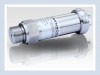 DMP320 0.5 msec Fast Response Pressure Sensor - High frequency response pressure sensor with a better than 0.5 millisecond response time and internal digital signal conditioning that samples readings at a rate of 10 kilohertz.
- Water pump input/output testing pressure sensor with 30 psi absolute range
- Manufacturing automation absolute pressure sensor with 100psia range and 0-10Vdc out
- Power generation OEM engine oil pressure sensor with 75bar abs range and RS485
- 700 to 1100 millibar scaled 4 to 20mA output pressure sensor for barometric pressure measurement
- 300 mmHg absolute vacuum pressure transducer with 10 volts output
- Marine approved atmospheric pressure sensor
- Barometric Pressure Transmitters - Select barometric pressure transmitters with compressed output scaling for superior resolution in detecting incremental atmospheric changes. Ideal for environmental controls & gas analysis compensation.
- Absolute Pressure Transmitters - Select absolute pressure transmitters with 4-20mA output, designed for precise measurements against a perfect vacuum. Ideal for leak testing, vacuum processes, and barometric-independent applications.
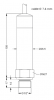 Waterproof Absolute Pressure Sensors - Discover robust waterproof absolute pressure sensors, ideal for reliable underwater pressure and level measurement where vented sensors are impractical. Learn how readings convert to gauge pressure. Suited for subsea, borehole, and marine deployments.
Send us your enquiry to discuss your Absolute Pressure Sensors application with a product specialist, and they will help you select the best option to suit your specific requirements.
Absolute pressure sensors are engineered to measure pressure in relation to a perfect vacuum (0 psi absolute). This distinction is critical in applications where the reference point must be absolute zero, rather than the fluctuating atmospheric pressure used in gauge pressure sensors.
Product Advantages
Absolute pressure sensors offer critical benefits for engineers and researchers who require precise, stable measurement points regardless of external environmental fluctuations. Their ability to provide consistent readings relative to a perfect vacuum, combined with a robust, sealed design, makes them an essential choice for a wide range of demanding applications where traditional gauge sensing is insufficient.
Independence from Atmospheric Pressure
Absolute pressure sensors measure pressure relative to a perfect vacuum, making them inherently immune to variations in local barometric pressure. This independence from atmospheric fluctuations is vital for applications where stable, consistent readings are required without the need for constant compensation for changing weather or altitude.
Precise Vacuum Reference
By utilizing a hermetically sealed reference vacuum chamber, these sensors provide a consistent and stable zero point (0 PSI absolute). This distinction is critical in industrial and scientific settings where the reference point must be absolute zero, rather than fluctuating atmospheric pressure, ensuring maximum measurement accuracy.
Enhanced Reliability in Submerged Environments
These sensors are engineered with robust, hermetically sealed housings, making them ideal for long-term submersion where traditional vented (gauge) sensors might fail. By eliminating the need for delicate vent tubes that are prone to blockage or contamination, they provide reliable performance in subsea, borehole, and other challenging underwater environments.
Versatility for Critical Applications
Absolute pressure sensors are indispensable in applications requiring precise, isolated pressure monitoring. From detecting minute leaks in sealed systems to facilitating critical process control in vacuum packaging, distillation, and meteorological research, their design ensures reliable data integrity across diverse and technically demanding environments.
Product Applications
Absolute pressure sensors are indispensable across a wide spectrum of industries and scientific disciplines where measuring pressure relative to a zero-reference vacuum is critical. By eliminating the confounding effects of local atmospheric fluctuations, these devices deliver unmatched precision and reliability. Below are key applications where absolute pressure measurement plays a pivotal role in operational success, quality control, and safety.
Leak Testing
In high-precision leak detection, absolute pressure sensors evaluate the integrity of sealed enclosures, pipes, and vacuum systems by measuring pressure decay or rise relative to a fixed vacuum reference. Because standard gauge sensors fluctuate alongside ambient barometric changes caused by weather or ventilation, absolute sensors eliminate false positive leak indications. This makes them crucial for quality verification in automotive, aerospace, medical device, and HVAC manufacturing environments where micro-leaks could lead to catastrophic product failure.
Barometric Compensation
Systems relying on non-vented hydrostatic level measurements or sensitive gas flow calculations require barometric compensation to offset local weather shifts and elevation changes. Absolute pressure sensors provide the exact real-time ambient atmospheric pressure baseline necessary to adjust system calculations accurately. By combining an absolute water head pressure measurement with a local absolute barometric reading, engineers can determine precise liquid levels in unvented tanks or boreholes without risking moisture ingress through vent tubes.
Atmospheric Pressure Measurement
Accurate measurement of total atmospheric pressure is vital for altimetry, weather forecasting, and aviation instrumentation. Absolute pressure sensors directly quantify the barometric mass of air pressing down at a given location, serving as the core component in digital barometers, weather stations, and aircraft altimeters. These measurements enable pilots to determine barometric altitude reliably and allow meteorologists to track pressure gradients that drive global weather patterns.
Industrial Processes
Industrial manufacturing operations, including semiconductor fabrication, vacuum packaging, freeze-drying (lyophilization), and chemical distillation, depend on tightly controlled low-pressure environments. Absolute pressure sensors monitor these vacuum chambers continuously, ensuring process repeatability and batch consistency regardless of external atmospheric shifts. By maintaining precise vacuum levels, manufacturers safeguard product quality, prevent oxidation, and optimize energy efficiency in automated production lines.
Scientific Research
In laboratory and experimental settings, scientific integrity relies on absolute baseline control. Absolute pressure sensors are widely deployed in gas chromatography, mass spectrometry, materials characterization, and high-energy physics experiments. They enable researchers to measure true pressure conditions inside closed test chambers, ensuring that thermodynamics calculations and gas law experiments are unaffected by outside environmental variables.
Environmental Monitoring
Environmental study networks and climate stations deploy ultra-low-power absolute pressure sensors in remote locations to collect continuous atmospheric data. These sensors contribute to long-term climate monitoring, storm trend prediction, and hydrological studies. Their robust sealed construction protects internal electronics from harsh weather, humidity, and atmospheric pollutants, ensuring multi-year stability without frequent recalibration.
Offshore Research & Exploration
Operating in deep sea and oceanographic environments presents extreme mechanical challenges. Submersibles, ocean floor observatories, and offshore oil exploration platforms rely on heavy-duty, hermetically sealed absolute pressure sensors to measure depth and hydrostatic pressure. Because vented cables are highly susceptible to clogging, flooding, and pressure differentials underwater, absolute sensors provide a significantly more dependable solution for deep-water deployment.
Product Selection
Selecting the optimal absolute pressure sensor requires careful consideration of technical and operational parameters to ensure accurate, stable measurements. Engineers should evaluate their specific application requirements to match the sensor’s capabilities with the operational environment, ensuring long-term reliability and data integrity.
Pressure Range and Reference Type
When selecting a sensor, ensure the chosen pressure range covers the full span of expected operational pressures without exceeding the sensor’s limits. For absolute pressure sensors, the measurement is referenced against a perfect vacuum (0 PSI absolute), making it distinct from gauge or differential sensors. Understanding this reference is critical to ensure the sensor captures true absolute pressure data, independent of changing ambient barometric conditions.
Output Signal Compatibility
The electrical output of the sensor—whether a 4-20mA current loop, voltage signal, or digital output—must be fully compatible with the downstream data acquisition or control system (PLC/DCS). 4-20mA signals are highly recommended for applications requiring long-distance transmission with high noise immunity, while digital outputs may be preferred for direct communication with computer systems.
Media and Material Compatibility
Chemical compatibility between the sensor’s wetted parts and the process media is essential to prevent corrosion or sensor failure. Verify that materials like 316L stainless steel, Hastelloy, or Viton seals are suitable for the specific gases or liquids being measured, especially in industrial processes involving corrosive chemicals or specialized process gases.
Environmental and Installation Considerations
Evaluate the broader environmental conditions for the installation site. Consider factors such as temperature extremes, the risk of physical vibration, and the required Ingress Protection (IP) rating for the environment. Robust, hermetically sealed housings are vital for preventing water ingress and contamination in demanding or outdoor industrial settings.