
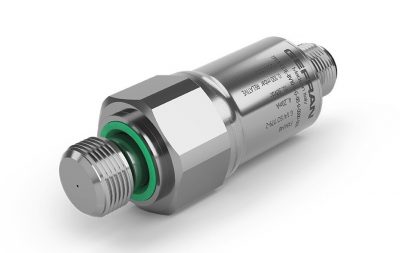
The TPLA series pressure transmitter utilizes a high-precision silicon piezoresistive sensing element designed for exceptional sensitivity and long-term stability, particularly in low-pressure applications. Constructed with stainless steel AISI 316L wetted parts and a durable AISI 304 housing, this series is engineered to withstand demanding industrial environments while maintaining an accuracy of better than ±0.5% FS. With a broad range of configuration options including various amplified analog outputs, multiple process connections, and integrated pressure peak protection, the TPLA offers a versatile solution for precise pressure monitoring from 50 mbar up to 60 bar.
Product Parameters
- Measurement Range: 0…0.05 bar to 0…60 bar
- Output Signal: Amplified voltage (e.g., 0-10V, 1-5V) or current (4-20mA)
- Accuracy: Less than ±0.5% Full Scale at room temperature
- Process Material: Stainless steel AISI 316L for wetted parts
- Housing Material: Stainless steel AISI 304
- Ingress Protection: IP65 to IP67 depending on the connector and installation
- Temperature Limits: Process temperatures from -40 to +125°C
- Sensing Technology: Piezoresistive silicon sensing element with silicone oil fill
Product Description
The TPLA series represents a high-performance advancement in piezoresistive pressure measurement, specifically engineered to deliver reliable data in processes where precision at low pressure is critical. By employing a silicon sensing element, the transmitter achieves high levels of repeatability and low hysteresis, ensuring that measurements remain consistent over extended operating periods. The internal electronics provide a range of amplified analog signals, making these units compatible with standard industrial PLCs and control systems.
Durability is a core feature of the TPLA design. The use of AISI 316L stainless steel for wetted parts and FKM seals ensures compatibility with a wide variety of fluids and gases. For applications subject to hydraulic shock or cavitation, such as those involving fast-acting valves or pump starts, the series can be equipped with an optional integrated pressure snubber. This 0.5 mm diameter through-hole effectively dampens harmful pressure peaks, protecting the sensing element from mechanical failure.
Configuration flexibility allows for seamless integration into existing hardware setups. The series supports five standard mechanical process connections, including G 1/4 and G 1/2 threads, and four distinct electrical connection styles such as M12x1 and various EN 175301-803 connectors . Each unit is manufactured to comply with international standards, including EMC and RoHS directives, and is available with both absolute and relative pressure measurement options.
Product Features
The TPLA series of pressure transmitters is engineered for demanding industrial environments, combining high-precision sensing technology with robust construction to ensure reliable performance. These features are designed to provide consistent, long-term accuracy, flexible integration options, and enhanced protection against environmental and operational stresses, making them an ideal solution for critical process monitoring applications.
High Sensitivity Sensing Technology
The TPLA series utilizes advanced silicon piezoresistive technology to deliver exceptional sensitivity and precision, particularly in low-pressure applications. This sensing method ensures high levels of repeatability and extremely low hysteresis, providing consistent measurement data even over extended operating periods.
Diverse Output Signal Options
The transmitter offers versatile integration capabilities through a wide selection of output signals. Users can choose from amplified analog signals, including 4-20 mA current loops, as well as multiple voltage ranges such as 0-10 Vdc and 1-5 Vdc, ensuring seamless compatibility with standard industrial PLCs and control systems.
Integrated Pressure Snubber Protection
For demanding applications susceptible to hydraulic shock, such as those involving fast-acting valves or sudden pump starts, the series can be equipped with an optional integrated pressure snubber. This 0.5 mm diameter through-hole effectively dampens harmful pressure peaks, protecting the internal sensing element from mechanical failure caused by liquid hammer and cavitation.
Robust Stainless Steel Construction
Built for longevity in harsh industrial environments, the TPLA series features a durable AISI 304 housing and AISI 316L stainless steel wetted parts. These materials, combined with high-quality FKM seals, ensure reliable operation and broad chemical compatibility across a wide variety of industrial fluids and gases.
Superior Long-Term Stability
Engineered for reliability, the TPLA series demonstrates excellent long-term stability with a drift of less than 0.2% Full Scale (FS) per year. This consistency minimizes the need for frequent recalibration, providing a dependable solution for long-term process monitoring requirements.
Enhanced Overpressure Safety
The TPLA series is designed with high overpressure and burst pressure ratings, providing an essential safety buffer in pressurized systems. These robust structural limits protect the device from damage during unexpected pressure spikes, ensuring operational continuity and enhanced equipment safety.
Flexible Electrical Termination
To facilitate easy installation, the series supports a variety of electrical termination styles. These include industry-standard M12x1 (4-pin) connectors for high ingress protection, various EN 175301-803 (Form A and Form C) connectors for valve-style cabling, and a convenient 1-meter shielded direct cable output.
Wide Operating Temperature Range
The TPLA series is built to perform in diverse environments, supporting a wide operating temperature range for both ambient conditions and process fluids. The unit is engineered to withstand process temperatures ranging from -40 to +125°C, ensuring high performance in everything from cold storage to high-heat manufacturing processes.
Product Applications
The TPLA series pressure transmitter provides a versatile and reliable solution across a broad range of industrial sectors. Its combination of high-precision sensing, robust construction, and flexible connectivity makes it an ideal choice for applications requiring exact pressure monitoring, from stringent hygiene-focused packaging lines to demanding hydraulic control systems and research environments.
Food and Pharmaceutical Packaging
In the highly regulated food and pharmaceutical sectors, packaging machinery must maintain exacting standards of hygiene and precision. The TPLA series is particularly valuable here due to its high-precision silicon piezoresistive sensing element, which offers the exceptional sensitivity required for low-pressure gas flushing or vacuum sealing processes. The use of AISI 316L stainless steel for wetted parts ensures that the device is compatible with strict cleaning protocols and sensitive products, while its ±0.5% FS accuracy guarantees that every package is processed under optimal pressure conditions to preserve product integrity and shelf life.
Industrial Inkjet Printing and Dosing
Precision fluid management is the cornerstone of high-quality industrial printing and chemical dosing systems. The TPLA pressure transmitter provides the reliable analog feedback necessary to maintain constant pressure within ink reservoirs and delivery lines, preventing drop-size variations or nozzle clogging. Its superior long-term stability and low hysteresis mean that once the system is calibrated, it will continue to deliver consistent results over millions of cycles. This reliability reduces maintenance downtime and ensures that dosing systems deliver exact volumes of fluid, which is critical for maintaining color consistency in printing or precise concentrations in chemical mixing.
Extrusion Blow Moulding
The extrusion blow moulding process relies on stable pressure to ensure uniform wall thickness and structural integrity of the final plastic containers. The TPLA series excels in this environment by providing fast response times and high repeatability, allowing control systems to make real-time adjustments to the extrusion process. The robust AISI 304 housing and wide operating temperature range enable the transmitter to withstand the high-heat conditions common near extrusion heads, while the variety of process connections allows for easy integration into existing machinery, ultimately resulting in fewer material rejects and higher production efficiency.
High-Performance Hydraulic Systems
Hydraulic systems often subject components to harsh conditions, including rapid pressure spikes, “liquid hammer,” and cavitation. The TPLA transmitter is uniquely equipped for these challenges through its optional integrated pressure snubber, which uses a 0.5 mm orifice to dampen harmful peaks before they reach the delicate sensing element. This protection, combined with high overpressure and burst ratings, ensures operational continuity in systems involving fast-acting valves or high-powered pumps. By providing accurate feedback even in turbulent conditions, the TPLA helps operators monitor system health and prevent catastrophic mechanical failures.
General Industrial Process Monitoring
Across a broad spectrum of manufacturing, the TPLA series serves as a versatile tool for general process monitoring. Whether tracking pressure in compressed air lines, cooling systems, or storage tanks, the transmitter’s flexible output options—including 4-20 mA and various voltage signals—ensure it can communicate with almost any industrial PLC or SCADA system. Its durability and ingress protection (up to IP67) make it suitable for installation in wash-down areas or dusty factory floors, providing plant managers with a cost-effective, high-accuracy solution for maintaining overall process efficiency and safety.
Research and Development Laboratories
For laboratory environments where accuracy and data integrity are paramount, the TPLA series provides the precision needed for research and development testing. Its low-pressure measurement ranges (starting at 50 mbar) and minimal long-term drift make it an ideal choice for monitoring experimental setups over long durations. The small, lightweight design and various electrical termination options, such as the M12x1 connector or direct cable output, allow it to be easily integrated into compact benchtop equipment or temporary test rigs, providing researchers with dependable analog feedback for critical data analysis.
Product Specifying Guide
Step 1: Select Output Signal
Choose the analog output that matches your control system requirements. Standard options include 4-20 mA current loops (Code E), 0-10 Vdc voltage (Code N), or 1-5 Vdc voltage (Code P). Numerous other voltage variants such as ratiometric 0.5-4.5 V are available on request .
Step 2: Choose Process Connection
Identify the thread type required for your pressure port. The series offers five standard options including G 1/4 (E1) or G 1/2 (31) ISO 1179-2 connections with rubber seals, as well as EN 837 (35) and DIN 3852 (12) versions .
Step 3: Define Electrical Connection
Select the termination style for your wiring. The M12x1 4-pin connector (Code Z) is standard for high ingress protection, while the EN 175301-803 Form A (E) and Form C (C) connectors are common for industrial valve-style cabling. A 1-meter direct cable output (F) is also available .
Step 4: Specify Measurement Range and Type
Select your pressure range from 0.05 bar (BV05) up to 60 bar (B06D). You must also specify whether you require a Relative (G) measurement for gauge pressure or an Absolute (A) measurement for pressure relative to a vacuum .
Step 5: Select Additional Options
Determine if your application requires an integrated snubber (Code S) for pressure peak protection. You can also specify transducer cleaning for specific purity requirements and whether a formal calibration report is required for your quality documentation.
Part Number Builder
Generate or decode TPLA ordering code
Installation & Operation Guide
Step 1: Physical Mounting
Screw the transducer into the pressure port using the hex flats (typically 24mm or 27mm depending on the model). While mounting position effects are generally negligible, it is best practice to install the unit in a location where it is protected from excessive vibration and accidental physical impact.
Step 2: Electrical Grounding
Ensure the transducer is properly grounded through the machine body. This is the primary method for maintaining the required protection level and ensuring accurate signal transmission.
Step 3: Wiring the Signal
Connect the shielded cable according to the connection diagram for your specific output type. For voltage versions (3-wire), connect supply +, supply -, and signal. For current versions (2-wire), the sensor is connected in series with the current loop. Ensure the cable shield is grounded only at the PLC side.
Step 4: Powering the System
Verify that the supply voltage is within the specified range (typically 8-30 Vdc) before powering on. The unit has a short warm-up time of less than 30 seconds before it reaches rated performance. The electronics include reverse polarity protection to prevent damage during initial setup.
Product Help
Measurement type selection
What is the difference between relative and absolute pressure versions in this series?
Relative pressure (G) measures pressure relative to atmospheric pressure, whereas absolute pressure (A) measures pressure relative to a perfect vacuum. For the TPLA series, absolute pressure is available as a standard option for ranges at or above 1 bar, and is the only option for ranges 4 bar and higher.
Using the pressure snubber
When should I specify the optional integrated pressure snubber?
The pressure snubber (option S) is recommended for hydraulic applications where the system may experience “liquid hammer,” cavitation, or rapid pressure spikes caused by the sudden starting/stopping of pumps or fast-closing valves. The 0.5 mm diameter orifice dampens these peaks to prevent damage to the sensing element.
Grounding and shielding requirements
How should the electrical shielding be handled during installation?
To ensure signal integrity and prevent electromagnetic interference, you must use a shielded cable. The cable shield should be grounded on the PLC/instrument side and left floating on the machine side. The transducer itself must also be grounded, typically through the machine body or the equipment it is threaded into.
Output load limits
How do I calculate the maximum load resistance for the 4-20mA current version?
The total load resistance (RL) is dependent on the power supply voltage. You can calculate the maximum allowed resistance using the formula RL≤(V supply −10V)/0.02A. For example, with a 24V supply, the maximum load would be 700 ohms.
Environmental protection ratings
What ingress protection (IP) rating can I expect once installed?
The IP rating depends on the chosen electrical connector. The M12x1 (Z) version provides IP67 protection when the female connector is properly mounted and tightened. The EN 175301-803 connectors (E and C) provide IP65 protection. In all cases, the rating only applies when the mating connector is correctly plugged in and wired.
Related Documents
Specification data sheet
Request Product Price
Please select the options you require for the TPLA Low Range Industrial Pressure Transmitter in your application and request a quote.