
What is the best way to measure the level of diesel fuel in a very shallow tank, for example, one that is only 20 centimetres (about 8 inches) deep?
Measuring liquid level in very shallow tanks presents a challenge, as standard submersible sensors may have a minimum range that is too high, leading to poor measurement resolution. For a tank just 20 cm deep, it is crucial to select a sensor with a very low measurement range.
A suitable solution is a pressure transmitter with a variable capacitance flush ceramic diaphragm. These sensors are available with a low pressure range of 0 to 40 millibar (mbar), which corresponds to 0 to 40 centimetres of water column (cmH2O).
Featured shallow depth liquid level sensor products
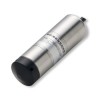 LMK382 Low Range IP68 Waste Water Level Transmitter - Submersible Low Range waste water level transmitter with intrinsically safe option for monitoring the level of sewage and effluent in water treatment plants.
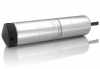 DCL 551 RS485 Modbus RTU Submersible Low Range Fuel, Oil & Wastewater Level Probe - Low range digital interface submersible liquid level probe with RS 485 Modbus RTU protocol serial bus communications for measuring level of fuel, oil and wastewater in low fill height open tanks.
To determine the pressure range needed, we can calculate the pressure exerted by the diesel fuel. The specific gravity (SG) of diesel is approximately 0.832. Therefore, a 20 cm depth of diesel exerts a pressure equivalent to: 20 cm x 0.832 (SG) = 16.64 cmH2O.
This pressure (approx. 16.6 mbar) fits comfortably within the 0-40 mbar range, utilizing over 40% of its measurement span. This ensures a much better signal resolution compared to a sensor with a higher standard range, such as 100 mbar (1 mH2O).
Furthermore, the flush diaphragm design is particularly advantageous for diesel fuel, which can be viscous. A flush surface prevents the accumulation of residue that could otherwise clog a sensor with a recessed diaphragm, ensuring accurate and reliable readings over the long term.
Related Help Guides
- Determining the hydrostatic pressure range for a tank level sensor
- Measuring liquid level in a sealed tank with a hydrostatic pressure sensor
- How do you measure the volume of a liquid using pressure
- Measuring liquid level in a tank using a dp sensor
- How to determine milk tank level and volume from pressure
- Installing a submersible level sensor horizontally
- Selecting the correct pressure sensor range for low-level applications
- Calculating required pressure range for fuel tank level measurement
Related Online Tools
- Liquid Level to Hydrostatic Pressure Calculator
- Fluid Depth, Density, Gravity, and Pressure Calculator
- Tank Height – Tank Level Depth to Tank Level Height Calculator
- Vertical Cylindrical Shaped Tank Contents Calculator
- Horizontal Cylindrical Shaped Tank Contents Calculator
- Rectangular Shaped Tank Contents Calculator
- Pressure to Liquid Level Calculator
Related Product and Application Guides
Related Application Questions and Answers
- Submersible rainwater tank level sensor for measuring 3.5m depth
- Low cost 2 metre high diesel tank level sensor with 0-10 volt output
- Submersible oil pressure sensor alternative to Ashdown CNS
- Raw leachate feed tank depth probe
- Above ground level potable water tank pressure level indicator
- Potable water underground 10ft dia storage tank temperature and level sensor
- Industrial dishwasher 0-1m 0-10Vdc water level sensor
- Measuring level of stoddard solvent in a sealed tank
- Ebb & Flow (Flood & Drain) Horticulture Hydroponic System 100mm Water Level Sensor
- Fleet management system submersible 3000mm height petrol tank level ATEX rated pressure sensor
- Generator diesel tank height level sensor for 1 metre height
Contact us about this Measuring diesel level in shallow tanks page to request more information, or to discuss your application requirements.