
When specifying the electrical connection for submersible types of the LMP, LMK and DCL series of liquid level sensors, you will need to choose from a selection of cable types.
The choice of cable will depend on your budget, application environment, and liquid compatibility.
Below is a summary of the properties of each cable to help make a better decision on the most appropriate cable for your application.
PVC
- Operating temperature from 0 … 70 °C
- Max. cable length 140 m
- Material is very flexible
- Good chemical resistance
PUR
- Operating temperature from -20 … 100 °C
- Max. cable length 700 m
- Abrasion-proof
- Resistant against chemicals
- May be used in food industry
FEP
- Operating temperature from -25 … 125 °C
- Max. cable length 700 m
- PUR cable + PTFE cover
- Resistant against all kinds of chemicals
TPE
- Large operating temperature from -25 … 125 °C
- Max. cable length 800 m
- Resistant against sea water and heavy oil
TPE-U
- Large operating temperature from -10 … 75 °C
- Drinking water approved
Featured submersible cable liquid level sensor products
 18.605 G Low Cost Submersible Diesel Fuel and Water Tank Level Sensor - Low cost OEM diesel fuel or water level sensor for installing inside or outside a storage tank.
 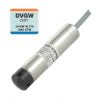 LMP307 Submersible Level Transmitter - Submersible level transmitter for measuring liquid level with a 4-20mA current loop or a 0-10V voltage output plus optional ATEX approval for intrinsically safe use in hazardous areas in ranges from 1mH2O up to 250mH2O. The LMP307 is suitable for use on potable water with no leaching, and can be supplied with a drinking water certificate according to DVGW and KTW.
Help
FEP vs TPE for Diesel
Is a FEP or TPE outer cable material preferred for immersing in diesel? TPE seems to be a common choice for marine approved applications, but what’s the reason?
TPE is more robust, resistant to seawater and rated higher for hot environments.
FEP is better with diesel in non-marine applications, but TPE is also acceptable.
Featured submersible cable liquid level sensor products
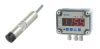 Underground rain water storage tank level sensor and readout for 2 metre depth - Water level indicator for a 2 metre deep rain water storage tank located underground.
 - LMP307 Submersible Level Transmitter - Submersible level transmitter for measuring liquid level with a 4-20mA current loop or a 0-10V voltage output plus optional ATEX approval for intrinsically safe use in hazardous areas in ranges from 1mH2O up to 250mH2O. The LMP307 is suitable for use on potable water with no leaching, and can be supplied with a drinking water certificate according to DVGW and KTW.
Related Help Guides
- Measuring diesel level in shallow tanks
- Installing a submersible level sensor horizontally
- Selecting the correct pressure sensor range for low-level applications
- Determining the signal cable length of a suspended liquid level transducer
- How to reduce submersible pressure sensor failures caused by moisture ingress
- Using absolute pressure sensors to measure hydrostatic level
- Using a screw-in or waterproof pressure transmitter to measure liquid level
- Improve the electrical termination of vented submersible pressure sensors
- Considerations for monitoring Landfill Water Level
- Why are Submersible applications so demanding of Pressure Transducers?
- Are all IP68 Water Resistant Protection Ratings the same
- Problem with zero drift when installing submersible pressure sensor
Related Technical Terms
Related Online Tools
Related Product and Application Guides
Related Application Questions and Answers
- Immersible water level sensor for 4 metre deep cold water storage tank
- Submersible rainwater tank level sensor for measuring 3.5m depth
- Dockside sea water tide level transmitter up to 6 metres depth
- 300 foot sea depth waterproof pressure sensor with 0-5V signal
- Sulfuric acid 12-15% conc. drop-in level probe for 10m high tank
- Concrete cooling tower submersible temperature probe
- Submersible oil pressure sensor alternative to Ashdown CNS
- Ferric Chloride solution hydrostatic level transmitter
- Hydropower reservoir submersible hydrostatic level transmitter & indicator
- Raw leachate feed tank depth probe
- Above ground level potable water tank pressure level indicator
- Hydrophone array submersible 200 meter seawater depth sensor
Contact us about this Choosing PVC, PUR, FEP and TPE cable types page to request more information, or to discuss your application requirements.