
Can a submersible level sensor be installed horizontally at the bottom of a tank, and if so, what is the measurement reference point?
Yes, a submersible level sensor can be installed horizontally on the floor of a tank. This installation method is often a practical solution for shallow tanks where vertical clearance is limited or when it is important to measure the entire liquid depth from the very bottom.
When a cylindrical level sensor is laid on its side, the point of measurement, or “zero” reference, is the centreline of the sensing diaphragm. All level readings will be relative to this horizontal axis. For example, if the sensor has a diameter of 39.5 mm, the zero point will be at a height of 19.75 mm from the bottom of the tank. This small offset can be easily calibrated out in the connected control system (e.g., PLC, display) to ensure the reading accurately reflects the level from the tank floor.
Featured low range liquid level sensor products
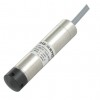 HVO and FAME biofuel storage tank submersible level sensor - Explore a solution for reliably measuring the level of biodiesel fuels such as HVO and FAME. A submersible level transmitter was specified with carefully selected wetted parts, including an FEP cable and FKM seals, to ensure long-term chemical compatibility in alternative fuel storage tanks.
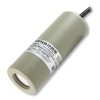 Raw leachate feed tank depth probe - Depth probe for monitoring the level of raw leachate in feed tanks up to 1 metre high on a landfill site.
This horizontal orientation is particularly effective for sensors with a large, flush frontal diaphragm. The open face of the sensor remains exposed to the liquid, ensuring that changes in hydrostatic pressure are detected immediately without the risk of being obstructed by sludge or sediment that might accumulate in a recess.
Related Help Guides
- Determining the hydrostatic pressure range for a tank level sensor
- Measuring liquid level in a sealed tank with a hydrostatic pressure sensor
- How do you measure the volume of a liquid using pressure
- Measuring liquid level in a tank using a dp sensor
- How to determine milk tank level and volume from pressure
- Measuring diesel level in shallow tanks
- Selecting the correct pressure sensor range for low-level applications
- Calculating required pressure range for fuel tank level measurement
Related Online Tools
- Liquid Level to Hydrostatic Pressure Calculator
- Fluid Depth, Density, Gravity, and Pressure Calculator
- Tank Height – Tank Level Depth to Tank Level Height Calculator
- Vertical Cylindrical Shaped Tank Contents Calculator
- Horizontal Cylindrical Shaped Tank Contents Calculator
- Rectangular Shaped Tank Contents Calculator
- Pressure to Liquid Level Calculator
Related Product and Application Guides
Related Application Questions and Answers
- Submersible rainwater tank level sensor for measuring 3.5m depth
- Low cost 2 metre high diesel tank level sensor with 0-10 volt output
- Submersible oil pressure sensor alternative to Ashdown CNS
- Raw leachate feed tank depth probe
- Above ground level potable water tank pressure level indicator
- Potable water underground 10ft dia storage tank temperature and level sensor
- Industrial dishwasher 0-1m 0-10Vdc water level sensor
- Measuring level of stoddard solvent in a sealed tank
- Ebb & Flow (Flood & Drain) Horticulture Hydroponic System 100mm Water Level Sensor
- Fleet management system submersible 3000mm height petrol tank level ATEX rated pressure sensor
- Generator diesel tank height level sensor for 1 metre height
Contact us about this Installing a submersible level sensor horizontally page to request more information, or to discuss your application requirements.