
Questions and answers about liquid level measurement.
Level switch vs transmitter
What is the difference between a level switch and a level transmitter?
A switch will turn on or off at a predetermined liquid level, perhaps to protect a tank from overflowing or to maintain a minimum / maximum level in the tank. The switch output is typically either a voltage free contact or if it is an electronic switch, a fixed voltage e.g. 12 volts when ON and 0 volts when OFF.
A transmitter has a variable output signal, 4 to 20 milliamps current loop is the most common. e.g. level transmitter for a 10 metre high tank, will read 4mA if the tanks is empty, 12mA if half full and 20mA if full.
Featured liquid level measurement products
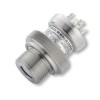 ATEX Approved Liquid Level Sensors for Hazardous Areas - European hazardous area ATEX approved sensors for liquid level measurement in intrinsically safe installations on petrochemical, pharmaceutical, landfill and sewage treatment sites.
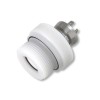 External Mounted Tank Level Sensors - External mounted level sensors for installing on the outside of a liquid storage tank to measure level of tank contents.
Related Help Guides
- Determining the hydrostatic pressure range for a tank level sensor
- Measuring liquid level in a sealed tank with a hydrostatic pressure sensor
- Difference between vented and non-vented water level measurement
- Determining water tank volume using hydrostatic pressure
- Measuring the volume of liquid in a horizontal cylinder tank
- How do you measure the volume of a liquid using pressure
- Measuring liquid level in a tank using a dp sensor
Related Technical Terms
- Capacitive Fluid Level Measurement
- cmH2O – Centimetres of Water Column at 4 deg C Pressure Unit
- Conductive Fluid Level Detection
- Float Fluid Level Detection
- ftH2O – Feet of Water Column at 4 deg C Pressure Unit
- mH2O – Metres of Water Gauge at 4 deg C Pressure Unit
- mmH2O – Millimetres of Water Column at 4 deg C Pressure Unit
- Specific Gravity
- Vibrating Tuning Fork Fluid Level Detection
Related Online Tools
- Liquid Level to Hydrostatic Pressure Calculator
- Fluid Depth, Density, Gravity, and Pressure Calculator
- Liquid Level Transmitter 4-20mA Current Output Calculator
- Vertical Cylindrical Shaped Tank Contents Calculator
- Horizontal Cylindrical Shaped Tank Contents Calculator
- Rectangular Shaped Tank Contents Calculator
- Pressure to Liquid Level Calculator
Related Product and Application Guides
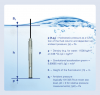
Related Application Questions and Answers
- HART flameproof (Ex d) re-scalable level transmitter for hydrostatic head up to 2 metres
- Dockside sea water tide level transmitter up to 6 metres depth
- Water tank level gauge transmitter with adjustable range
- Portable battery powered tank level gauge with submersible sensor
- Generator diesel tank height level sensor for 1 metre height
Contact us about this Liquid Level Measurement page to request more information, or to discuss your application requirements.