
European hazardous area ATEX approved sensors for liquid level measurement in intrinsically safe installations on petrochemical, pharmaceutical, landfill and sewage treatment sites.
Our ATEX approved liquid level sensors are engineered for demanding applications within hazardous areas, particularly Zone 0 and Zone 1 environments where flammable gases and vapors pose a constant explosion risk. These sensors achieve safety through intrinsic safety (Ex i) principles, limiting electrical and thermal energy to prevent ignition, and must be integrated with certified intrinsically safe barriers. Critical for industries like petrochemical, pharmaceutical, landfill operations, and sewage treatment, they provide reliable level measurement while ensuring compliance with stringent European safety directives for installations such as fuel storage, solvent handling, leachate monitoring, and digester gas environments.
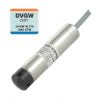 LMP307 Submersible Level Transmitter - Submersible level transmitter for measuring liquid level with a 4-20mA current loop or a 0-10V voltage output plus optional ATEX approval for intrinsically safe use in hazardous areas in ranges from 1mH2O up to 250mH2O. The LMP307 is suitable for use on potable water with no leaching, and can be supplied with a drinking water certificate according to DVGW and KTW.
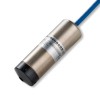 LMK458 Marine Approved Hydrostatic Level Transmitter - Marine approved level transmitter with 4-20mA output for measuring level of contents inside ship ballast, fuel, liquid cargo or wastewater tanks
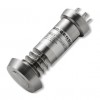 DMP331P Hygienic Flush Pressure Transmitter - Sanitary pressure sensor wth exposed diaphragm with no crevices for high temperatures up to 300 Degrees Celsius in ranges from 100mb up to 40 bar gauge or absolute
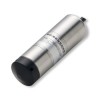 LMK382 Low Range IP68 Waste Water Level Transmitter - Submersible Low Range waste water level transmitter with intrinsically safe option for monitoring the level of sewage and effluent in water treatment plants.
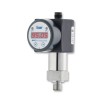 DS200 Combined Hydrostatic Level Switch, Gauge and Sensor - Three in one hydrostatic level switch, digital level gauge and level sensor with level ranges from 1 mWG up to 600 mWG (3.3 to 1969 ftWG).
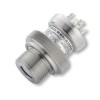 LMK331 Screw-In Ceramic Level Transmitter - Level pressure sensor with semi-flush ceramic diaphragm and stainless steel or PVDF wetted parts in ranges from 0-4 to 600mH2O gauge.
- Zone 0 ATEX borehole water level sensor for flammable atmospheres
- Leachate holding tank submersible level sensor for 5 metre depth
- IP68 sewage level transmitter with 6m/20ft range, ATEX IS approval and FEP cable
- Fleet management system submersible 3000mm height petrol tank level ATEX rated pressure sensor
- High temperature de-ionised water bath 300mm ATEX level sensor
- Fuel and freshwater level sensor with adjustable hydrostatic range for small vessel tanks
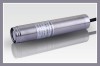 Hazardous Area Submersible Hydrostatic Liquid Level Sensors - Explore our range of intrinsically safe (IS) submersible hydrostatic level sensors, designed for accurate liquid level measurement in hazardous environments
Send us your enquiry to discuss your ATEX Approved Liquid Level Sensors for Hazardous Areas application with a product specialist, and they will help you select the best option to suit your specific requirements.
ATEX approved liquid level sensors are specifically engineered for deployment in environments where the presence of flammable gases, vapors, or dusts creates a persistent risk of explosion. The ATEX certification signifies compliance with stringent European Union directives, ensuring these sensors are suitable for intrinsically safe installations. This intrinsic safety (Ex i) protection concept is paramount, as it limits the electrical and thermal energy within the sensors and associated wiring to levels below that which could ignite a specific hazardous atmospheric mixture. This is achieved through careful design that restricts voltage, current, and power, even under fault conditions.
When selecting these sensors, a critical consideration is the designated hazardous area classification, such as Zone 0 or Zone 1. Zone 0 environments are those where an explosive atmosphere consisting of a mixture with air of flammable substances in the form of gas, vapour or mist is present continuously or for long periods or frequently. Zone 1 areas are locations where such an explosive atmosphere is likely to occur in normal operation occasionally. Therefore, liquid level sensors intended for Zone 0 must meet the most rigorous safety requirements, often involving multiple redundant safety features. The choice of sensor must align precisely with the zoning and the specific gas group (e.g., IIA, IIB, IIC) and temperature class (T1-T6) of the hazardous materials present.
The integration of these ATEX certified liquid level sensors with compatible, certified intrinsically safe (I.S.) barriers is a non-negotiable aspect of system design. These barriers, typically Zener barriers or galvanic isolators, are installed in the safe area and regulate the energy supplied to the field-mounted sensor in the hazardous area. This ensures that even if a fault occurs within the control system or power supply in the safe area, the energy entering the hazardous zone remains below ignition levels. Incorrect barrier selection or installation can compromise the entire safety concept, negating the sensor’s ATEX approval.
Applications for these specialized liquid level sensors are diverse and critical. In petrochemical facilities, they are essential for monitoring levels in storage tanks containing volatile fuels, solvents, or chemical feedstocks, preventing overfills and ensuring process stability. Pharmaceutical manufacturing often involves the use of flammable solvents in reactors and mixing vessels, where precise level control under ATEX conditions is vital for both safety and product quality. Landfill sites utilize these sensors for monitoring leachate levels, where the presence of methane (a highly flammable gas) necessitates intrinsically safe instrumentation. Similarly, in sewage treatment plants, particularly in anaerobic digesters or confined spaces where sewer gases can accumulate, ATEX approved level sensors provide crucial monitoring to prevent hazardous situations and optimize process control. The robust construction and material compatibility of these sensors are also key, ensuring they can withstand corrosive substances often found in these industrial environments while maintaining their safety integrity.