
For the best frequency response use a strain gauge pressure transducer that provides a mV output without any amplification.
The increased use of digital electronics to characterise, condition and amplify the output of a pressure transducer offer the user many benefits, but the trade-off is that the natural frequency response of the sensor is masked by the damping, filtering and averaging of the transducers output signal by the smart electronics.
Typically only a few resistor components is required to condition the millivolt output from a strain gauge pressure sensor in order to rationalise the signal without compromising the natural response of the pressure sensing diaphragm.
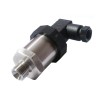 The IMP-LR low range pressure transducer which covers ranges from 25 mb up to 1000 mb gauge can provide a milli-volt output from a silicon strain gauge diaphragm. Semiconductor strain gauges have very high gauge factors which make it possible to use a small size silicon chip which in turn helps increase the natural frequency of the sensing diaphragm.
For ranges between 1 and 10 bar gauge or absolute the IMP strain gauge pressure sensor uses a ceramic thick film strain gauge diaphragm which has a high dynamic response due to the high rigidness of ceramic compared to other sensing materials.
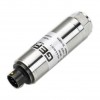 The TPS high range pressure transducer can measure pressures from 10 up to 1000 bar via 17-4ph stainless steel sensing diaphragm with bonded foil strain gauges which provide a high dynamic response particularly at higher ranges.
In the case of dynamic response it is true to say that less is more when it comes to conditioning the output signal of a pressure sensor for optimum frequency response.
Featured mv output pressure sensor products
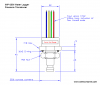 Low voltage 20 bar range OEM water logger pressure transducer - The stripped down OEM version of the IMP transducer is specifically designed for use inside freshwater pressure loggers
- OEM Millivolt Output Pressure Transducers - OEM millivolt output pressure transducers offer design engineers a versatile solution for integrating pressure sensing into custom instrumentation and equipment.
Related Help Guides
- How to create a list of specification parameters for a pressure sensor
- Shunt resistor calibration explanation
- What is the difference between a pressure transducer and a transmitter
Related Technical Terms
- 4 Wire
- Isolation Diaphragm
- mV/V – Millivolts per Volt Output Signal
- Piezoresistive Strain Gauges
- Ratiometric
- Span Sensitivity
- Stainless Steel Pressure Sensors
- Wheatstone Bridge Strain Gauge
Related Online Tools
- Load Cell Millivolt (mV) Output Calculator
- Pressure Transducer Millivolt (mV) Output Calculator
- Torque Transducer Millivolt (mV) Output Calculator
- Strain Gauge Transducer Millivolt (mV) Output Calculator
- Ratiometric mV/V Signal to Measurement Converter
Related Product and Application Guides
Related Application Questions and Answers
- 0.05 msec response time, 2 bar range pressure transducer
- Low voltage 20 bar range OEM water logger pressure transducer
Contact us about this Dynamic pressure measurement with mV output transducers page to request more information, or to discuss your application requirements.