
0-10 Volt pressure sensors featuring internal amplification for enhanced noise immunity and accurate, high-level voltage output for process control and monitoring.
This range of 0-10 Volts output pressure transducers are specifically engineered to provide a robust, high-level analog DC voltage signal directly proportional to the measured pressure. These instruments feature integral amplified signal conditioning electronics, enhancing signal strength and noise immunity, and are available in versatile 3-wire or 4-wire configurations to suit diverse installation requirements. Ideal for seamless integration with PLCs, data acquisition units, and various control systems, these transducers ensure accurate and reliable pressure monitoring in a wide range of industrial automation, HVAC, hydraulic, pneumatic, and research applications, simplifying system design with their direct 0-10Vdc output.
 Monitoring intake filter differential pressure in industrial air compressors - Monitor the pressure drop across industrial air compressor intake filters to trigger maintenance alarms and improve energy efficiency with precise analog signal output.
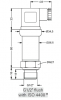 20 bar absolute steam pressure transducer - Pressure transducer for measuring a closed steam system pressurized by Nitrogen up to pressures of 20 bar
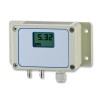 DPS200 HVAC Differential Pressure Transmitter
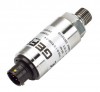 TPSA Precision High Pressure Transducer
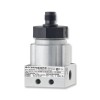
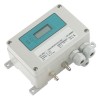 DPS Low Differential Pressure Transmitter
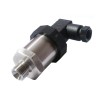 IMPLR Low Range All Stainless Steel OEM Pressure Sensor
- 180 degC pressure sensor for saturated steam up to 10 bar - A built-in cooling element allows the pressure sensor to be used on media temperatures up to 200 degC (FKM seal limit).
- Using 25 mbar DP sensor on vacuum below 0.2 bar absolute - I would like to measure a differential pressure of 0 to 25 mbar in a vacuum of < 0.2 bar absolute pressure.
- Data acquisition module 0-10Vdc output pressure gauge - DS200 has an in-built pressure gauge and a 0-10 volt dc analogue signal output which you can feed into a data acquisition module.
- Atmospheric air pressure transducer with 10 volt output - Pressure transducer with 0 to 10 v signal to monitor ambient air pressure in a room accurate to 0.5% range.
- 1 hPa Positive Room Pressure Sensor, Switch & Display - A 100 Pascal range positive room pressure sensor with a 0-10 volt analogue output signal relating to the inside/outside room pressure difference.
- R134A Coolant Pressure Transducer For Automotive Air Conditioning - All welded voltage output pressure transducer for use on R134A refrigerant coolant gas used in automotive air conditioning systems.
- IMP Low Cost Pressure Sensor
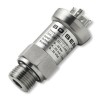 DMP331 Precision Pressure Transmitter
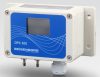 DPS300 User Switchable Pressure Range, Volts or Current Output Low DP Sensor
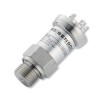 DMP333 High Range Precision Pressure Transmitter
- Leak testing at 0.5 bar to detect 200 Pascal pressure drop - The parts have to be checked at 0.5bar pressure. We are interested in measuring leakage which results in a drop of 200Pa pressure over a period of 10 sec.
- Nitrogen gas pressure transducer for pressures up to 4 bar g - 0-10Vdc output pressure transducer for measuring Nitrogen gas pressure in the range of 0 to 4 bar gauge.
- Low delta P sensor with 200mmH2O range and response time < 5ms - The DMD331 uses silicon technology which is very small compared to other sensing technologies which would have a more limited response time.
- 10 mmWC draft fan differential pressure transmitter - Low range dp transmitter for measuring 0... -10mmWC to maintain constant negative pressure across an induced draft fan fitted with a variable frequency drive.
- Monitoring data center positive pressure with a low-range differential transducer - Low-range differential pressure transducer for verifying and monitoring critical positive air pressure between a data center equipment room and adjacent areas, ensuring compliance with required ≥5 Pa and ≥10 Pa thresholds.
- 20 pascal differential pressure transducer for clean rooms - Voltage output pressure transducer with 0-20 Pa range for cleanroom applications. Provides reliable pressure monitoring to prevent contamination in critical environments.
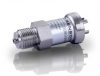 DMP 335 All Welded Stainless Steel Diaphragm Pressure Sensor
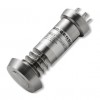 DMP331P Hygienic Flush Pressure Transmitter
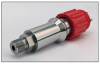 SSPT Subsea Wet-Mateable Electrical Connector Pressure Sensor
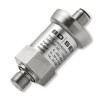 DMP343 Low Range Pneumatic Pressure Sensor
- 20 Pa DP range 0-10V output air pressure sensor for building management use
- Brake line pressure sensor to measure up to 4000 psi g with 0-10Vdc signal
- -0.9 to +2.2 bar g Autoclave pressure transducer
- 300 mmHg absolute vacuum pressure transducer with 10 volts output
- High pressure homogenizer engine oil pressure sensor with 60000 psig range and 0-10Vdc output
- Popcorn maker pressure transducer with 90 psig range and 200 degC air temperature tolerance
- Water pump input/output testing pressure sensor with 30 psi absolute range
- 10 bar water mains pressure sensor with overpressure protection for commercial buildings
- Manufacturing automation absolute pressure sensor with 100psia range and 0-10Vdc out
Find out more about 0-10 Volts Output Pressure Transducers to determine which product options and capabilities will best meet your application requirements.
Pressure transducers engineered to deliver a 0-10 Volt DC output signal are specifically designed for applications requiring a high-level analog voltage proportional to the measured pressure. These instruments incorporate integral amplified signal conditioning electronics, a crucial feature that enhances the raw sensor signal, making it more robust and suitable for transmission and direct interfacing with a variety of control and data acquisition systems commonly found in industrial and research environments. The amplification process boosts the signal level, improving the signal-to-noise ratio and reducing susceptibility to electrical interference, which is particularly beneficial when long cable runs are necessary or when operating in electrically noisy plant conditions.
The internal signal conditioning circuitry often extends beyond simple amplification, frequently including features such as temperature compensation to maintain accuracy across varying operational temperatures, and linearization to ensure a consistently proportional relationship between pressure input and voltage output. This sophisticated onboard processing minimizes the need for external signal conditioning components, simplifying system design and integration for engineers. The resulting 0-10Vdc output is a widely adopted standard, readily accepted by Programmable Logic Controllers (PLCs), Distributed Control Systems (DCS), data loggers, and panel meters, facilitating seamless integration into existing or new measurement and control loops without requiring specialized input modules.
These transducers are typically available in either a 3-wire or 4-wire configuration, offering flexibility depending on the specific application requirements. In a 3-wire setup, the connections usually consist of a power supply line, a common ground, and the 0-10V signal output line. This configuration is often chosen for its relative simplicity and reduced wiring complexity, suitable for many standard industrial applications. Proper attention must be paid to the common ground to avoid potential ground loop issues, especially in complex systems with multiple ground points.
Alternatively, a 4-wire configuration provides dedicated connections, typically two for the power supply (Power+ and Power-) and two for the signal output (Signal+ and Signal- or a signal output and a dedicated signal ground/reference). This separation can offer enhanced signal integrity and noise immunity, particularly by isolating the power return path from the signal reference. For applications demanding the highest precision or operating in environments with significant electrical noise or long transmission distances, the 4-wire setup, sometimes offering a true differential output, can be advantageous in mitigating issues like voltage drop in power lines affecting the signal reference.
The 0-10Vdc output signal itself is a direct representation of the calibrated pressure range of the transducer. For instance, a transducer specified for a 0-100 bar range will output 0V at 0 bar and 10V at 100 bar, with the voltage scaling linearly in between (e.g., 5V at 50 bar). This straightforward relationship simplifies programming and interpretation within the control system. Instrument technicians and calibration engineers must ensure that the input impedance of the receiving device (e.g., PLC analog input module) is sufficiently high to prevent loading of the transducer’s output, which could otherwise lead to inaccurate voltage readings. Careful consideration of shielding and grounding practices for the interconnecting cables is also paramount to fully realize the benefits of the amplified, conditioned signal.
Common use cases for 0-10V output pressure transducers span a wide array of industrial and research settings. They are frequently employed in hydraulic systems for monitoring line pressures in manufacturing machinery, ensuring operational parameters are maintained for consistent production quality. In pneumatic control systems, these transducers provide feedback on air pressure for automated processes. HVAC applications often utilize them for measuring duct static pressure, filter differential pressure, or chilled/hot water line pressures, feeding data into Building Management Systems (BMS) for optimized energy consumption and comfort control. Research and development laboratories integrate these transducers into test stands and experimental setups for precise pressure data logging, where their compatibility with standard data acquisition hardware is a key benefit. Other applications include monitoring water levels in tanks by measuring hydrostatic pressure, controlling pump systems in water treatment facilities, and integration into agricultural machinery for tasks like monitoring sprayer pressure.
Product Help
Checklist for 0 to 10 volts output pressure transducer requirements
Define your 0-10V output signal pressure transducer requirements using this checklist:
- Pressure range?
- Output signal? 0-10 volts
- Accuracy?
- Electrical connection?
- Process connection?
- Process media type?
- Temperature range?