
Sensors for use with seawater or protected from salt spray corrosion in marine environments. Select instruments with titanium, ceramic, plastic or marine bronze parts which have a high resilience to corrosion from salt water.
Sensors designed for reliable operation in seawater or marine environments subject to salt spray corrosion demand meticulous material selection to combat the aggressive, chloride-rich conditions. This category features instruments constructed with highly resilient materials such as specific titanium alloys, advanced ceramics like alumina and zirconia, engineered plastics including PEEK and PVDF, and specialized marine bronze alloys. These choices are critical for preventing electrochemical degradation, pitting, and crevice corrosion, ensuring long-term accuracy and durability for applications ranging from oceanographic research and desalination plants to aquaculture monitoring and equipment on marine vessels, where resistance to both direct immersion and atmospheric salinity is paramount.
 Sea water temperature probe and display for depth to 100 metres - Robust and reliable system for measuring sea water temperature at depths to 100 meters. Features a marine bronze sensor and a wall-mounted display with relay outputs and Modbus communication.
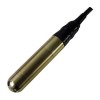 SDI-12 submersible tide level gauge for harbour navigational safety - Monitor coastal sea levels and harbor depths with a low-power digital interface sensor built to withstand abrasive silts and corrosion in demanding littoral zones.
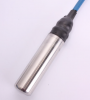 STT-26 Submersible Temperature Probe and Transmitter
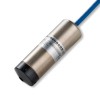 LMK458 Marine Approved Hydrostatic Level Transmitter
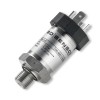 DMK457 Marine Approved Pressure Transmitter
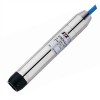 ATM/N Titanium Submersible Hydrostatic Pressure Transmitter
- High-accuracy sea level monitoring for high-salinity marine environments - Robust hydrostatic solution for sea level monitoring in high-salinity environments using marine bronze and ceramic sensing technology r with high-frequency data sampling.
- Tidal level measurement with SDI-12 interface seawater level sensor - Marine bronze submersible sensor for accurate tidal level measurement with SDI-12 for seamless integration with existing data acquisition and transceiver systems in coastal environment
- Dockside sea water tide level transmitter up to 6 metres depth - Pressure transmitter for measuring depth of tide in a dock from 0 to 6 metres of seawater.
- 300 foot sea depth waterproof pressure sensor with 0-5V signal - Waterproof submersible pressure sensor for lowering to ~300 feet below sea level.
- 1-5Vdc output, 2.5m range, salt water ballast tank level sensor - We want a 1-5Vdc output submersible pressure sensor which is seawater compatible to monitor the level of a salt water ballast tank over a range of 0 to 2.5 metres.
- Salt water pump pressure sensor & gauge with 250 psi range - I'm looking for a pressure sensor to use on a salt water pump to measure pressures between 100 and 250 psi which includes a digital gauge
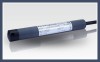 LMK 806 Plastic 21mm diameter Submersible Level Probe
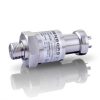 DMK 458 Seawater Low Range Pressure Transmitter
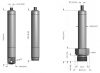 LMK 487 Submersible Ballast Tank and Draught Level Pressure Transmitter
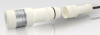 LMK 858 Plastic Submersible Liquid Level Sensor with Removable Cable
- Hydrophone array submersible 200 meter seawater depth sensor - Submersible pressure sensor which can be connected at the end of our hydrophone cable to measure the water depth.
- Height & temperature of water sensor for tidally inundated tunnel - We have an installation which involves measuring equipment in a tidally inundated tunnel. We need to know if there is water in the tunnel and the height and temperature of the water.
- Seawater Reverse Osmosis (SWRO) compatible pressure sensor - We have had some problems with our pressure transmitters for SWRO, please could you advise a pressure transmitter which is designed for use with sea water
- River & Coastal Water Submersible Level Sensor with SDI-12 interface - The most popular device is the SLS-D submersible level transmitter with SDi-12 output, this can be supplied with various measurement ranges and cable lengths to suit the installation. There is also the SLS-DMB which is a ceramic based sensor with a Marine Bronze housing which is suitable for permanent submersion in estuary and seawater installations. USB-SDI12-PRO […]
- 2 bar g sea water pressure transmitter for marine engine cooling system - 4-20mA (2 wire) transmitter for monitoring sea water pressure up to 2 bar gauge on the cooling system of a marine diesel engine.
- Pressure monitoring in corrosive brine transfer for water treatment - Seawater resistant pressure transmitter for pump control when transferring corrosive brine from a bulk salt saturator to water softener day tanks.
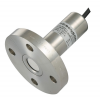 LMK457 Marine Approved Level Transmitter
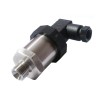 IMP Ceramic Strain Gauge Pressure Transducer
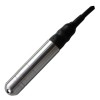 S12C SDI-12 Seawater Pressure & Temperature Transducer
- SWL Marine Bronze Submersible Level Sensor
- USV fire suppression seawater pressure monitoring using wireless sensor system
- Monitoring high-pressure seawater pumps on merchant vessels with submersible pressure transmitters
- Marine air lubrication system submersible seawater resistant air pressure transmitter
- Abstraction pump protection using a screw-on hydrostatic level transmitter in a tidal river
- Desalination plant feed tank submersible level sensor
- Floating dry dock ballast tank 14ft range 4-20mA output submersible seawater level sensor
- Reverse osmosis desalination plant seawater pressure sensor with 1,500 psig range and 4-20mA output
- Seawater depth sensor with I2C output for aquaculture underwater camera integration
- Low power tide gauge sensor for remote seawater level monitoring
- Dock bridge tidal flap submersible level transmitter with sea water compatibility
- High pressure sensing in containerized reverse osmosis systems
- Durable temperature probe for harbour swimming facilities
- Sea Water Resistant Pressure Transmitters - Find robust 4-20mA pressure transmitters designed to resist seawater corrosion. Ideal for ship sytems, desalination plants, subsea & coastal monitoring.
- Sea, Brackish or Salt Water Submersible IP68 Depth & Level Sensors - Explore IP68 submersible depth & level sensors designed for long-term use in sea, salt, and brackish water. Featuring corrosion-resistant materials like Titanium & Ceramic.
- Sea Water Resistant Ship Use Certified Pressure Transmitters - These pressure transmitters are specifically engineered to handle the harsh conditions found in shipboard and marine environments. Constructed with corrosion-resistant wetted parts suitable for seawater and certified for marine use
- Brackish Water Hydrostatic Liquid Level Sensors - Brackish water hydrostatic level sensors are specifically designed for continuous submersion in coastal and estuarine environments where fresh and saltwater mix
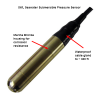 Seawater Hydrostatic Liquid Level Sensors - Submersible hydrostatic level sensors designed for long-term immersion in seawater, engineered with corrosion-resistant materials to withstand harsh coastal and offshore environments.
Find out more about Seawater Compatible Sensors to determine which product options and capabilities will best meet your application requirements.
The selection of appropriate materials is paramount when designing or specifying sensors intended for deployment in seawater or environments prone to salt spray corrosion. The highly conductive and chloride-rich nature of seawater presents a formidable challenge, accelerating various forms of corrosion that can compromise sensor integrity, accuracy, and operational lifespan. Instruments destined for such marine applications necessitate wetted parts and housings constructed from materials demonstrating exceptional resilience to these aggressive conditions.
Titanium alloys, particularly grades like Grade 2 (commercially pure) and Grade 5 (Ti-6Al-4V), are frequently specified due to their outstanding performance. Titanium forms a highly stable, tenacious, and self-healing passive oxide layer (TiO2) that provides excellent protection against general corrosion, pitting, and crevice corrosion, even in deaerated or high-velocity seawater. This inherent resistance makes titanium suitable for critical components such as pressure diaphragms, sensor bodies, and fasteners in long-term subsea deployments, including oceanographic moorings, remotely operated vehicles (ROVs), and autonomous underwater vehicles (AUVs).
Ceramic materials, such as alumina (Al2O3), zirconia (ZrO2), and silicon carbide (SiC), offer another tier of exceptional chemical inertness and corrosion immunity. These materials are not susceptible to electrochemical corrosion and can withstand a wide range of chemical attacks beyond just salinity. Their hardness and wear resistance are also beneficial. Ceramic elements are often employed in sensor faces, insulating components, or as robust transducer diaphragms in applications like conductivity cells, dissolved oxygen sensors used in aquaculture monitoring systems, or within instrumentation for desalination plants where both high salinity and varying chemical concentrations are encountered.
Engineered plastics play a crucial role in seawater compatible sensor design, offering a combination of chemical resistance, electrical insulation, and often a more cost-effective solution for complex geometries. Polymers like PEEK (Polyether Ether Ketone) exhibit remarkable mechanical strength at elevated temperatures alongside resistance to hydrolysis and a broad spectrum of chemicals. PVDF (Polyvinylidene Fluoride) is another excellent choice, known for its high purity, UV resistance, and robust defense against salts and acids, making it suitable for sensor housings or flow-through components in water quality monitoring systems. PTFE (Polytetrafluoroethylene) provides near-universal chemical resistance and low-friction surfaces, while more common plastics like Polypropylene (PP) or PVC (Polyvinyl Chloride) can be effective for less structurally demanding parts or in splash zone applications where constant immersion isn’t the primary concern.
Marine bronze alloys, specifically certain aluminum bronzes (e.g., C63200, C95500, C95800) and nickel-aluminum bronzes (NAB), are also utilized. These alloys form a protective, adherent surface film of aluminum oxide and cuprous oxide, which offers good resistance to seawater corrosion and, importantly, often exhibits a degree of biofouling resistance. This makes them suitable for components like valve bodies, sensor housings on ship hulls, or fittings in seawater cooling circuits. However, careful consideration of galvanic compatibility is essential when incorporating marine bronzes with other metallic materials in a sensor assembly to prevent accelerated corrosion of the less noble metal.
Beyond direct immersion, sensors operating in marine environments, such as those on coastal installations, offshore platforms, or onboard vessels, must also be protected from salt spray. Airborne saline particles can deposit on surfaces, and in the presence of moisture, create a highly corrosive electrolyte. Therefore, the external housing, connectors, and seals of such sensors must also be fabricated from, or adequately protected by, these corrosion-resistant materials to ensure long-term reliability and prevent premature failure in applications like meteorological buoys, structural health monitoring sensors on bridges, or equipment within engine rooms of marine craft. The meticulous choice of these specialized materials ensures that sensors maintain their performance specifications and operational integrity even when subjected to the relentless corrosive forces of saltwater and marine atmospheres.