
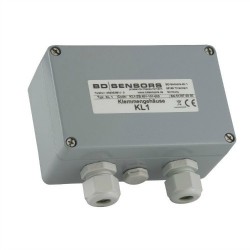
 Submersible cable is more expensive because it has to be reinforced to support the sensor plus its own weight in deep holes without stretching which would lead to a change in sensor position and ultimately sensor calibration.
A submersible cable also has a vent tube running through it to allow gauge reference pressure sensors access to ambient air pressure which is essential for accurate level measurement. Due to this extra complexity, submersible cable are more expensive than general purpose sensor cable and therefore the KL1 junction box helps reduce the cost of installations whilst providing a vent which prevents moisture ingress down the cable.
Although most instruments are not able to survive a direct lightning strike it is possible to protect nearby instrumentation from voltage surges which are less severe but can be just as damaging to sensitive sensor electronics without adequate discharge protection. The KL1 submersibe sensor junction box includes the option for protection from a 10 kiloamp discharge current.
If a PT100 temperature sensor probe is included in the installation the KL1 terminal box can include an option for a PT100 transmitter to convert the output from a platinum resistance thermometer to a 2 wire, 4 to 20 mA output signal.
Featured vented submersible pressure sensor products
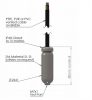 Submersible rainwater tank level sensor for measuring 3.5m depth - Low budget price rainwater level sensor with 3.5 metres maximum water depth (0.35 bar), 4-20mA output, 15 volt supply, and typical 0.5% accuracy
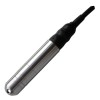 River level sensor for run-of-the-river hydropower monitoring up to 4m - Vented pressure river level sensor for measuring water level up to 0.4 bar in run-of-the-river hydroelectricity systems.
Related Help Guides
- Choosing PVC, PUR, FEP and TPE cable types
- Determining the signal cable length of a suspended liquid level transducer
- IP65 sealing a vented gauge pressure transmitter with a DIN plug
Related Application Questions and Answers
Contact us about this Improve the electrical termination of vented submersible pressure sensors page to request more information, or to discuss your application requirements.