
Suction pressure sensors for measuring negative gauge reference pressure. Select pressure sensors for measuring the level of pressure below ambient atmospheric pressure.
Suction pressure sensors are specialized instruments designed to accurately measure pressures below the ambient atmospheric level, often referred to as negative gauge pressure or vacuum. These devices are crucial for applications where the creation, monitoring, and control of sub-atmospheric conditions are paramount, providing a precise indication of the pressure deficit relative to the surrounding environment. From industrial automation and process control to research and development, suction pressure sensors with a negative gauge reference ensure operational efficiency, safety, and the integrity of vacuum-dependent processes.
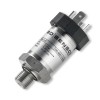 DMK457 Marine Approved Pressure Transmitter - Marine approved pressure transmitter with 4-20mA current loop output for shipbuilding with optional CuNiFe housing for sea-water compatibility
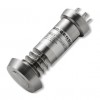 DMP331P Hygienic Flush Pressure Transmitter - Sanitary pressure sensor wth exposed diaphragm with no crevices for high temperatures up to 300 Degrees Celsius in ranges from 100mb up to 40 bar gauge or absolute
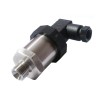 IMP Low Cost Pressure Sensor - Versatile low price pressure sensor with a wide selection of electrical and mechanical options for customisation.
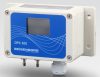 DPS300 User Switchable Pressure Range, Volts or Current Output Low DP Sensor - The DPS 300 is a low range HVAC differential pressure sensor. The lowest possible pressure range is 0...100 pascals. 2 or 3 switchable pressure ranges, plus volts or current output are included with most standard configurations.
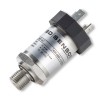 DMP457 Marine Approved Pressure Transmitter - Marine approved stainless steel diaphragm pressure transmitter with 4-20mA current loop output for shipbuilding in ranges from 100mb to 600 bar gauge or absolute.
- IMP Ceramic Strain Gauge Pressure Transducer - Ceramic strain gauge pressure transducer with a 2mV/V or 10mV/V output signal in pressure ranges from 1 bar up to 700 bar gauge or absolute.
- -10…30 kPa g compound range inert gas pressure transmitter for ship IG system
- ATEX approved negative 10 mbar vacuum pressure transmitter
- Landfill biogas extraction well depressure pressure transmitter
- Dredging vacuum pressure Transmitter
- Solvent tank nitrogen blanketing monitoring with all welded IS/SIL2 bidirectional pressure transmitter
- Measuring negative pressure in hospital construction zones with a low range differential pressure transducer
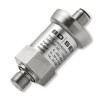 Suction Pressure Transmitters - Find suction pressure transmitters designed for precise negative pressure measurement relative to ambient. Ideal for industrial vacuum control and monitoring applications.
- Suction Pressure Transducers - Choose suction pressure transducers with 0-5V or 0-10Vdc outputs. Ideal for measuring suction from millibars to 1 bar, ensuring linear and precise vacuum monitoring.
Send us your enquiry to discuss your Suction Pressure Sensors application with a product specialist, and they will help you select the best option to suit your specific requirements.
Suction pressure sensors are specifically engineered to quantify pressures below the prevailing local atmospheric pressure, a domain often referred to as negative gauge pressure or vacuum. Unlike absolute pressure sensors that measure against a perfect vacuum, or standard gauge sensors that measure positive pressure relative to ambient, suction pressure sensors provide a precise indication of how far the pressure has dropped below the surrounding atmospheric level. This capability is crucial in applications where a specific level of vacuum or sub-atmospheric condition must be established, monitored, and controlled with accuracy. The design of these sensors often involves careful consideration of diaphragm sensitivity and movement in the negative direction, ensuring reliable performance even when measuring slight deviations below ambient pressure.
The term negative gauge reference pressure is central to understanding the operation of these devices; it means the sensor is calibrated with atmospheric pressure as its zero point, and any decrease from this point registers as a positive reading on a vacuum scale or a negative reading on a compound gauge scale. Selecting the appropriate suction pressure sensor requires attention to the required measurement range, the nature of the media being measured (which might be drawn into the system by the suction), and the desired accuracy, particularly at the lower end of the sub-atmospheric spectrum. For instance, in industrial automation, a pick-and-place robot might use suction cups, and the sensor verifies that sufficient negative pressure is achieved to securely grip an item before initiating a transfer, preventing drops and ensuring process integrity.
In process engineering, suction pressure sensors are integral to vacuum conveying systems, where bulk materials are moved through pipelines by creating a pressure differential. They help optimize flow rates and detect blockages by monitoring the suction levels at various points. Similarly, in research environments, such as altitude simulation chambers or experiments requiring controlled vacuum conditions for material processing or coating, these sensors provide critical data for maintaining the integrity of the experimental setup. Other applications include monitoring the intake manifold pressure in internal combustion engines to optimize fuel efficiency and performance, managing vacuum levels in degassing systems to remove dissolved gases from liquids, and ensuring proper operation of vacuum pumps and ejectors by measuring their inlet pressure. The choice of sensing technology, whether piezoresistive, capacitive, or other, will also depend on the specific demands for stability, response time, and resilience to potential contaminants encountered in these diverse suction applications. Calibration routines for these sensors must accurately reflect the negative gauge reference, ensuring that readings validly represent the pressure deficit relative to the ambient environment.