
SDI-12 hydrostatic liquid level sensors for remote environmental monitoring. Low power, digital output, ideal for battery-powered data loggers in hydrology & water resource management.
SDI-12 hydrostatic liquid level sensors are specifically engineered for remote, low-power environmental monitoring applications. These sensors utilize the SDI-12 communication protocol, a serial digital interface ideally suited for battery-powered data loggers and telemetry systems. Unlike traditional analog sensors, SDI-12 devices provide a robust, noise-immune digital output and support two-way communication for remote configuration and diagnostics. Ideal for deployments in hydrology, water resource management, and flood warning systems, these sensors offer precise liquid level measurements, durable construction, and simplified integration with multi-sensor networks, to provide reliable and temperature compensated measurements.
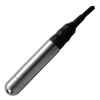 S12S SDI-12 Coms IP68 Pressure and Temperature Sensor - Combined pressure and temperature sensor with a 1200 baud rate serial data interface as defined by the SDI-12 support group.
- S12C SDI-12 Seawater Pressure & Temperature Transducer - SDI-12 protocol transducer for sensing water depth level and temperature in seawater, brackish water, tidal water, saline water or leachate.
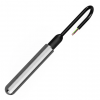 SLS-D SDI-12 Digital Interface Submersible Level Sensor - This submersible level sensor has SDI-12 digital communications which provides the level and temperature readings as a serial output using the SDI-12 version 1.4 protocol.
- Submersible water level and temperature probe with SDI-12/USB interface for freshwater monitoring
- Low power consumption SDI-12 lake water level sensor
- Irrigation water channel and storage dam SDI-12 submersible level sensor with 10m range
- Roadside creeks & streams flood warning SDI-12 coms water level sensor
- Evaporation pan SDI-12 environmental data interface water level sensor
- Tidal level measurement with SDI-12 interface seawater level sensor
Send us your enquiry to discuss your SDI-12 Hydrostatic Liquid Level Sensors application with a product specialist, and they will help you select the best option to suit your specific requirements.
SDI-12 hydrostatic liquid level sensors represent a specialized class of submersible pressure transducers specifically designed for integration with low-power data logging and telemetry systems in remote environmental monitoring applications. The defining feature of these sensors is their adherence to the SDI-12 (Serial Digital Interface at 1200 baud) communication protocol, a standard particularly well-suited for battery-powered instrumentation requiring minimal energy consumption.
Unlike analog output level sensors, SDI-12 devices transmit data digitally, providing a robust and noise-immune signal, crucial for maintaining data integrity over long cable runs often encountered in field deployments. This digital communication also allows for multiple sensors to be connected on a single bus, simplifying wiring and reducing overall system complexity. The sensor reports a calibrated liquid level directly, requiring no additional signal conditioning or interpretation by the receiving device.
The SDI-12 protocol facilitates two-way communication, enabling remote configuration and diagnostics of the sensor. This includes the ability to adjust measurement parameters, initiate self-tests, and retrieve sensor-specific identification and calibration data. This is a significant advantage in remote deployments, such as hydrological monitoring stations, groundwater observation wells, or surface water level gauging in rivers and canals.
These hydrostatic level sensors are typically constructed with robust materials like stainless steel or marine-grade polymers to withstand prolonged submersion and exposure to various environmental conditions. The pressure sensing element, typically a piezoresistive diaphragm, is isolated from the measured liquid by a protective barrier, ensuring long-term reliability and accuracy. Some models include additional protections such as built-in surge suppression, to provide extra protection from electrical interference, such as nearby lightning strikes.
Product Advantages
SDI-12 hydrostatic liquid level sensors offer key advantages for remote monitoring, including ultra-low power consumption, digital noise immunity, multi-sensor bus integration, simplified remote configuration, and durable construction suited for harsh environments.
Low Power Consumption
Designed for off-grid and battery-powered applications, SDI-12 sensors operate with minimal energy usage. They remain in a low-power sleep state until queried by a data logger, significantly extending battery life and reducing solar panel capacity requirements in remote locations.
Digital Signal Reliability
Unlike traditional analog sensors, SDI-12 devices transmit calibrated digital signals over the SDI-12 bus. This ensures high resistance to electrical noise and eliminates signal degradation across long cable runs typical in hydrological installations.
Multi-Sensor Bus Networking
Multiple SDI-12 sensors can share a single 3-wire data bus connected to one port on a data logger. This multi-drop capability reduces field wiring complexity, lowers installation costs, and allows for straightforward expansion of monitoring networks.
Two-Way Digital Communication
The bidirectional SDI-12 protocol supports remote diagnostics, parameter configuration, and identification retrieval directly through the data logger. This enables remote troubleshooting and calibration without requiring physical site visits.
Product Applications
SDI-12 liquid level sensors are widely used across diverse environmental monitoring applications including irrigation and water resource management, groundwater observation, flood warning networks, coastal and tidal level tracking, and wastewater and landfill management.
Irrigation & Water Resource Management
Deployed in canals, rivers, and storage dams, SDI-12 sensors monitor surface water levels and stage to optimize distribution and water resource management.
Groundwater & Well Monitoring
These low-power sensors are installed in boreholes, deep wells, and observation aquifers to continuously track groundwater levels for environmental research and supply management.
Flood Warning & Stream Gauging
Ideal for roadside creeks, streams, and rivers, SDI-12 devices provide reliable, noise-immune digital telemetry to deliver early flood warnings during extreme weather events.
Tidal & Seawater Level Measurement
Constructed with corrosion-resistant materials, specialized transducers monitor tidal height, coastal waters, brackish estuaries, and marine environments.
Wastewater & Landfill Leachate Monitoring
Durable SDI-12 level sensors provide continuous level measurements in industrial wastewater treatment facilities and landfill leachate collection basins.
Product Selection
Selecting the right SDI-12 hydrostatic liquid level sensor requires careful consideration of environmental conditions, measurement parameters, system compatibility, and operational constraints to ensure reliable remote monitoring and long service life in off-grid deployments.
Measurement Range & Depth
Determine the maximum expected liquid depth and potential flood levels to select an appropriate pressure range. Choosing a sensor range close to your operational depth optimizes measurement resolution and accuracy while providing sufficient head headroom for unexpected high-water events.
Media Compatibility & Materials
Evaluate the fluid environment to select suitable wetted materials. Standard stainless steel housings are suitable for freshwater, while marine-grade alloys, titanium, or specialized elastomer seals are required for seawater, brackish water, or corrosive landfill leachate applications.
Power Supply & Energy Budget
Verify the supply voltage requirements and standby current draw of the sensor against your data logger’s power budget. Ultra-low current sleep modes and fast warm-up times are essential for maximizing battery life in solar or battery-powered installations.
Cable Length & Venting Requirements
Specify continuous submersible cable lengths to avoid underwater splices. For gauge pressure measurements, vented cables with atmospheric reference tubes and desiccant cartridges ensure accurate level readings unaffected by barometric pressure changes.
Environmental Protection & Surge Suppression
For outdoor or exposed installations prone to lightning or electrical transients, choose sensors with integrated lightning surge protection and IP68 waterproof ratings to maintain long-term system reliability.
Product Installation
Proper installation of SDI-12 hydrostatic liquid level sensors is critical for ensuring reliable measurement accuracy, protecting equipment from environmental hazards, and maintaining stable long-term operation in remote monitoring applications.
Physical Mounting & Sensor Positioning
Secure the sensor lower than the minimum expected liquid level, ideally suspended within a stilling well or protective pipe to shield it from turbulence and mechanical shock. Ensure the sensing diaphragm remains fully submerged and free from sediment accumulation at the bottom of the well or water channel.
SDI-12 Wiring & Bus Connection
Connect the 3-wire SDI-12 interface (Power, Data, Ground) securely to the data logger. When connecting multiple sensors to the same bus, ensure each device is assigned a unique SDI-12 address prior to full deployment.
Vented Cable & Desiccant Maintenance
For gauge pressure sensors, route the vented cable to an enclosure above high-water levels without kinking or bending the internal vent tube. Attach a fresh desiccant cartridge or vent filter to prevent moisture condensation inside the tube, which can cause measurement errors or sensor damage.
Product Troubleshooting
Troubleshooting SDI-12 hydrostatic liquid level sensors involves systematically checking power supply levels, sensor addressing, physical connections, and communication protocols to resolve issues with signal loss, inaccurate readings, or sensor unresponsiveness.
Power Supply & Voltage Checks
Ensure the data logger or external power source provides adequate operating voltage within the sensor’s specified range (typically 9.6 to 16 VDC). Check for excessive voltage drop across long cable runs and verify that the power supply can support peak warm-up currents when measurements are initiated.
SDI-12 Address Verification
Verify that each sensor connected to a shared SDI-12 bus has a unique address (0–9, A–Z, a–z). Address conflicts between multiple sensors on the same 3-wire bus will cause communication failures or corrupted data responses.
Cable & Vent Tube Inspection
Inspect the submersible cable for physical damage, kinks, or water ingress. For gauge pressure sensors, confirm that the atmospheric vent tube is unblocked, dry, and fitted with an active desiccant cartridge to prevent moisture accumulation that causes reading drift.
Data Logger Communication & Commands
Test communication using standard SDI-12 commands such as the acknowledgement command (?!), identification query (aI!), and measurement request (aM!). Ensure the logger’s baud rate is set to 1200 and timing parameters allow sufficient response time following a measurement command.