
Low-range liquid level sensors engineered for shallow depths in rivers, weirs, drains, sewers, and small tanks. Submersible and external threaded options available.
Accurately measuring liquid levels in environments characterized by shallow depths or within small volume containers requires specialized instrumentation designed for high sensitivity at low hydrostatic pressures. This category features low-range liquid level sensors engineered for exceptional resolution and stability, suitable for applications ranging from environmental monitoring in streams, weirs, and drains, to precise process control in small dosing systems or laboratory storage tanks. Whether your application demands a submersible probe for direct immersion in open channels and sumps or an externally mounted sensor with a threaded process connection for seamless vessel integration, these instruments deliver the precise low-level hydrostatic data critical for tasks where conventional, higher-range sensors lack the necessary measurement fidelity.
 Flood prevention in underground pump rooms using 4-20ma hydrostatic level sensors - Prevent pump room flooding by integrating a low-range submersible hydrostatic level sensor into a VFD for early leak detection and automated system protection.
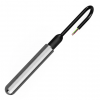 Monitoring groundwater level in jet fuel contaminated wells using SDI-12 hydrostatic sensor - Monitor fluid levels in underground wells containing water and Jetfuel A1 mixtures using SDI-12 protocol hydrostatic level sensors
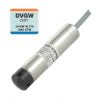 LMP307 Submersible Level Transmitter
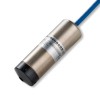 LMK458 Marine Approved Hydrostatic Level Transmitter
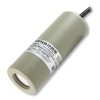 LMK809 Plastic Submersible Low Level Transmitter
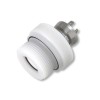 LMK351 High Overpressure Flush Level Transmitter
- Industrial dishwasher 0-1m 0-10Vdc water level sensor - Compact and economically processed submersible hydrostatic pressure sensor, which can be submerged in or mounted externally to an industrial dishwashers integrated water tank.
- Ebb & Flow (Flood & Drain) Horticulture Hydroponic System 100mm Water Level Sensor - We are looking for a level sensor for measuring from 0 to 100mm of water height, in an ebb and flow horticulture hydroponic system used in greenhouses and indoor farms.
- Water level transmitter for monitoring sump pit water depth - Low range water depth sensor with a 4-20mA output, for connecting to a PLC to control a sump pump and submerging into a pit to monitor the level
- Storm surge protected low range submersible river level transmitter - This submersible level transmitter offers accurate low range water level monitoring with high overpressure resistance for storm surge protection in rivers
- Cooling tower basin water level transmitter - Ensure efficient cooling tower operation with the LMK382 submersible level transmitter. Its low-range measurement capabilities and robust design make it ideal for monitoring basin water levels, preventing pump damage, and optimizing water usage.
- High temperature mini sewage tank level sensor - Submersible level sensor for low-range sewage applications in small, high-temperature wastewater tanks.
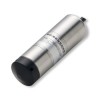 LMK382 Low Range IP68 Waste Water Level Transmitter
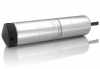 DCL 551 RS485 Modbus RTU Submersible Low Range Fuel, Oil & Wastewater Level Probe
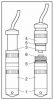 LMP 308 Removable Waterproof Cable Connection Water Level Sensor
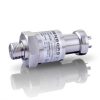 DMK 458 Seawater Low Range Pressure Transmitter
- Surface water hydrostatic level sensor for shallow stream - Submersible hydrostatic level sensor and a vented terminal box with surge protection provide an accurate and robust solution for monitoring water levels in shallow streams.
- 200cm range 0-5Vdc output submersible road flood stream depth and PT1000 sensor - Rugged submersible sensor for road flood stream monitoring. 0-200cmH2O range, 0-5Vdc output, PT1000 temperature sensor, 316L stainless steel, IP68 cable.
- Rainwater harvesting depth sensor for 1 metre deep tank - Affordable and reliable depth sensor for rainwater harvesting tanks. Submersible design, 316L stainless steel, ideal for underground installations.
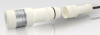 LMK 858 Plastic Submersible Liquid Level Sensor with Removable Cable
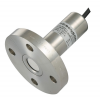 LMK457 Marine Approved Level Transmitter
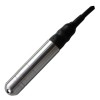 S12S SDI-12 Coms IP68 Pressure and Temperature Sensor
- LMP307T Submersible Level and Temperature Transmitter
Find out more about Low Range, Shallow Depth Liquid Level Sensors to determine which product options and capabilities will best meet your application requirements.
Accurate liquid level measurement in applications limited to shallow depths or small volumes presents unique challenges, requiring sensors specifically engineered for low-range sensitivity and high resolution. These instruments are crucial where small variations in height represent significant proportional changes or are critical for process control or environmental monitoring, demanding high fidelity measurements often well below 1 metre of water column (mWC).
Sensors designed for shallow depth applications must provide reliable readings even when dealing with minimal hydrostatic pressures, often operating down to ranges of just a few centimetres or inches water gauge. Achieving precise measurement at these low ranges demands exceptional sensor stability, minimal thermal zero and span shifts, and high signal-to-noise ratios to discern meaningful level changes, particularly near the zero point or empty state of a tank or channel.
One common configuration involves submersible hydrostatic level transmitters optimized for shallow immersion. These are frequently deployed in open channel flow measurement scenarios such as monitoring water levels upstream of weirs (e.g., V-notch, Cipolletti, rectangular) or within flumes (e.g., Parshall, Palmer-Bowlus) where level corresponds directly to flow rate calculations. Material selection is critical for deployment durability, especially in drains, culverts, or sewer systems where corrosive media or abrasive suspended solids are encountered; robust housings constructed from materials like PVDF, specific grades of stainless steel (e.g., 316L), or titanium, coupled with clog-resistant nose cone designs, enhance operational longevity. Even at shallow depths, proper venting via an integrated cable tube to the surface is essential to ensure accurate gauge pressure measurement relative to ambient barometric pressure.
Alternatively, for small tanks, buffer vessels, or standpipes, externally mounted level sensors featuring threaded process connections (such as G1/2, 1/2 NPT, or custom flanges) offer a practical installation solution. These sensors measure the hydrostatic head from outside the container, typically installed via a threaded boss or tapping point near the vessel base. This approach is common in laboratory R&D setups, chemical dosing skids, header tanks for gravity-fed systems, small batch processing applications, and machine lubricant reservoirs where keeping electronics isolated from the process fluid is advantageous or where internal access for submersible sensor installation is impractical. Careful consideration must be given to the precise mounting elevation relative to the desired zero measurement point and the potential for process media crystallization or build-up affecting the sensing diaphragm.
Key technical considerations for engineers specifying low-range level sensors include excellent long-term zero stability and effective electronic temperature compensation, as even minor ambient or process temperature fluctuations can induce significant apparent level shifts in low-pressure measurements. High-resolution output signals, whether standard analog (e.g., 4-20mA configured for the narrow span) or digital communication protocols (e.g., Modbus RTU, SDI-12), are vital for capturing subtle level fluctuations accurately within control systems or data loggers. While measuring shallow depths, adequate overpressure tolerance remains an important specification to ensure sensor survivability during potential process upsets, filling surges, or accidental handling during installation and maintenance. The selection between different sensing technologies, such as sensitive piezoresistive silicon elements or robust ceramic capacitive cells, will often depend on the interplay between required accuracy, chemical compatibility with the measured liquid, dynamic response needs, and overall budget constraints for the specific shallow depth monitoring task.