
Universal input data loggers are versatile devices designed to acquire and record electrical signals from various sensor types, including pressure, temperature, position, load, humidity, and flow. These data loggers offer a flexible and convenient solution for monitoring and analyzing multiple parameters simultaneously in diverse industrial and research applications.
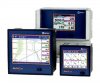 MultiCon Multichannel Controller and Datalogger - Multifunctional digital controller & datalogger for processing the signal from an extensive range of sensors for the purpose of controlling a process or recording data.
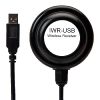 IWR-USB Wireless Sensors to USB Gateway Receiver - The IWR-USB Gateway provides a link between wireless sensors and any PC with a USB connection
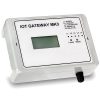 IoT Gateway Wireless Sensors to 2G 3G 4G Modem Receiver - The IoT Gateway allows virtually any sensor to be monitored from anywhere with a Cellular connection.
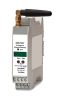 IWR-PORT Wireless Sensors to Ethernet, RS232 or RS485 Gateway Receiver - The IWR-PORT Ethernet Gateway provides a link between wireless sensors and sensor networks and Industrial Ethernet or RS-232/485 networks.
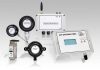 IW Series Industrial Wireless Measurement System - A complete wireless sensor and receiver system for use in industrial applications.
- Vacuum testing PID controller and datalogger for pressure-flow measurement and regulating vacuum
- Compact multichannel indicator for logging mixed pressure and temperature signals
- Negative room pressure monitor and logger for multiple zones
- Resource testing logger for water wells with flow rate monitor & pressure transducer
Send us your enquiry to discuss your Universal Sensor Input Data Loggers application with a product specialist, and they will help you select the best option to suit your specific requirements.
Universal input data loggers are essential tools for engineers and researchers seeking to capture and analyze data from a wide range of sensors. These versatile devices offer a streamlined approach to data acquisition, enabling users to monitor multiple parameters simultaneously with a single instrument.
Product Advantages
Universal input data loggers offer significant operational and financial benefits for industrial and research environments. By unifying diverse signal processing into a single robust platform, these systems streamline deployment, lower hardware costs, and ensure highly dependable measurements across complex data acquisition workflows.
Multi-Input Capability
Universal input data loggers are engineered to seamlessly accept signals from a wide array of sensor formats, including thermocouples, RTDs, thermistors, DC voltage, process current loops, and pulse outputs. This extensive multi-channel compatibility removes the requirement for multiple single-purpose logging devices, greatly simplifying overall system integration, lowering capital equipment expenses, and centralizing data collection across diverse parameters into a single unified architecture.
High Accuracy and Resolution
Designed with high-grade analog-to-digital converters and advanced signal conditioning, these loggers deliver exceptional measurement accuracy and fine signal resolution. They effectively minimize signal drift, low-level electrical noise, and thermal interference, guaranteeing robust data integrity. This precision ensures even minute fluctuations in environmental or process variables are accurately recorded for thorough diagnostics and quality assurance.
Flexible Configuration
Featuring versatile hardware and software configuration options, universal loggers allow users to tailor sampling intervals, scaling factors, linearizations, and alarm thresholds on an individual channel basis. Operators can define custom logging triggers, logic equations, and real-time alert parameters to match highly specific operational requirements, providing dynamic adaptiveness across changing testing conditions.
Data Storage and Retrieval
Equipped with non-volatile internal memory and expandable external storage options, these instruments can record large volumes of continuous measurement data over extended periods without risk of data loss. Stored data sets can be efficiently offloaded using industry-standard communication interfaces such as USB, Ethernet, or RS485, enabling automated integration into centralized databases, analytical software packages, and reporting workflows.
Remote Monitoring
Modern universal input data loggers incorporate advanced remote access options via cellular, Ethernet, or wireless gateways, enabling seamless data transmission to cloud platforms or remote servers. This facility empowers engineering teams to monitor real-time process parameters, perform diagnostics, and receive immediate alarm notifications from hazardous, remote, or unmanned locations without requiring on-site presence.
Product Applications
Universal input data loggers serve as central data acquisition hubs across a wide spectrum of demanding environments, spanning heavy industrial manufacturing, environmental research, facility engineering, and logistics monitoring. By standardizing signal conversion and logging across diverse sensor types, these instruments provide operational visibility, optimize resource efficiency, and ensure critical process safety and regulatory compliance.
Industrial Automation
In complex manufacturing facilities and continuous processing plants, universal loggers continuously record critical variables such as hydraulic pressure, steam temperature, thermal distribution, flow rates, and vibration levels. They integrate directly with machinery instrumentation to provide accurate, real-time diagnostic telemetry, assisting plant engineers with predictive maintenance, fault analysis, and throughput optimization.
Environmental Monitoring
These loggers are widely deployed in research greenhouse facilities, environmental chambers, cleanrooms, and long-term ecology field studies. By interfacing with precise temperature, ambient humidity, soil moisture, barometric pressure, and solar irradiance sensors, they capture stable baseline records required to evaluate microclimates and ensure strict regulatory compliance.
Research and Development
During experimental testing and prototype validation, R&D laboratories rely on universal loggers to acquire synchronized signals from specialized transducers, including strain gauges, load cells, torque sensors, and high-frequency accelerometers. The high resolution and multichannel flexibility allow researchers to thoroughly evaluate structural integrity, mechanical endurance, and thermal behavior under dynamic stress test conditions.
Building Automation
In commercial facilities and smart infrastructure, data loggers support energy management systems (EMS) by auditing HVAC performance, monitoring duct air flow, tracking differential pressures across isolation zones, and recording electrical power usage. They provide baseline performance metrics necessary for LEED certification, indoor air quality compliance, and operational efficiency improvements.
Transportation and Logistics
For cold chain logistics and global freight transportation, loggers provide continuous validation of temperature, relative humidity, and mechanical shock during transit. This continuous auditing protects sensitive cargoes such as biopharmaceuticals, vaccines, perishable food products, and precision electronics, ensuring full compliance with cold-chain storage mandates and quality assurance standards.
Product Selection
Selecting the ideal universal sensor input data logger requires a thorough assessment of your operational environment, sensor types, and data analysis requirements. Evaluating key parameters—such as channel capacity, measurement accuracy, sample rates, memory bandwidth, and physical durability—ensures the instrument seamlessly integrates into your system and delivers reliable long-term performance.
Sensor Compatibility
Verify that the logger supports the specific electrical outputs of your existing or planned sensors, including analog voltage (e.g., 0-10V), current loops (e.g., 4-20mA), resistance temperature detectors (RTDs), thermocouples, and digital/pulse signals. Flexible input conditioning per channel allows mixing different sensor types on a single instrument without requiring external signal converters.
Channel Count
Determine the total number of primary measurement points needed for your application, as well as potential future expansion requirements. Universal data loggers range from compact single- or dual-channel units for localized monitoring to modular, expandable architectures capable of logging dozens of inputs simultaneously across large industrial installations.
Sampling Rate & Resolution
Match the logger’s sampling frequency and analog-to-digital (A/D) resolution to the dynamic nature of your application. High-speed transient events require rapid sampling rates to capture fast fluctuations, whereas slow-changing environmental monitoring benefits from lower sampling speeds with higher bit-resolution for maximum precision and minimal data overhead.
Data Storage & Connectivity
Evaluate internal memory capacity and removable storage options (such as SD cards or USB flash drives) based on logging duration and recording frequency. Additionally, select communication interfaces—such as USB, RS485/Modbus, Ethernet, or cellular gateways—that match your data retrieval workflow, whether manual offloading or automated real-time cloud integration is required.
Environmental & Power Requirements
Consider operating conditions such as ambient temperature ranges, exposure to moisture or dust, and electrical noise levels, selecting NEMA/IP-rated enclosures when necessary. Review power options, choosing between mains AC power, low-voltage DC, battery operation, or solar power depending on whether the installation is located in a factory setting or an off-grid remote site.