• Skip to primary navigation
  • Skip to main content
  • Skip to primary sidebar
SensorsONE

SensorsONE

  • Products
  • Contact

Measuring gauge pressure using a dp sensor

Differential pressure sensors can double as gauge pressure sensors. Here we will explain how a DP sensor is used to measure gauge pressure.

  • Gauge pressure measures pressure relative to the atmosphere.
  • Differential pressure sensors measure the difference between two pressures.
  • A differential pressure sensor can be used as a gauge pressure sensor by leaving one side open to the atmosphere.

Featured differential pressure sensor products
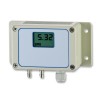
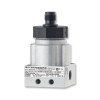
  • Heating appliance chimney draft and barometric pressure testing using differential and absolute sensors - Very low, bi-directional chimney draft pressure and barometric pressure sensor for testing preformance of wood stoves in a research environment.
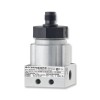
  • PrimAtü 10 Low Cost Low Range Differential Air Pressure Transducer - The PrimAtü 10 low cost low range differential air pressure transducer can detect and display both positive and negative differential pressure variations of very low low pressure ranges from 0.5 up to 1000 mbar/hPa, and output the pressure as a 4-20mA, 0-20mA or a 0-10Vdc analog output.

Gauge pressure is the measurement of pressure relative to the surrounding atmospheric pressure. This is normally achieved by using a sensor which has the reverse side of the sensing diaphragm open to atmosphere via a reference tube or port.

A differential pressure sensor is designed for pressure to be applied to both sides, so the mechanical design and fittings are similar on both sides of the diaphragm.

Even though the reverse side connection of a dp sensor is designed to withstand a range of pressures, and protected against liquids in many cases, it is perfectly okay, despite its underuse, to leave the process connection open and vented to atmosphere.

When pressure is now applied to the forward side connection of the dp sensor, it will be measured relative to atmospheric pressure, operating in exactly the same way as a gauge reference pressure sensor.

Featured differential pressure sensor products
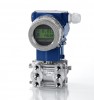
  • Wireless environmental sensors with custom MQTT SCADA system for energy management IoT platform - An energy management specialist required a multi-point wireless sensor network with specific accuracy requirements and a gateway that could output to their own MQTT-based SCADA system. This explains the selection of sensors and the dual gateway solution offered, covering both Modbus RTU and cellular MQTT options.
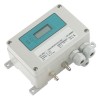
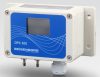
  • DPS Low Differential Pressure Transmitter Using 25 mbar DP sensor on vacuum below 0.2 bar absolute - I would like to measure a differential pressure of 0 to 25 mbar in a vacuum of < 0.2 bar absolute pressure.

Here are the steps involved in measuring gauge pressure using a differential pressure sensor:

  1. Make sure that the reverse or negative side of the sensor is left open to the atmosphere.
  2. Connect the forward or positive side of the differential pressure sensor to the system to be measured.
  3. The pressure that you apply will be measured relative to atmospheric pressure.
  4. The sensor will output a value that corresponds to the gauge pressure.

Related Help Guides

  • Measuring vacuum with negative gauge or absolute ranges
  • Measuring the difference in air pressure between rooms
  • Measuring liquid level in a sealed tank with a hydrostatic pressure sensor
  • What is the difference between gauge and absolute pressure measurement
  • What does negative and positive gauge pressure mean
  • Measuring negative pressure using a positive differential pressure range
  • Measuring vacuum as a negative gauge pressure using a dp sensor
  • Measuring liquid level in a tank using a dp sensor
  • Measuring density of a liquid using a dp sensor

Related Technical Terms

  • Dry/Dry
  • Gauge Reference Pressure
  • Negative Gauge Pressure
  • Reference Pressure
  • SG – Sealed Gauge
  • Static Line Pressure
  • Vented Cable
  • Vented Gauge
  • Wet/Dry
  • Wet/Wet

Related Online Tools

  • DP Flow Transmitter Output Calculator
  • High and Low Side Pressure to Differential Pressure Calculator
  • Gauge + Barometric to Absolute Pressure Calculator

Related Product and Application Guides
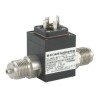
  • Differential Pressure Sensors

Related Application Questions and Answers

  • 16 bar, 200°C steam pressure transmitter and gauge
  • Pass/Fail timed 500 kPa pressure leak test software and sensor
  • Hydraulic puller-tensioner bar pressure to kilonewton load HMI display & logger
  • 60000 psi pressure indicator with RS232 interface
  • Submersible rainwater tank level sensor for measuring 3.5m depth
  • Air Replacement Plant (ARP) 100 mm H2O differential pressure transmitter
  • HART flameproof (Ex d) re-scalable level transmitter for hydrostatic head up to 2 metres
  • Dockside sea water tide level transmitter up to 6 metres depth
  • Vacuum drying pressure data logger
  • 5 bar water irrigation pressure transducer with 0 to 5 volt output
  • Low range vacuum pressure logger for 0 to -60 inH2O g
  • 300 foot sea depth waterproof pressure sensor with 0-5V signal

Contact us about this Measuring gauge pressure using a dp sensor page to request more information, or to discuss your application requirements.

Primary Sidebar

Pressure Sensor Specifier

Specify a pressure sensor

Select your pressure sensor requirements

Pressure Sensor Calculator

Calculate errors and readings for a pressure sensor
Enter your parameters into this pressure sensor calculator to determine calibration errors, expected readings, and error tolerances

Pressure Sensor Technology Guide

Rating table for performance of different pressure sensor technology types

Compare performance of the most popular pressure sensor technology types and how they rate for different application requirements

Products

  • Pressure
  • Level
  • Temperature
  • Interfacing
  • Datalogging
  • Calibration
  • Wireless

Product Enquiry

Send us your enquiry for a product associated with this Measuring gauge pressure using a dp sensor page, and get assistance with selecting a product for your application.

Email Your Enquiry

enquiries@sensorsone.com
By clicking "OK" or continuing to use this website you are providing your consent to use cookies as described in our Privacy Policy

© 2026 SensorsONE Ltd, all rights reserved

  • Home
  • Products
  • Tools
  • Legal
  • Contact