
High-pressure data loggers are specialized instruments designed for continuous monitoring and recording of pressure levels in demanding industrial and research applications. These rugged devices provide accurate and reliable data capture in environments with extreme pressure ranges, ensuring safety and process optimization.
Engineered to perform under severe stress, high-pressure loggers integrate high-precision sensors, robust protective enclosures, and versatile communication interfaces—such as USB or wireless links—to streamline continuous tracking, prevent equipment failure, and verify compliance across critical field operations.
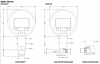 DM01-500-HD High Range Digital Pressure Gauge - The DM01-500 HD high range pressure gauge is available in pressure ranges from 0 to 600, 1000, 1600, 2000 & 2200 bar.
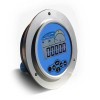 ADT681 Digital Pressure Gauge - The ADT681 digital pressure gauge family covers a wide range of pressures from as low as 1 inH20 differential to as high as 36,000 psi gauge.
- Hydraulic puller-tensioner bar pressure to kilonewton load HMI display & logger
- 40,000 psi pressure sensor and data logger
- High pressure data logging to 20,000 psi
- Hydraulic piston recorder & display with 2 pressure sensors
- 5000 psi data logging gauge for measuring hydraulic pressures
- Recordable indicator and sensor up to 30000 psi for pressure test rig
Send us your enquiry to discuss your High Pressure Range Data Loggers application with a product specialist, and they will help you select the best option to suit your specific requirements.
Product Advantages
High-pressure data loggers offer significant advantages for monitoring severe industrial environments, including exceptional measurement precision under extreme pressure conditions, robust construction for harsh operating environments, and long-term automated recording capabilities that optimize process safety and data integrity.
High Precision in Extreme Conditions
These data loggers are engineered with high-accuracy sensors capable of maintaining stability and reliable pressure measurements even when exposed to extreme pressure ranges and dynamic pressure surges.
Rugged and Durable Construction
Built using heavy-duty materials, high-pressure loggers withstand harsh industrial environments, mechanical shock, vibration, and exposure to aggressive fluids or corrosive media.
Continuous & Automated Monitoring
Automated data logging eliminates manual tracking errors and allows continuous, long-term monitoring of critical pressure metrics to support predictive maintenance and safety compliance.
Product Applications
High-pressure data loggers play a critical role across a wide variety of demanding fields. From monitoring heavy industrial machinery and energy infrastructure to supporting precise aerospace testing and environmental research, these versatile instruments ensure operational safety, process efficiency, and accurate data collection in extreme operating environments.
Hydraulic Systems
Continuous tracking of pressure fluctuations in hydraulic presses, heavy-duty cylinders, and high-pressure pumps helps engineers ensure optimal operating efficiency, prevent unexpected component failures, and extend equipment service life.
Water Jet Cutting
Monitoring ultra-high water pressure levels in precision water jet cutting machinery ensures consistent cutting performance, maintains edge quality, and helps detect line blockages or pump degradation early.
Burst Pressure Testing
Accurately capturing high-speed pressure data during burst tests enables manufacturers to determine the ultimate mechanical strength, safety margins, and maximum failure thresholds of pressure vessels, hoses, and piping.
Destructive Testing
Recording real-time pressure curves during destructive testing allows materials scientists to evaluate structural deformation, fatigue limits, and exact failure modes under extreme and controlled pressure stresses.
Oil and Gas Industry
Monitoring downhole pressures in deep wells, assessing pipeline structural integrity, and logging hydraulic fracturing fluid pressures are vital operations that maintain environmental safety and optimize resource extraction.
Process Industries
Precise pressure monitoring in high-pressure chemical reactors, autoclave vessels, and fluid delivery networks supports strict quality control, enhances yield consistency, and protects against dangerous overpressure events.
Research and Development
High-resolution pressure logging supports academic and commercial laboratory experiments, advanced materials characterization, and fundamental scientific inquiries requiring precise measurement under extreme conditions.
Aerospace
Tracking rapid pressure changes in flight-critical aircraft hydraulic flight control systems, landing gear actuators, and rocket propulsion fuel delivery systems helps ensure aerospace safety and mission reliability.
Environmental Monitoring
Deploying ruggedized loggers in deep-sea oceanographic research, deep geothermal wells, and sub-surface geological formations enables long-term environmental data collection under extreme natural pressures.
Construction and Civil Engineering
Monitoring heavy hydraulic machinery pressure, pile driving foundation loads, and structural prestressing systems provides actionable data to maintain site safety and ensure long-term infrastructure integrity.
Automotive
Evaluating dynamic hydraulic brake line pressures, high-pressure common rail fuel injection systems, and active suspension components ensures peak vehicle safety, efficiency, and compliance with performance standards.
Product Selection
Selecting the appropriate high-pressure data logger requires a thorough evaluation of operational demands, environmental factors, and measurement specifications. Key considerations include verifying the required pressure range and accuracy levels, determining optimal sampling rates and data storage capacities, assessing environmental resistance, and ensuring adequate overpressure protection for dynamic application environments.
Pressure Range
Ensure the selected logger’s operating pressure range is carefully matched to both expected working pressures and potential pressure spikes. Selecting a sensor range that closely matches your operational maximum ensures optimal signal resolution and prevents sensor saturation during peak load conditions.
Accuracy
Determine the precise accuracy and tolerance levels required for your specific measurement task. High-precision applications, such as laboratory calibration or critical quality control testing, demand low-drift sensors with minimal full-scale thermal error to maintain absolute data integrity over extended periods.
Sampling Rate
Evaluate how rapidly pressure readings must be captured to accurately characterize process behavior. While slow-changing environmental monitoring requires low logging frequencies to conserve memory, dynamic industrial processes like hydraulic testing or fast valve actuation demand high sampling speeds to capture brief transient spikes.
Memory Capacity
Choose a logger equipped with adequate onboard memory or expandable storage to support the planned deployment duration. High-frequency recording setups consume memory rapidly, so selecting sufficient storage capacity or automated wrap-around logging modes prevents critical data loss between manual offloads.
Environmental Conditions
Evaluate the logger’s physical exposure to harsh working environments, including extreme operating temperatures, high humidity, or immersion risks. Furthermore, chemical compatibility between internal wetted parts and aggressive, corrosive media is essential to prevent sensor degradation and premature failure.
High-Frequency Mode
If your application involves highly dynamic pressure fluctuations, fast fluid transients, or rapid pump cycles, select a logger featuring a high-frequency sampling mode. Rapid response times are essential for detecting brief water hammer shocks and structural micro-fractures before major equipment failures occur.
Overpressure Protection
For installations subject to unexpected pressure surges, cavitation events, or hydraulic shocks, select a data logger with high burst pressure limits and robust built-in overpressure protection. This ensures continuous operational reliability and protects sensitive internal diaphragms from permanent recalibration errors or physical rupture.