
External mounted level sensors for installing on the outside of a liquid storage tank to measure level of tank contents. These level sensors have a screw-in, clamp or bolt-on flange fitting to attach the sensor to a connection port on the external wall of the tank.
External mounted tank level sensors provide a versatile and robust solution for measuring liquid levels by attaching to connection ports on the tank’s exterior, such as screw-in, clamp, or bolt-on flange fittings. This design is particularly beneficial for applications involving corrosive, sterile, or difficult-to-access media, as it isolates the sensor from the tank contents, facilitating easier maintenance and enhancing sensor lifespan, making them a preferred choice for design engineers and instrument technicians in chemical, pharmaceutical, and water treatment industries.
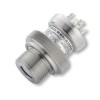 Dirty water, sludge & sewerage tank level 400 mbar pressure sensor - Flush ceramic diaphragm pressure sensor for measuring level of a dirty water, sludge & sewerage tank.
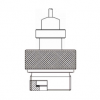 Ferric aluminium sulphate level sensor for monitoring coagulant tank in water treatment - Overcome corrosion and clogging when measuring ferric aluminium sulphate levels in water treatment plants using a flush-mounted ceramic transmitter.
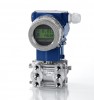 DPT200 Pressurised Tank Level Differential Pressure Transmitter
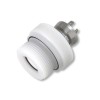 LMK351 High Overpressure Flush Level Transmitter
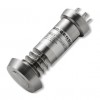 DMP331P Hygienic Flush Pressure Transmitter
- LMK331 Screw-In Ceramic Level Transmitter
- Vacuum transmitter for chlorine, hydrogen chloride and nitrogen oxide gas with NaOH solution - Capacitive ceramic sensor with PVDF and FFKM materials provides a stable vacuum measurement in gas scrubbers containing chlorine, HCl, and NOx, plus NaOH solution.
- Electrophoretic painting tank level monitoring using flush ceramic transmitters - Using high-purity alumina diaphragms and PVDF connectors to provide reliable level monitoring in aggressive chemical environments found in car paint plants.
- High temperature ethanol boiler level measurement - Looking for a precise level sensor for boiling ethanol? Discover how a capacitive ceramic transmitter with EPDM seals provides millimeter accuracy for low-pressure boiler applications.
- Ammonium nitrate level sensing in agitated tanks at high temperature - Measure the liquid level of hot, concentrated ammonium nitrate using a flush ceramic sensor designed to withstand agitation and prevent crystallization issues.
- Viscous machine tool coolant level measurement with flush diaphragm sensor - Using a flush ceramic diaphragm to prevent clogging in viscous machine tool coolant tanks, ensuring reliable level measurement for oil and water emulsions containing swarf.
- Viscous soap and detergent storage hydrostatic level measurement - Flush-mounted ceramic transducer for monitoring tank levels in viscous soap and 50% sodium hydroxide applications.
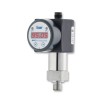 DS200 Combined Hydrostatic Level Switch, Gauge and Sensor
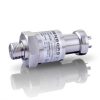 DMK 458 Seawater Low Range Pressure Transmitter
- Geothermal weir box flow measurement using low range capacitive level sensor - Measure water discharge flow rates in geothermal applications using a capacitive ceramic level transmitter designed for shallow weir boxes and waste water.
- HART flameproof (Ex d) re-scalable level transmitter for hydrostatic head up to 2 metres - HART compatible, ATEX flameproof approved, rangeable level transmitter to measure hydrostatic head of water/glycol or mineral oil fluid within a reservoir about 2 metres in height.
- Low cost 2 metre high diesel tank level sensor with 0-10 volt output - Cost effective level sensor 0 – 2m, media is diesel fuel, output is 0-10V
- 1-5Vdc output, 2.5m range, salt water ballast tank level sensor - We want a 1-5Vdc output submersible pressure sensor which is seawater compatible to monitor the level of a salt water ballast tank over a range of 0 to 2.5 metres.
- Water tank level gauge transmitter with adjustable range - We are looking for level measurement gauge transmitters for water tanks used for domestic water and fire water in a hotel.
- Non-metallic level sensor with 3 ftH2O range & 4-20mA signal - I have a 300 gallon enclosed 4 feet high round tank which is filled with sodium hypochlorite (bleach). I need a non-metallic level sensor that will output a 4-20ma signal. I can't have any metal in contact with the bleach.
- Canola oil tank hygienic level sensor & indicator with high temperature protection
- Industrial dishwasher 0-1m 0-10Vdc water level sensor
- 2m tank height, high temperature oil level sensor with 4-20mA out
- Dairy silo level sensor & display unit for reading content in litres
- River level monitoring with hydrostatic level sensor in sealed PVC stilling well
- Beverage tank liquid level sensor for beer, wine, spirits or cider
- Measuring fuel and water tank levels on ferries with a hydrostatic transmitter
- Seawater depth sensor with I2C output for aquaculture underwater camera integration
- Integrating a pressure sensor into a borehole sonde for flood detection
- Generator diesel tank height level sensor for 1 metre height
- OEM sensor for diesel tank level measurement
- Remote water tank level monitoring via GSM mobile network
Find out more about External Mounted Tank Level Sensors to determine which product options and capabilities will best meet your application requirements.
External mounted tank level sensors are designed for robust liquid level measurement where the main body of the sensor is installed on the outside of a storage tank, while its sensing element interfaces directly with the tank’s contents through a dedicated connection port. This configuration means that while the wetted parts of the sensor, such as a diaphragm, probe, or float mechanism, are exposed to the process media, the primary electronics, housing, and process connection interface remain external to the tank’s internal environment. This design is particularly advantageous as it protects the bulk of the instrumentation from harsh internal tank conditions such as extreme temperatures, corrosive vapors (beyond the immediate wetted area), or physical interference from mixers or agitators. Crucially, it allows for easier access to the sensor’s main housing for setup, diagnostics, or replacement without requiring entry into the tank, although process isolation at the connection port is typically necessary for maintenance. The integrity of the seal at the tank wall penetration and the material compatibility of the wetted components with the liquid are paramount design considerations for engineers and technicians working with these instruments.
The connection to the tank is typically achieved through robust mechanical interfaces such as screw-in threaded fittings, versatile clamp-on assemblies, or secure bolt-on flange arrangements. Screw-in types, often utilizing NPT or BSP threads, are common for smaller tanks or where a simple, direct port is available. Clamp fittings, such as Tri-Clamp or similar sanitary connections, are frequently specified in hygienic applications like food, beverage, and pharmaceutical processing, where ease of cleaning and prevention of contamination are paramount. For larger tanks, or in systems operating under higher pressures or temperatures, bolt-on flanges conforming to ANSI, DIN, or JIS standards provide a highly secure and leak-proof connection, crucial for safety and environmental compliance in chemical plants or refineries.
Instrument technicians and design engineers should consider the specific design of the connection port, ensuring material compatibility between the sensor fitting, the port, and the process environment to prevent galvanic corrosion or chemical degradation. The choice of mounting also influences the type of sealing mechanism employed, ranging from O-rings and gaskets for threaded and clamped connections to specialized flange gaskets for high-integrity seals. These externally mounted sensors are commonly employed in a diverse range of industries, including chemical storage facilities monitoring aggressive reagents, water treatment plants for bulk water or effluent levels, and in manufacturing processes where tanks may contain viscous liquids or slurries not suitable for internal probes. Their application is also valuable in retrofitting level measurement capabilities to existing tanks where internal modifications are complex or cost-prohibitive, allowing for upgraded process monitoring with minimal structural alteration.