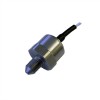
Wet/Dry describes a differential pressure measurement device which is compatible with a liquid on the positive pressure side and a dry/non-condensing gas on the negative pressure side.
This is most commonly found with compact designs where a gauge reference design has been adapted to measure differential pressure. The negative side of these pressure transducers were only designed to withstand exposure to atmospheric air pressure and contain composite materials, and in some cases exposed electronics and connecting wires.
Featured differential pressure measurement products
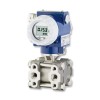 Differential Pressure Transmitters - Differential pressure transmitters for measuring the DP of fluids and gases across particle filters and along a length of pipe to monitor flow.
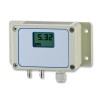 DPS200 HVAC Differential Pressure Transmitter - Differential air pressure sensor with a 10 volt or a 4-20mA output for building ventilation applications. Ranges from 0 to 6 mbar up to 0 to 1000 mbar.
Glossary of Pressure Sensor technical terms
- Ceramic Pressure Sensors
- Digital Compensation
- Dry Cell
- Dry/Dry
- HART®
- Isolation Diaphragm
- LVDT – Linear Variable Differential Transformer
- Pressure Sensors
- SOI – Silicon on Insulator
- Stainless Steel Pressure Sensors
- Static Line Pressure
- Wet/Wet
Help from Pressure Sensor resources
- Determining the hydrostatic pressure range for a tank level sensor
- How to get a 10 volt signal from a 4-20mA output pressure sensor
- Pressure Sensor Accuracy Specifications
- Symptons and Causes of Damage to Pressure Transducer Diaphragms
- How to Connect a 4-20mA Current Loop Pressure Transmitter
- What is difference between working, burst and over pressure
- Measuring vacuum as a negative gauge pressure using a dp sensor
- Measuring liquid level in a tank using a dp sensor
- Measuring density of a liquid using a dp sensor
- Pressure Sensor Technology Comparative Guide