
Digital gauges using piezoresistive & capacitance sensors for low to partial vacuum, suction, and negative pressure. Ideal for industrial & lab applications.
Our range of digital vacuum, suction, and negative pressure gauges leverages proven piezoresistive and capacitance sensor technologies to deliver precise measurement for low and partial vacuum applications. These instruments provide clear digital readouts, high accuracy, and often include features like data logging, selectable engineering units, and process outputs, making them ideal for industrial control, laboratory research, and system testing. Whether you’re monitoring negative gauge pressures or partial absolute vacuum, our digital gauges offer reliable performance and enhanced functionality for optimizing processes that operate below atmospheric pressure.
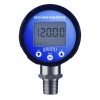 -100 mbar digital vacuum gauge - Measure vacuum down to -100 mbar with this digital vacuum gauge. Ideal for industrial and laboratory applications.
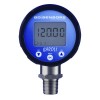 Vacuum gauge for minus 150 mbar range with a 0.1 mbar display resolution - We are looking to measure have to measure vacuum from zero to -150mbar to a resolution of 0.1 milibar
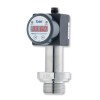 DS200P Sanitary Low Range Pressure Gauge, Switch and Sensor
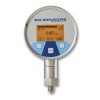 DM01 Multi-Range High Accuracy Pressure Gauge
- Baroli 02 Precision Digital Pressure Gauge
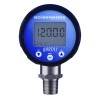 Baroli 05 Industrial Digital Pressure Gauge
- 760mmHg absolute range digital vacuum gauge - Digital vacuum gauge for measuring over the 0 to 760mmHg (millimetres of Mercury) absolute pressure range.
- Leak testing set for checking 1mb/min drop at negative 10 mbar vacuum - We need a suitable gauge to use as a leak testing test set we are looking to build. We need to measure down to -10 mbar and monitor for 1 minute to ensure the leak rate is not greater than 1 mbar/minute.
- Vacuum digital gauge to measure 0 to 1000 mbar absolute - We have a need for a general vacuum digital gauge which can display 0-1000mbar vacuum as absolute readings.
- 450 mmHg vacuum range pressure gauge - The Baroli 05 pressure gauge can be supplied with a negative gauge vacuum range and display the pressure in millimetres of mercury (mmHg) pressure units.
- 30 inHg relative vacuum range digital display vacuum pressure gauge and logger - Battery-powered, pipe-mounted vacuum gauge with 0 to -30 inHg range, 0.1% accuracy, and USB data logging for industrial and research applications.
- Negative 30 inHg vacuum gauge with 0-10V output - Dual-function vacuum gauge with digital display and 0-10V output for industrial process control and monitoring.
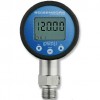 Baroli 02P Low Range Flush Diaphragm Digital Pressure Gauge
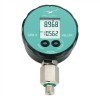 LEO3 Current or Digital Output Pressure Gauge
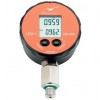 LEO1 (Ei) Digital Pressure Gauge
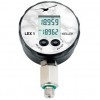 LEX1 (Ei) High Accuracy Digital Pressure Gauge
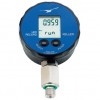 LEO Record (Ei) Pressure Data Logger
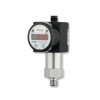 DS210 Combined Low Pressure Switch, Indicator and Sensor
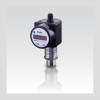 DS201 Combined Pressure Sensor, Display and Switch
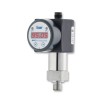 DS200 Combined Pressure Switch, Gauge and Sensor
Find out more about Vacuum, Suction, Negative Pressure Gauges to determine which product options and capabilities will best meet your application requirements.
Digital vacuum range gauges are versatile instruments designed for the precise measurement and clear display of pressures below ambient atmospheric levels, utilizing established electronic sensor technologies. They accurately quantify both absolute vacuum within moderate ranges and negative differential pressures (commonly referred to as suction). The distinction remains important: digital absolute vacuum gauges, even those using conventional sensor types, reference a true zero pressure, providing essential data for many industrial processes and research applications where knowing the pressure independent of local barometric conditions is beneficial. More commonly, digital gauges measuring negative pressure relative to atmospheric pressure are widely employed for precise monitoring and control of suction levels, offering superior readability and functionality.
For applications demanding continuous, reliable monitoring within a system, permanently installed digital vacuum gauges are selected for their robust design and system integration capabilities. Process connection integrity is crucial, with standard options like NPT or BSP threads ensuring secure, leak-tight installation. The choice of wetted part materials, typically stainless steel for compatibility with a wide range of process media, is vital for sensor longevity and sustained measurement accuracy in these partial vacuum environments. These digital units often feature durable housings with appropriate IP ratings to protect against dust and moisture ingress. Power is usually supplied via common industrial protocols like 4-20mA loop power or external DC voltage, and their output signals facilitate seamless integration with PLCs, SCADA systems, or dedicated data acquisition hardware for automated process control and continuous monitoring of low vacuum conditions.
When diagnostic precision, system calibration, or intermittent checks of low or partial vacuum systems are needed, digital vacuum test gauges offer significant advantages. These portable, often battery-powered, instruments provide high-resolution digital displays, frequently backlit for excellent visibility. They deliver enhanced accuracy specifications due to advanced sensor designs, such as piezoresistive or capacitance elements, and sophisticated electronic signal conditioning. Common features include immediate min/max vacuum level capture, user-selectable engineering units (e.g., mbar, kPa, inHg, psi, Torr), and a convenient tare or zero function for relative pressure measurements. Many digital test gauges for these vacuum ranges also incorporate internal data logging, allowing technicians to record pressure trends for detailed analysis, process validation in applications like vacuum forming, or for conducting vacuum decay leak tests.
Digital vacuum and suction gauges excel in providing unambiguous measurement data across typical industrial and laboratory partial vacuum ranges. The clear numerical display eliminates the parallax error and subjective interpretation challenges associated with older analog indicators, offering superior resolution for discerning small changes in vacuum level. Many digital models allow users to effortlessly switch between various units of pressure, catering to diverse operational preferences and documentation standards. Programmable alarm setpoints are a valuable feature on some models, providing visual or electrical alerts when vacuum levels fall outside predefined operational windows, crucial for maintaining process integrity and product quality in applications like vacuum-assisted material handling or medical suction.
The core of these digital vacuum gauges typically incorporates proven electronic sensor technologies such as piezoresistive or capacitance-based sensors. In a piezoresistive vacuum sensor, a silicon diaphragm deflects under the pressure difference, causing a change in resistance in embedded piezoresistors, which is then converted to a precise pressure reading. Capacitance sensors measure the change in capacitance between a sensing diaphragm and a fixed electrode as the diaphragm deflects under vacuum. These sensor types are well-suited for measuring negative gauge pressures down to full vacuum (relative to atmosphere) and moderate absolute vacuum levels. Onboard microprocessors manage the signal conditioning, temperature compensation for enhanced accuracy across the operating range, and digital filtering, while also enabling features like self-diagnostics or display customization. Robust sensor designs often include inherent over-pressure resilience suitable for the targeted vacuum ranges.
Practical applications for digital vacuum, suction, and negative pressure gauges using these conventional technologies are widespread. Process engineers value their accuracy and output signals for optimizing vacuum levels in component drying ovens, controlling clamping force in vacuum chucks, or ensuring consistent performance in degassing systems. Research and development labs use them for maintaining controlled partial vacuum environments for material testing or benchtop experiments. Instrument technicians find digital test gauges indispensable for calibrating vacuum circuits in HVAC systems, performing leak detection in sealed assemblies, verifying the performance of vacuum pumps, and documenting vacuum levels in medical aspiration equipment. Design engineers incorporate these digital gauges into new machinery, from automated packaging equipment to laboratory robotics, benefiting from their compact form factor, reliability, and ease of integration into control loops.