
Highly sensitive low DP transmitters designed for critical applications like ventilation control, hospital isolation rooms, and laboratory environments. Features include 4-20mA signals, displays, and alarm contacts.
Low differential pressure transmitters are precision instruments engineered to measure very slight differences in pressure between two points, typically for air and non-corrosive gases. These devices, often featuring 4-20mA outputs scaled over ranges of a few millibar, Pascals, or inches of water, are crucial for applications such as optimizing ventilation flow in HVAC systems, monitoring air filter conditions for predictive maintenance, and maintaining critical room pressurization in cleanrooms, hospitals, and laboratories, thereby ensuring operational efficiency, safety, and environmental control.
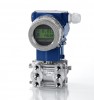 Bi-directional room pressure sensing in explosive gas and dust atmospheres - Optimize facility safety in chemical and pharmaceutical plants by maintaining accurate pressure gradients between labs and hazardous production areas.
- Low range ATEX approved 100 Pascal range DP transmitter - The DPT200 is a robust ATEX approved differential pressure transmitter which has a very low range of 100Pa.
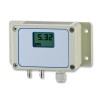 DPS200 HVAC Differential Pressure Transmitter
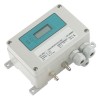 DPS Low Differential Pressure Transmitter
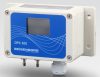 DPS300 User Switchable Pressure Range, Volts or Current Output Low DP Sensor
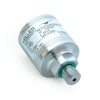 41X High Precision Low Range Pressure Transmitter
- Biogas HDPE cover PD blower pressure sensor - The XMD is a low range process pressure transmitter with an all stainless steel 316L wetted parts suitable for measuring the pressure of a biogas inflated HDPE cover to control a positive displacement pump.
- 100 Pa bi-directional range differential air pressure transmitter - Bi-directional low range 4 to 20 milliamp differential pressure transmitter covering an air pressure range from -100 to +100 pascals, for cleanrooms, isolation rooms, and filter monitoring.
- Solvent compatible +/-100mWG dp transmitter with PTFE seals - Differential pressure transmitters to use on Nitrogen and/or air containing low levels of flammable solvents.
- 4 inch water column range 4-20mA differential pressure sensor for liquids - Low range wet/wet dp sensor for measuring differential pressure of a liquid from 0 to 4 inches of water column.
- Measuring HVAC plenum and sub-floor air pressure in data centers - Monitoring the critical air pressure gradients in data center sub-floors, server rooms, and ceiling plenums. Low range differential pressure transmitter provides stable gauge pressure readings for optimizing HVAC and cooling efficiency.
- Monitoring hot and cold aisle containment in datacenters using a differential pressure transmitter - Low range differential pressure transmitter with a local display was used to maintain precise room pressurization in a mission-critical datacenter environment for improved thermal management.
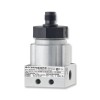 DMD341 Compact Differential Air Pressure Sensor
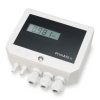 PrimAtü 10 Low Cost Low Range Differential Air Pressure Transducer
- Bidirectional -50 to +50 Pa diff pressure transmitter with user calibration adjustment - Enhance your hvac or filter monitoring system with this accurate and durable low differential pressure transmitter featuring user-adjustable zero and span.
Find out more about Low Differential Pressure Transmitters to determine which product options and capabilities will best meet your application requirements.
Low differential pressure transmitters are specialized instruments engineered for the precise measurement of minute pressure differences between two distinct points. This capability is crucial in applications where even slight variations in pressure can significantly impact operational efficiency, safety, or environmental control. These devices are designed with highly sensitive sensing elements capable of reliably detecting pressures often in the range of just a few millibars, Pascals, or inches of water column (inWC). The ability to accurately discern such small pressure gradients is fundamental in systems where subtle changes are indicative of important process conditions.
The 4 to 20 milliamp (4-20mA) current loop output is a standard feature, providing a robust and noise-immune signal transmittable over long distances, which is essential for integration with building management systems (BMS), programmable logic controllers (PLCs), or other industrial control systems. This analog signal is precisely scaled to the specific low-pressure range of the transmitter, ensuring that the full resolution of the output signal corresponds to the narrow pressure span being measured. This fine scaling is critical for achieving the necessary control accuracy in sensitive applications, such as modulating fan speeds in variable air volume (VAV) systems or maintaining precise room pressure cascades.
Many low differential pressure transmitters offer options such as integrated digital displays for local pressure indication, simplifying setup, calibration, and troubleshooting for instrument technicians. Alarm contact switches are another vital feature, providing configurable setpoints that can trigger alerts or automated actions when a pressure differential exceeds or falls below critical thresholds. For instance, these contacts can signal a clogged filter in an air handling unit (AHU), alert to a loss of pressurization in a hospital isolation room, or indicate insufficient airflow from a ventilation fan.
In HVAC systems, these transmitters are indispensable for monitoring and controlling airflow. By measuring the pressure drop across components like orifice plates, Pitot tubes, or even the fan itself within ductwork, airflow rates can be accurately determined and adjusted. This ensures optimal energy consumption and maintains desired indoor air quality. For air filter condition monitoring, the gradual increase in differential pressure across a filter bank provides a clear indication of particulate loading, enabling predictive maintenance schedules. This proactive approach avoids compromised air quality, reduced system efficiency due to overworked fans, and potential equipment damage.
Within cleanrooms, pharmaceutical manufacturing facilities, hospital operating theatres, and research laboratories, maintaining specific room pressurization is paramount. Low differential pressure transmitters are key to managing these critical environments, ensuring positive pressure to prevent the ingress of contaminants into sterile zones, or negative pressure to contain hazardous substances within areas like bio-safety level (BSL) laboratories or infectious disease isolation wards. Other applications include monitoring fume hood face velocity to ensure operator safety, detecting minute leaks in duct systems, and controlling draught in specialized industrial processes or environmental test chambers. The primary media for these instruments are typically air and other non-corrosive gases, aligning with their common deployment in controlled indoor environments and ventilation systems where aggressive media are not present.