
Suction pressure transmitters designed for precise negative pressure measurement relative to ambient. Ideal for industrial vacuum control and monitoring applications.
Suction pressure transmitters are sensing devices designed to measure and report pressure levels below the ambient atmospheric pressure. These devices utilize a sensing diaphragm referenced to the surrounding atmosphere, enabling them to accurately quantify the degree of vacuum or negative pressure within a system. Essential for a wide array of industrial, research, and medical applications, from monitoring pump inlets and controlling vacuum furnaces to ensuring the efficacy of medical suction apparatus, these transmitters provide critical data for process control, safety, and operational efficiency by converting the measured suction into a transmittable electrical signal.
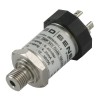 ATEX approved negative 10 mbar vacuum pressure transmitter - ATEX certified intrinsically safe pressure transmitter for measuring from 0 to minus 10 millibar gauge vacuum pressure.
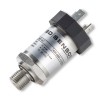 -10…30 kPa g compound range inert gas pressure transmitter for ship IG system - An intrinsically safe, marine approved compound range pressure transmitter for ship cargo tank IG system use to measure pressure of inert gas over a range of -10 to 30 kPa g from the G1/2 male process connection, and sending the corresponding 4-20mA signal through the DIN plug electrical connection.
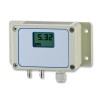 DPS200 HVAC Differential Pressure Transmitter
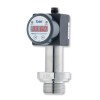 DS200P Sanitary Low Range Pressure Gauge, Switch and Sensor
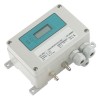 DPS Low Differential Pressure Transmitter
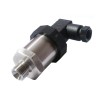 IMPLR Low Range All Stainless Steel OEM Pressure Sensor
- Vacuum suction sensor & wall mount digital readout with switched contacts - Vacuum suction sensor that can provide a digital readout and a switched contact when the pressure gets too high
- Solvent tank nitrogen blanketing monitoring with all welded IS/SIL2 bidirectional pressure transmitter - Discover a solution for measuring low nitrogen blanket pressure in flammable solvent tanks. This application story details the use of an all-welded, intrinsically safe pressure transmitter with SIL2 certification to ensure chemical compatibility with acetone and alcohols in a Zone 0 environment.
- Dredging vacuum pressure Transmitter - Vacuum pressure sensor that will measure the vacuum pressure of a dredger suction pipe pump inlet.
- Landfill biogas extraction well depressure pressure transmitter - Ensure efficient biogas extraction and safe operation in hazardous landfill environments with the DMP331 pressure transmitter. This intrinsically safe device accurately measures depressure in extraction wells, contributing to optimized gas collection and environmental protection.
- IMP Low Cost Pressure Sensor
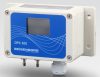 DPS300 User Switchable Pressure Range, Volts or Current Output Low DP Sensor
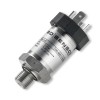 DMK457 Marine Approved Pressure Transmitter
- DMP457 Marine Approved Pressure Transmitter
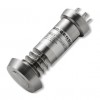 DMP331P Hygienic Flush Pressure Transmitter
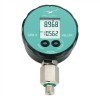 LEO3 Current or Digital Output Pressure Gauge
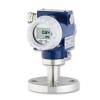 XMPi Process Plant Gauge and Absolute Pressure Transmitter
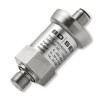 DMP343 Low Range Pneumatic Pressure Sensor
Find out more about Suction Pressure Transmitters to determine which product options and capabilities will best meet your application requirements.
Suction pressure transmitters are instruments engineered to accurately quantify and relay measurements of pressure below the prevailing atmospheric level. These devices are crucial in applications where maintaining, monitoring, or controlling a specific degree of vacuum is essential. The core of their operation involves a sensing diaphragm which is exposed to the process medium on one side, experiencing the suction or negative pressure. The opposite side of this diaphragm, known as the reference side, is typically vented to the ambient atmospheric pressure. This differential creates a deflection or change in the sensing element, which is then precisely converted into a standardized electrical signal suitable for transmission to control systems, data loggers, or display units.
The design considerations for suction pressure transmitters often focus on the sensitivity and stability of the sensing element at these sub-atmospheric pressures. The materials used for the diaphragm and the wetted parts are selected based on compatibility with the medium being measured, which could range from air and inert gases to more aggressive vapors or liquids in industrial processes. The integrity of the seal around the sensing diaphragm is paramount to ensure that the reference to ambient pressure is accurate and that no leaks compromise the negative pressure measurement. Unlike gauge pressure transmitters that measure positive pressure relative to ambient, suction pressure transmitters are exclusively calibrated and scaled for ranges that fall below this ambient baseline, often expressed in units such as millibar (mbar), inches of mercury (inHg), or Pascals (Pa) below atmospheric.
Engineers and technicians deploying suction pressure transmitters must consider the required measurement range carefully, as an inappropriately scaled device can lead to inaccuracies or an inability to detect critical low-pressure setpoints. The dynamic response of the transmitter is also important in applications where suction levels change rapidly, such as in automated pick-and-place systems or vacuum forming machinery. Furthermore, the environmental conditions of the installation, including temperature fluctuations and potential vibrations, can influence the performance and longevity of these transmitters, necessitating careful selection of housing materials and mounting techniques. For instance, monitoring the inlet pressure of pumps to detect potential cavitation conditions, controlling vacuum levels in degassing processes, or ensuring efficient operation of medical suction equipment are all common applications where the precise measurement of negative pressure is vital. These transmitters are also integral in HVAC systems for monitoring filter conditions or maintaining negative pressure in controlled environments like cleanrooms or isolation wards.