
Explore an extensive range of robust SDI-12 sensors and high-precision instruments engineered specifically for seamless integration with modern environmental data acquisition systems, remote telemetry units, and automated field stations. These versatile sensing devices deliver exceptional measurement reliability, ultra-low power consumption, and long-term stability across remote and demanding monitoring applications.
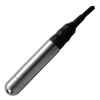 S12S SDI-12 Coms IP68 Pressure and Temperature Sensor - Combined pressure and temperature sensor with a 1200 baud rate serial data interface as defined by the SDI-12 support group.
- S12C SDI-12 Seawater Pressure & Temperature Transducer - SDI-12 protocol transducer for sensing water depth level and temperature in seawater, brackish water, tidal water, saline water or leachate.
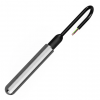 SLS-D SDI-12 Digital Interface Submersible Level Sensor - This submersible level sensor has SDI-12 digital communications which provides the level and temperature readings as a serial output using the SDI-12 version 1.4 protocol.
- Submersible water level and temperature probe with SDI-12/USB interface for freshwater monitoring
- Low power consumption SDI-12 lake water level sensor
- Roadside creeks & streams flood warning SDI-12 coms water level sensor
- Irrigation water channel and storage dam SDI-12 submersible level sensor with 10m range
- Evaporation pan SDI-12 environmental data interface water level sensor
- Tidal level measurement with SDI-12 interface seawater level sensor
- SDI-12 Hydrostatic Liquid Level Sensors - SDI-12 hydrostatic liquid level sensors for remote environmental monitoring. Low power, digital output, ideal for battery-powered data loggers in hydrology & water resource management.
Send us your enquiry to discuss your SDI-12 Serial Interface Sensors and Instruments application with a product specialist, and they will help you select the best option to suit your specific requirements.
SDI-12 (Serial Digital Interface at 1200 baud) is a widely adopted standard digital communication protocol designed primarily for interfacing intelligent environmental sensors with data loggers and peripheral equipment. Operating over a simple three-wire bus architecture—covering power, ground, and a bi-directional serial data line—the protocol enables multiple digital sensors to communicate over a single channel while maintaining superior signal integrity over extended cable lengths.
Product Advantages
SDI-12 sensors and instruments offer significant benefits for long-term environmental monitoring, hydrology, and remote data collection. Designed specifically for low-power and multi-sensor bus networks, the SDI-12 standard simplifies deployment while maximizing measurement reliability across complex field applications.
Low Power Consumption
SDI-12 sensors operate with minimal energy requirements, making them ideal for remote, off-grid installations powered by small solar panels or long-life internal batteries. They remain in a low-power sleep state until queried by the data logger, ensuring extended field maintenance intervals and reduced overall operational costs.
Simple Integration & Multi-Drop Bus Architecture
Using a standardized digital communication protocol, multiple SDI-12 sensors can be connected to a single SDI-12 channel on a data logger using a shared 3-wire bus (power, ground, and data line). This greatly simplifies cabling requirements, reduces installation complexity, and allows easy expansion of monitoring networks.
Robustness & Environmental Protection
Built to withstand demanding environmental conditions, SDI-12 instruments feature high IP-ratings (such as IP68 for submersible models) and rugged housing materials like stainless steel or titanium. They are designed to operate reliably across wide temperature ranges and in corrosive environments such as seawater or brackish water.
Digital Accuracy & Signal Integrity
Because SDI-12 utilizes digital signal transmission directly from the sensor, signal degradation, noise, and voltage drops associated with long analog cable runs are eliminated. This ensures accurate, high-resolution measurement data even when sensors are deployed at significant distances from the logging hardware.
Interoperability & Standardization
Maintained by the SDI-12 Support Group, the standardized protocol guarantees compatibility across different equipment manufacturers. Users can easily swap sensors or integrate components from various vendors into a unified telemetry system without requiring custom software drivers.
Product Applications
SDI-12 sensors and instruments are utilized across a wide variety of environmental, industrial, and research domains. Their standardized multi-drop communication bus, low-power operation, and high digital measurement accuracy make them an indispensable choice for continuous, remote monitoring projects. Below is a detailed overview of key application areas where SDI-12 monitoring systems excel.
Hydrological & Aquatic Monitoring
SDI-12 hydrostatic pressure transducers and multi-parameter probes are extensively deployed in rivers, lakes, reservoirs, streams, and estuarine environments. They deliver precise real-time measurements of surface water levels, flow dynamics, stream gauging, and water storage capacity. Additionally, SDI-12 water quality sensors continuously track essential environmental parameters such as pH, electrical conductivity, dissolved oxygen, turbidity, and temperature, enabling comprehensive aquatic ecosystem protection and watershed management.
Meteorological & Atmospheric Research
Modern automated weather stations (AWS) rely on SDI-12 digital instrumentation to aggregate weather data from diverse sensor arrays over a single low-power cable bus. Integrated instruments collect high-resolution data on ambient air temperature, relative humidity, barometric pressure, precipitation, solar radiation, and wind speed and direction, supporting weather forecasting networks and climate research initiatives.
Precision Agriculture & Irrigation Management
In smart farming and agricultural research, SDI-12 soil moisture probes and volumetric water content sensors enable precise, multi-depth soil profiling. By combining soil moisture monitoring with soil temperature, salinity, and local evapotranspiration measurements, growers can optimize automated irrigation schedules, conserve water resources, maximize crop yields, and minimize fertilizer runoff.
Geotechnical & Structural Health Monitoring
Engineers use SDI-12 piezometers, inclinometers, tiltmeters, and settlement gauges to assess soil stability, slope integrity, and structural movement. These robust sensors are crucial for monitoring groundwater pore pressures in dams, embankments, mine sites, tunnels, and deep excavations to ensure structural safety and early hazard detection.
Groundwater & Aquifer Management
SDI-12 submersible level transducers are widely installed in monitoring wells, boreholes, and aquifers to track long-term groundwater table fluctuations, recharge rates, and extraction impacts. Digital signal integrity ensures accurate depth and drawdown data over deep well installations without signal attenuation.
Coastal, Estuarine & Marine Studies
Corrosion-resistant SDI-12 marine sensors crafted from high-grade titanium or specialized polymers measure tidal elevations, wave height patterns, and oceanographic parameters in saline and brackish waters. They support coastal flood warning systems, port management, and marine habitat monitoring.
Industrial & Wastewater Effluent Tracking
SDI-12 instruments are increasingly integrated into industrial wastewater facilities, stormwater runoff collection systems, and environmental compliance monitoring stations to track discharge levels, fluid temperatures, and chemical indicators prior to release.
Product Selection
Selecting the optimal SDI-12 sensor requires careful evaluation of your application’s operational environment, required measurement parameters, power availability, and integration constraints. Key criteria include assessing measurement range and accuracy, environmental resistance and housing materials, cable length and signal integrity, low-power optimization, and protocol compatibility.
Measurement Parameters & Accuracy
Identify the exact physical or environmental properties to be monitored, such as hydrostatic pressure, water depth, temperature, soil moisture, or water quality indicators. Ensure the sensor measurement range covers maximum expected field extremes while maintaining the required precision and resolution across the intended operating span.
Environmental Compatibility & Housing Materials
Consider the deployment environment to select appropriate wetted materials and ingress protection. Standard 316L stainless steel housings are suitable for freshwater applications, whereas aggressive environments—such as seawater, brackish estuarine water, or industrial chemical effluent—require titanium construction, high-grade polymers, or specialized elastomeric seals to prevent corrosion and biofouling.
Power Supply & Operating Voltage
Verify the sensor’s supply voltage requirement (typically 9.6 to 16 VDC for standard SDI-12 devices) and evaluate its standby and active current draw. For remote, battery- or solar-powered telemetry stations, select instruments with ultra-low power consumption and fast warmup times to maximize battery longevity.
Cable Length & Signal Integrity
Account for the distance between the sensor and the data logger. While SDI-12 digital communication supports cable runs up to 60 meters (200 feet) or more depending on bus load, ensure proper cable shielding, vented polyurethane cables for gauge pressure sensors, and surge protection for exposed long-run installations.
Protocol Version & Telemetry Compatibility
Ensure the sensor supports a compatible version of the SDI-12 protocol (such as v1.3 or v1.4) required by your data logger or remote telemetry unit. Version 1.4 offers enhanced features such as high-volume metadata commands and improved identification parameters for streamlined network management.
Product Interfacing
Interfacing SDI-12 sensors with data logging systems involves connecting electrical connections, issuing standard SDI-12 commands, and managing multi-drop bus configurations efficiently. Understanding these integration parameters ensures reliable data transfer and optimal power management across field deployments.
Wiring & Electrical Connection
SDI-12 devices connect using a standard 3-wire system consisting of Power (+9.6 to +16 VDC), Ground, and a bi-directional Data line. Proper grounding and shielding are critical, especially when installing sensors with long cable lengths in high-exposure field sites prone to transient electrical noise or lightning spikes.
Command Set & Communication Protocol
Communication relies on ASCII commands transmitted at a baud rate of 1200. Data loggers query specific sensors using unique addresses (typically 0–9, A–Z, or a–z). Standardized command sets allow users to trigger measurements, read concurrent values, request sensor identification, and fetch calibration data without custom driver integration.
Multi-Drop Bus Management
Multiple sensors can be connected in parallel on the same 3-wire bus channel. Each device on the bus must be assigned a unique address prior to multi-drop operation to prevent communication collisions and ensure accurate individual data collection.