
Explore our selection of corrosion-resistant submersible hydrostatic level sensors specifically designed for challenging chemical applications. These sensors feature durable PVC housings and ceramic diaphragms to ensure compatibility with a wide range of aggressive media, while various cable coatings and seal materials offer further customization for optimal performance in your specific environment.
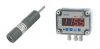 Contaminated groundwater submersible plastic body 5 psi pressure transducer & display - This submersible pressure transducer and display can be used by landfill site pump techs to read leachate water level above the transducer at the well head.
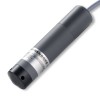 Sulfuric acid 12-15% conc. drop-in level probe for 10m high tank - level measurement of sulfuric acid tanks with a concentration between 12 and 15%.
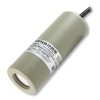 LMK809 Plastic Submersible Low Level Transmitter
- LMK807 Plastic Submersible Level Transmitter
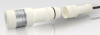 LMK 858 Plastic Submersible Liquid Level Sensor with Removable Cable
- Ferric Chloride solution hydrostatic level transmitter - We're looking for a hydrostatic level transmitter which is resistant to acids & chemicals including Chlorine & ferric chloride acid (FeCl3) dissolved in water
- Raw leachate feed tank depth probe - Depth probe for monitoring the level of raw leachate in feed tanks up to 1 metre high on a landfill site.
- 2m range 0.6% conc. chlorine liquid level sensor - Corrosion resistant liquid level sensor to measure up to 2m chlorine solution 0.6% conc.
- High-temperature level transmitter for aggressive landfill leachate - Monitor hot, aggressive leachate in landfill wells with the LMK 809 submersible level transmitter. Features PP-HT housing and ceramic diaphragm for superior corrosion resistance.
- Hydrochloric acid storage tank 1mH2Og hydro-static pressure transmitter - A hydro-static pressure transmitter for storage tank level monitoring use to measure level of 36% hydrochloric acid over a range of 0 to 1 mH2O g by immersion in the tank, and sending the corresponding 4-20mA signal through the submersible electrical connection.
- Chemical resistant level sensor for sodium hydroxide and bleach - Plastic-bodied submersible transmitter with a flush ceramic sensor provides reliable level measurement in a disinfection tank containing high-density, aggressive media.
- 33% HCL level monitoring with PVDF submersible probe - Highly corrosion-resistant submersible hydrostatic level sensor for bulk acid storage tanks.
- HVO and FAME biofuel storage tank submersible level sensor - Explore a solution for reliably measuring the level of biodiesel fuels such as HVO and FAME. A submersible level transmitter was specified with carefully selected wetted parts, including an FEP cable and FKM seals, to ensure long-term chemical compatibility in alternative fuel storage tanks.
- Lightning protected submersible level sensor for hydroelectric intakes and rivers - Enhance hydroelectric monitoring reliability with the LMK858 sensor. Built-in lightning protection and robust design for remote water level measurement.
Find out more about Plastic Submersible Hydrostatic Liquid Level Sensors to determine which product options and capabilities will best meet your application requirements.
Submersible hydrostatic level sensors are essential tools for measuring liquid levels in tanks, vessels, and wells, particularly within the chemical processing industry. These sensors operate on the principle of hydrostatic pressure, where the pressure exerted by a fluid column is directly proportional to its height. By measuring this pressure, the sensor accurately determines the liquid level above it.
When dealing with harsh chemicals, standard level sensors with exposed metal components are susceptible to corrosion, leading to premature failure and inaccurate readings. Our specialized range of corrosion-resistant submersible hydrostatic level sensors addresses this challenge by incorporating the following key features:
- PVC Housing: The non-metallic PVC (Polyvinyl Chloride) housing provides excellent resistance to a broad spectrum of chemicals, acids, and alkalis, ensuring the sensor’s longevity even in aggressive environments.
- Ceramic Diaphragm: The sensing element utilizes a ceramic diaphragm, chosen for its exceptional chemical compatibility and ability to withstand corrosive media. This ensures accurate and reliable measurements even when exposed to challenging fluids.
- Customizable Cable and Seals: To further enhance chemical resistance, these sensors offer a choice of cable coatings and seal materials. This customization allows you to tailor the sensor to your specific application, considering factors such as chemical concentration, temperature, and potential exposure to abrasive substances.
Applications
These corrosion-resistant submersible hydrostatic level sensors find wide application in various chemical processing scenarios, including:
- Storage Tanks: Monitoring the level of acids, bases, solvents, and other aggressive chemicals in storage tanks.
- Process Vessels: Measuring liquid levels within reactors, mixing tanks, and other process vessels where chemical compatibility is critical.
- Wastewater Treatment: Monitoring levels in sumps, lift stations, and treatment tanks containing corrosive wastewater.
- Chemical Injection Systems: Ensuring accurate chemical dosing by monitoring levels in day tanks and injection systems.
By utilizing these specialized sensors, chemical processing facilities can ensure accurate level measurement, prevent costly downtime due to sensor failure, and maintain the integrity of their operations even in the presence of harsh chemicals.