
Marine approved hydrostatic liquid level sensors provide accurate and reliable level measurement of seawater ballast, diesel fuel, wastewater, and liquid cargo in harsh marine environments. These sensors are designed for both internal and external mounting on tanks, offering flexibility and durability for diverse applications on ships and offshore platforms.
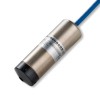 Hydrophone array submersible 200 meter seawater depth sensor - Submersible pressure sensor which can be connected at the end of our hydrophone cable to measure the water depth.
 Measuring fuel and water tank levels on ferries with a hydrostatic transmitter - Marine certified level sensors for ferry onboard fuel, water, and sewage tanks up to 2.4 meters
- LMK458 Marine Approved Hydrostatic Level Transmitter
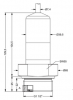
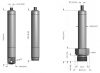 LMK 487 Submersible Ballast Tank and Draught Level Pressure Transmitter
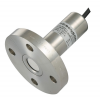 LMK457 Marine Approved Level Transmitter
- Abstraction pump protection using a screw-on hydrostatic level transmitter in a tidal river - Learn about the deployment of a 4-20mA screw-on hydrostatic level sensor for monitoring fluctuating seawater levels. Key aspects include the benefits of a fixed threaded mounting, diaphragm vulnerability without a nose cone, and protecting the atmospheric vent tube.
- Desalination plant feed tank submersible level sensor - Highly durable submersible level sensor designed for harsh desalination plant environments. Copper-nickel alloy housing and ceramic diaphragm ensure long-term reliability in aggressive saline conditions. 4-20mA output, 0-5mH2O range.
- Floating dry dock ballast tank 14ft range 4-20mA output submersible seawater level sensor - 14ft range submersible level sensor for monitoring the level of seawater in floating dry dock ballast tanks.
- Retrofitting ship bubbler tank gauging system with 22mm submersible level probe - A narrow 22mm diameter submersible level transmitter was used to replace an old bubbler system on a ship, providing an easy retrofit solution for fuel tanks without mechanical changes.
- Screw-in 2m height onboard marine vessel diesel tank base mount level sensor - Monitor fuel levels in marine diesel tanks with the DMK 458 hydrostatic level sensor. Marine-approved and designed for viscous fluids.
Find out more about Marine Approved Hydrostatic Liquid Level Sensors to determine which product options and capabilities will best meet your application requirements.
Hydrostatic level sensors utilize the principle of measuring the pressure exerted by a liquid column to determine the level of the liquid within a tank or vessel. In marine applications, these sensors play a critical role in monitoring and managing various liquids, ensuring the safe and efficient operation of ships and offshore platforms.
To ensure these sensors are suitable for the harsh marine environment, they must undergo rigorous testing and certification by recognized marine approval bodies. These certifications guarantee that the sensors meet stringent safety and performance standards, providing reliable operation even in challenging conditions.
Marine Approval Certifications
Several international marine classification societies provide certifications for hydrostatic level sensors, including:
- Det Norske Veritas Germanischer Lloyd (DNV GL): Supports approval in Norway, Germany, and other countries.
- Lloyd’s Register (LR): A global risk assessor and supports approval in the United Kingdom and internationally.
- American Bureau of Shipping (ABS): Supports approval in the United States and internationally.
- Bureau Veritas (BV): Supports approval in France and internationally.
- ClassNK: Nippon Kaiji Kyokai, supports approval in Japan and other countries.
- China Classification Society (CCS): Supports approval in China and internationally.
These organizations have established standards for the design, construction, and testing of marine equipment, ensuring that certified sensors can withstand the corrosive effects of seawater, vibrations, shocks, and extreme temperatures.
Installation Types
- Submersible Sensors: These sensors are designed to be lowered directly into the liquid, providing continuous level measurement. They are typically constructed with robust housings made from corrosion-resistant materials such as stainless steel or titanium to withstand the harsh marine environment.
- External Mount Sensors: These sensors are mounted on the outside of the tank, eliminating the need for direct contact with the liquid. They are ideal for applications where internal mounting is impractical or where access to the tank interior is limited.
Applications
- Seawater Ballast Tanks: Accurate monitoring of ballast levels is essential for maintaining ship stability and trim. Hydrostatic level sensors provide reliable level measurement, enabling efficient ballast operations and ensuring safe navigation.
- Diesel Fuel Tanks: Monitoring fuel levels is critical for optimizing fuel consumption and preventing engine starvation. Hydrostatic level sensors provide precise fuel level measurement, enabling accurate fuel inventory management and ensuring uninterrupted operation of the vessel.
- Wastewater Tanks: Effective wastewater management is crucial for environmental compliance and preventing pollution. Hydrostatic level sensors monitor wastewater levels, enabling timely discharge operations and preventing overfilling of tanks.
- Liquid Cargo Tanks: Accurate measurement of liquid cargo levels is essential for safe loading and unloading operations. Hydrostatic level sensors provide reliable level measurement, ensuring cargo integrity and preventing spills or overflows.
Advantages
- Corrosion Resistance: Marine approved sensors are constructed from materials that can withstand the corrosive effects of seawater and other harsh marine environments.
- Durability: These sensors are designed to withstand the vibrations, shocks, and temperature fluctuations encountered in marine applications.
- Accuracy: Hydrostatic level sensors provide precise and reliable level measurement, ensuring accurate monitoring and control of liquid levels.
- Easy Installation: Both submersible and external mount sensors offer straightforward installation procedures, minimizing downtime and simplifying maintenance.
- Safety and Reliability: Marine certifications guarantee that the sensors meet stringent safety standards and provide reliable performance in demanding marine environments.
- Compliance: Using marine approved sensors ensures compliance with international maritime regulations and avoids potential legal issues.