
Explore our range of differential pressure sensors featuring RS485, RS232, and USB digital interfaces. These sensors provide seamless communication with computers and other devices, simplifying data acquisition and integration into various industrial and research applications. Choose from a variety of pressure ranges, accuracies, and output options to meet your specific needs.
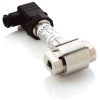 PD33X Digital Differential Pressure Sensor - High precision differential pressure transducer with accuracy of 0.1% full scale. Available with RS485, USB or RS232 for connecting to a computer.
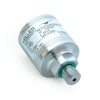 41X Low Range Digital Output Pressure Sensor - Low pressure sensor with a USB, RS232 or RS485 digital output interface for measuring low range gauge or differential pressures from 10 to 300 mbar.
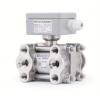 DPT100 Modbus RTU RS485 Differential Pressure Sensor - The DPT 100 is a high-accuracy differential pressure transmitter designed for fast test processes in leakage and flow measurement applications where rapid response time and high sampling rates are essential
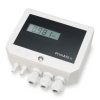 PrimAtü 10 Low Cost Low Range Differential Air Pressure Transducer - The PrimAtü 10 low cost low range differential air pressure transducer can detect and display both positive and negative differential pressure variations of very low low pressure ranges from 0.5 up to 1000 mbar/hPa, and output the pressure as a 4-20mA, 0-20mA or a 0-10Vdc analog output.
- Airflow and chamber pressure measurement for a portable modbus data acquisition trolley
- -1 to 6 bar differential RS485 Modbus RTU freshwater pressure sensor for farming use on a 6bar line
- USB pressure sensors for detecting water leaks & restrictions
Send us your enquiry to discuss your Digital Interface DP Sensors application with a product specialist, and they will help you select the best option to suit your specific requirements.
Digital interface differential pressure sensors offer a modern solution for pressure measurement, providing direct communication capabilities with computers and other digital systems. These sensors eliminate the need for analog-to-digital converters (ADCs) and simplify data acquisition and analysis.
Product Advantages
Digital interface differential pressure sensors provide superior performance and operational advantages compared to traditional analog transmitters. By processing measurements via internal microprocessors and transmitting digital signals, these sensors eliminate analog signal losses and conversion errors, maintain signal integrity in electrically noisy industrial environments, and enable advanced digital error compensation for low differential pressure and high static line pressure applications. Furthermore, direct computer and network connectivity simplifies data acquisition and multi-sensor management.
Signal Integrity & Precision
Digital output signals preserve precise differential pressure readings without susceptibility to signal degradation or noise over long cable runs. Whether monitoring subtle pressure drops across HVAC filters or measuring rapid flow changes, the digital signal arrives intact. Integrated high-resolution analog-to-digital converters (16-bit or higher) process minute pressure variations across the sensing diaphragm, delivering measurement precision better than 0.01% full scale without signal loss.
Direct Digital Communication
Direct digital communication eliminates the need for repeated analog-to-digital or digital-to-analog conversions between the differential pressure sensor and receiving instrumentation. By interfacing directly with computers, PLCs, or data acquisition hardware via digital protocols, the system avoids additional conversion errors, ensuring that the differential pressure measurement used for control loops or data logging retains its original accuracy.
Advanced Digital Error Compensation
Internal microprocessors digitally characterize the differential pressure sensor across a wide matrix of pressure and temperature points. This 3D error mapping virtually eliminates linearity and thermal zero/span errors. Additionally, this compensation mitigates zero-shift offsets caused by high static line pressure stress on oil-filled or mechanical DP cell diaphragms, maintaining exceptional accuracy across varying process conditions.
Multi-Drop Networking & Connectivity
Digital interfaces such as RS485, USB, and RS232 allow seamless multi-drop networking and direct computer connectivity. In differential pressure applications—such as monitoring cleanroom room-to-room pressure differences or flow rate monitoring in pipelines—digital protocols allow each sensor to be uniquely addressed and polled over a single bus. Real-time data logging, live plotting, and sensor diagnostics can be managed centrally via software without signal conditioning hardware.
Enhanced Rangeability & Turndown Ratio
Advanced digital compensation allows differential pressure sensors to offer higher turndown ratios and flexible rangeability. High turndown ratios enable a single sensor to accurately measure lower differential pressure spans without sacrificing precision or increasing relative thermal errors, providing immense versatility for varying flow rates or dual-range differential pressure monitoring.
Product Applications
Digital interface differential pressure sensors are crucial components across a wide spectrum of modern industries, providing precise, real-time measurements required for safety, process efficiency, and environmental control. By integrating seamlessly with digital control networks, programmable logic controllers (PLCs), and central computer monitoring systems, these sensors streamline data acquisition in diverse environments ranging from HVAC systems and cleanrooms to complex industrial automation, medical equipment, and advanced research facilities.
Building Automation
In commercial and industrial HVAC systems, continuous monitoring of pressure differentials across air filter banks is essential for maintaining optimal indoor air quality, ensuring energy efficiency, and preventing system overload. As filters collect particulate matter, the pressure drop across them increases. RS485-equipped differential pressure sensors using protocols like Modbus RTU can be multi-dropped along a single communication line, transmitting precise real-time differential pressure data to a central Building Management System (BMS). This connectivity enables automated maintenance alerts, predictive filter replacement schedules, and dynamic fan speed adjustments to balance airflow and minimize energy consumption.
Environmental Monitoring
Critical environments such as pharmaceutical cleanrooms, semiconductor fabrication facilities, isolation wards, and research laboratories rely on strictly controlled room-to-room pressure cascades to prevent airborne contamination. Digital interface differential pressure sensors featuring RS232, RS485, or USB outputs measure minute positive or negative pressure differences between adjacent zones with exceptional precision. Direct digital communication ensures that subtle pressure drifts are logged without analog signal degradation, allowing centralized monitoring platforms to record continuous audit trails for regulatory compliance, trigger containment alarms, and rapidly respond to room seal compromises.
Industrial Process Control
Differential pressure measurement is fundamental to determining fluid and gas flow rates across primary flow elements like orifice plates, Venturi tubes, and nozzles in industrial pipelines. By delivering high-accuracy digital output directly to Programmable Logic Controllers (PLCs) or Distributed Control Systems (DCS), digital DP sensors eliminate conversion errors inherent in analog loops. This enables rapid and precise closed-loop control of control valves, dosing pumps, and variable-speed drives in chemical manufacturing, oil and gas distribution, and water treatment, enhancing operational safety, product consistency, and process throughput.
Medical Equipment
In medical devices such as ventilators, anesthesia machines, and respiratory diagnostic equipment, accurate measurement of low differential pressures is vital to ensuring precise tidal volumes and airway pressure management for patients. Digital DP sensors with direct board-level or USB interfaces allow microcontrollers to poll patient breath dynamics in real time with high resolution. This fast, noise-immune digital feedback loop ensures patient safety through immediate breath detection, accurate flow integration, and instantaneous response to airway obstructions or disconnects.
Research and Development
In aerodynamic testing, wind tunnel experiments, fluid dynamics research, and prototype filter development, researchers require high sampling rates and exceptional measurement accuracy. USB and RS232 differential pressure sensors simplify laboratory test setups by connecting directly to PCs running data acquisition software, eliminating the need for external signal conditioning hardware or dedicated DAQ cards. Researchers can collect, plot, and analyze high-resolution pressure data in real time, streamlining experimental validation and model calibration.
Product Selection
Selecting the optimal digital interface differential pressure sensor involves evaluating key differential pressure specifications, system parameters, and digital communication protocols against your specific application requirements.
Specifying Differential Pressure Parameters
Line Pressure
Static line pressure refers to the maximum pressure existing on the system. Because line pressure is often significantly higher than the measured differential pressure range, verify that the sensor possesses an adequate line pressure rating. Ensure the DP cell design balances line pressure stress equally across both sides to prevent zero-shift offsets caused by mechanical diaphragm strain under varying process pressures.
Overpressure Limits
Differential overpressure occurs when high line pressure is applied to only one side of the sensing diaphragm, such as during installation, maintenance, or valve sequencing. To prevent permanent calibration drift or diaphragm damage, choose a DP sensor featuring internal mechanical diaphragm stops or one rated for high one-sided overpressure.
Media Compatibility (Wet vs. Dry)
Match the sensor construction to the process media on both high and low pressure ports:
- Wet/Wet: Designed with dual isolation diaphragms for liquid or aggressive gas applications on both ports. Offers higher line pressure ratings but incurs a larger size and higher cost.
- Wet/Dry: Allows liquid media on the positive high-pressure side only, requiring dry, non-condensing gas on the reference side.
- Dry/Dry: Suitable strictly for clean, dry gases on both ports (e.g., HVAC and cleanroom airflow). Provides cost-effective, high-sensitivity low-pressure measurement.
Choosing a Digital Interface Protocol
Selecting the appropriate digital bus protocol depends on transmission distance, total sensor count, network topology, and system architecture:
RS485 (e.g., Modbus RTU)
- Pros: Uses noise-immune differential signaling ideal for long cable runs in electrically noisy industrial settings. Supports multi-drop networking, allowing multiple uniquely addressed DP sensors to share a single bus connected to PLCs or BMS platforms.
- Cons: Requires master-slave polling architecture and dedicated RS485-to-USB/RS232 converter hardware or communication cards for direct PC monitoring.
USB Interface
- Pros: Delivers plug-and-play simplicity with high sample rates and direct computer connectivity without external signal converters or DAQ hardware. Excellent for R&D, lab testing, and fast dynamic data logging.
- Cons: Restricted to short cable distances (typically under 5 meters) and point-to-point connections, making it unsuited for distributed industrial control loops.
RS232 Interface
- Pros: Simple, point-to-point serial communication widely supported by legacy industrial equipment, microcontrollers, and specialized lab instruments.
- Cons: Limited to short transmission distances, single-device point-to-point connections (no multi-dropping), and susceptible to noise interference over longer cables.