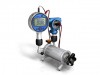
Primary pressure reference standards are used to measure and generate pressures to a high level of accuracy and repeatability for calibration purposes.
These instruments are used to ensure that the measurement uncertainty of all pressure instrumentation which are referred to the standard are kept within performance requirements.
For example water or mercury manometers which are liquid filled U tube columns, use the difference in height between columns to determine the weight (Force) of liquid. Since the diameter of the column is known the cross sectional area (Area) can be calculated and thus the pressure can be determined.
Another example is a Dead Weight Tester which uses a piston and cylinder of a known cross sectional area (Area) and weights of a known mass (Force) which are placed on top of the piston. Thus the pressure applied can be determined very accurately.
Since Primary Pressure Standards are the most accurate pressure measurement instruments available they are typically used as calibration instruments for pressure sensors and gauges.
Featured pressure calibration products
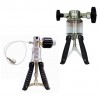 Calibration Hand Pumps - Explore pneumatic and hydraulic calibration hand pumps for precise pressure/vacuum generation. Ideal for labs, factories & process plants with pressure transfer standards.
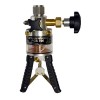 High Pressure Range Calibrators - High range pressure calibrators for checking and testing the accuracy performance of high pressure measurement instrumentation.
Glossary of Calibration technical terms
- BSL – Best Straight Line
- Compensated Temperature Range
- Dead Weight Tester
- NPL – National Physical Laboratory
- PPM – Parts Per Million
- Secondary Pressure Standard
- Span Offset
- Traceable Calibration
- TSL – Terminal Straight Line
- UKAS – The United Kingdom Accreditation Service
- UKAS Calibration Certificate
- Zero Offset
- Zero Tare
Help from Calibration resources
- Determining calibration error of Bourdon tube pressure gauge
- What is the difference between zero offset and zero drift?