
High-pressure voltage output transducers are essential components for monitoring and controlling demanding hydraulic applications. These sensors provide accurate pressure measurements even in extreme conditions, ensuring safe and efficient operation of hydraulic test rigs, machinery, and control systems.
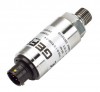 TPSA Precision High Pressure Transducer - High pressure transducer for pressure testing applications with pressure ranges from 0...4 bar (60 psi) up to 0...1000 bar (15,000 psi) gauge with a measurement accuracy of 0.1%.
 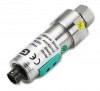 TPHADA Ultra High Range Pressure Sensor - Extra high pressure transmitter with 4-20mA current loop or amplified voltage output signal in pressure ranges from 1000 up to 5000 bar gauge.
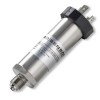 DMP333i Rangeable High Pressure Precision Transducer - High performance transducer with adjustable scaling for modifying the pressure range for different applications. Ranges from 0-60 bar up to 0-600 bar.
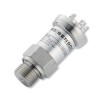 DMP333 High Range Precision Pressure Transmitter - The DMP 333 is a stainless steel 316L wetted parts pressure sensor for high pressure ranges on applications such as hydraulic test benches, presses, and hydraulic actuation.
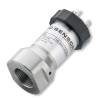 DMP334 Hydraulic Pressure Transducer for Very High Pressures - DMP 334 is a high range pressure transducer designed for measuring hydraulic pressures up to 2200 bar (32,000 psi) .
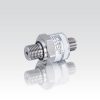 17.620 G Low Cost Heavy Duty Compact OEM Hydraulic Pressure Sensor - Compact robust all welded stainless steel pressure sensor for heavy duty hydraulic system applications.
- High pressure homogenizer engine oil pressure sensor with 60000 psig range and 0-10Vdc output
- 60000 psi hydraulic pressure transducer with 0-5Vdc signal out
- Custom pressure sensor for mining haul truck suspension hydraulics
- 200 bar pressure sensor to interface with Arduino board
- OEM 5000 psig range 5Vdc supply with 0.5-4.5Vdc output pressure sensor
- 6000 psi g range 0-10V output ceramic diaphragm pressure sensor
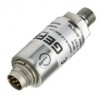 Hydraulic Analog Voltage Signal Pressure Transducers - Measure extreme hydraulic pressures with our robust, voltage-output (0-5V, 0-10V) transducers. Designed for actuators, presses, & pumps. Ideal for demanding applications in automotive, aviation, and material testing.
Send us your enquiry to discuss your High Range Voltage Output Pressure Transducers application with a product specialist, and they will help you select the best option to suit your specific requirements.
High-pressure environments require robust and reliable sensors capable of withstanding the immense forces involved. High-pressure voltage output transducers fit this need perfectly. They are designed to measure pressures ranging from 350 bar up to an impressive 70,000 psi, covering a wide spectrum of industrial and research applications.
A key advantage of these transducers is their amplified output signals. With options ranging from 0-5V, 1-5V, 0-10V, and 1-10V, they provide a strong and easily measurable signal that is compatible with a wide range of data acquisition systems and control devices. This simplifies integration and ensures reliable data transmission even in noisy industrial environments.
Product Advantages
High-pressure voltage output transducers offer several key advantages that make them the preferred choice for demanding hydraulic systems and extreme-pressure environments. From exceptional durability to robust signal conditioning and flexible output choices, these instruments ensure superior performance and reliable integration.
High-Pressure Durability
These transducers are engineered with robust sensing elements capable of withstanding the extreme forces inherent in high-pressure environments. By utilizing advanced materials and construction techniques, they ensure long-term reliability and accurate performance even when subjected to intense, continuous stress, making them ideal for rigorous hydraulic applications.
Amplified Signal Reliability
Featuring built-in signal conditioning, these transducers provide a strong, amplified voltage output (e.g., 0-10V) that is highly resistant to electrical noise. This robust output ensures accurate data transmission over longer distances and simplifies integration with standard data acquisition systems, PLCs, and control devices, minimizing signal degradation in industrial settings.
Precise Control and Monitoring
Designed to deliver continuous and accurate pressure feedback, these transducers enable precise control over actuators, valves, and other critical system components. Their ability to maintain consistent measurement accuracy under high-pressure conditions allows operators to optimize system performance, maintain safety standards, and achieve repeatable results in both testing and industrial processes.
Wide Compatibility
With a comprehensive range of voltage output options (such as 0-5V, 1-5V, 0-10V, and 1-10V) and support for pressure ranges up to 70,000 psi, these transducers offer exceptional flexibility. This adaptability ensures they can be seamlessly integrated into a wide variety of hydraulic test rigs, research setups, and industrial control systems without the need for extensive system modifications.
Product Applications
High-pressure voltage output transducers are utilized across a broad spectrum of demanding industrial, energy, manufacturing, and research applications. By converting extreme fluid and hydraulic pressure levels into precise, amplified electrical signals, these transducers enable critical monitoring, automated safety interlocks, and fine-tuned control across specialized equipment and heavy machinery.
Hydraulic Test Rigs
In hydraulic test rigs, these transducers play a vital role in verifying the mechanical integrity and operational limits of valves, pumps, hoses, and cylinders under severe pressure cycles. They deliver continuous, highly accurate voltage feedback to data acquisition units, allowing test engineers to detect micro-leaks, monitor burst pressure thresholds, and validate compliance with rigorous industry safety standards.
Hydraulic Control Systems
Industrial hydraulic control systems rely on real-time feedback to manage heavy actuators, proportional valves, and power units. High-pressure voltage output transducers integrate seamlessly with PLCs to deliver stable, noise-immune signals, enabling immediate system responses, exact force regulation, and proactive thermal or overload protection across automated machinery.
High-Pressure Research
Academic and industrial research laboratories utilize these transducers during material synthesis, phase-change studies, and extreme fluid dynamics experiments. Their exceptional measurement stability at extreme pressure ranges ensures accurate scientific logging, supporting repeatable experimental setups and high-precision data collection in high-pressure physics and chemical engineering.
Water Jet Cutting Machines
Ultra-high-pressure water jet cutting systems depend on precise pressure maintenance to achieve clean cuts through dense alloys, stone, and composite materials. Voltage output transducers continuously measure intensifier pump output, ensuring steady fluid pressure to prevent nozzle wear, cutting speed variance, or work surface damage.
Oil & Gas Well Monitoring
In downhole and wellhead operations, transducers provide critical monitoring of downhole pressure, blow-out preventers, and injection manifolds. Designed to endure harsh environmental conditions and immense hydrostatic pressure, they deliver immediate signal updates that protect surface equipment and preserve wellhead safety.
Plastic Injection Molding
Injection molding machines rely on accurate hydraulic pressure feedback during the injection, packing, and holding phases to produce defect-free molded parts. High-pressure voltage transducers monitor hydraulic ram pressures, guaranteeing uniform density, minimal part shrinkage, and precise cycle-to-cycle repeatability.
Product Selection
Selecting the right high-pressure voltage output transducer involves carefully evaluating key operational parameters to guarantee long-term reliability and measurement accuracy. By considering factors such as operating pressure limits, signal compatibility, environmental conditions, and chemical compatibility with process media, users can ensure seamless system integration and optimal performance under demanding conditions.
Pressure Range and Overpressure Protection
Matching the transducer’s full-scale pressure range to the application is critical for achieving optimal measurement resolution while preventing sensor failure. In high-pressure hydraulic systems, dynamic pressure spikes and water hammer effects can exceed normal operating limits. Selecting a device with sufficient overpressure ratings and burst pressure limits protects the delicate sensing element from permanent deformation or failure during extreme pressure surges.
Voltage Output and Signal Compatibility
Choosing the appropriate output signal—such as 0-5V, 1-5V, 0-10V, or 1-10V—depends on the input specifications of your data acquisition system or PLC. Selecting an output with a offset or “live zero” (like 1-5V or 1-10V) allows control electronics to distinguish between a zero-pressure state and a broken wire or loss of power, providing an essential diagnostic safety feature for critical control loops.
Environmental and Thermal Stability
Operating environments subject sensors to broad ambient temperature variations, mechanical vibration, and shock. Thermal expansion can induce measurement drift in sensing elements, making advanced temperature compensation vital for consistent accuracy. Additionally, ensuring appropriate ingress protection (IP ratings) and robust housing construction prevents moisture intrusion and mechanical damage in harsh industrial settings.
Material Compatibility and Process Connections
The wetted materials, including diaphragms and seals, must be chemically compatible with the hydraulic fluids, synthetic oils, or corrosive chemicals used in the process to avoid material degradation. Furthermore, selecting the proper high-pressure process fittings (such as cone-and-thread or specialized high-pressure threads) ensures a secure, leak-free mechanical connection capable of safely withstanding extreme operating pressures.