
Ensure the safety and integrity of your food and beverage processing with specialized hygienic pressure gauges. Engineered with stainless steel construction and food-grade oil fill options, these gauges are designed to withstand rigorous cleaning processes and prevent contamination, meeting the stringent requirements of food, dairy, beverage, medical, and biotech applications.
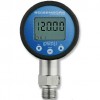 Baroli 02P Low Range Flush Diaphragm Digital Pressure Gauge - All stainless steel 316L hygienic digital display pressure gauge for measuring low range pressures with ranges from 0-100 mbar up to 0-40 bar.
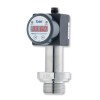 DS200P Sanitary Low Range Pressure Gauge, Switch and Sensor - All in one electronic switch, gauge and sensor designed specifically for use in the food, drink and biomedical industry for measuring process pressures.
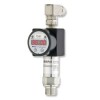 DS201P High Range Flush Pressure Gauge, Switch and Sensor - High pressure sensor, electronic switch and digital gauge with an all welded stainless steel flush diaphragm for high viscosity liquids.
- 60psig range pharmaceutical pressure gauge and 0-10Vdc transducer with triclamp fitting
- Food and beverage pressure gauge with 10 barg range and 4-20mA output
Send us your enquiry to discuss your Food & Drink Grade, Hygienic Pressure Gauges application with a product specialist, and they will help you select the best option to suit your specific requirements.
Hygienic pressure gauges are essential tools for maintaining the cleanliness and safety of food and beverage processing environments. Unlike standard pressure gauges, these specialized instruments are built to resist the growth of bacteria and other contaminants, ensuring the integrity of your products and processes.
By utilizing hygienic pressure gauges, food and beverage manufacturers can effectively uphold strict hygiene standards, ensuring the safety and quality of their products throughout the entire production chain.
Product Advantages
Stainless Steel Construction
The most critical feature of a hygienic pressure gauge is its construction. They are typically fabricated from high-grade stainless steel, most commonly 316L. This material offers excellent resistance to corrosion and is easy to clean and sterilize. Moreover, the surfaces of these gauges are often polished to a mirror-like finish (Ra grade) to minimize any crevices or pockets where bacteria or other contaminants might accumulate.
Food-Grade Fill Fluids
In some applications, hygienic pressure gauges may be filled with food-grade oils. This further enhances their sanitary properties, as it eliminates the risk of contamination from traditional fill fluids should the gauge become damaged.
Hygienic Process Connections:
Another key aspect of these gauges is their hygienic process connections. These fittings are designed to create smooth, crevice-free transitions between the gauge and the process piping, making them easy to clean and preventing the buildup of residue. Common hygienic connection types include tri-clamp, Varivent, and DIN 11851.
Ease of Cleaning
Hygienic pressure gauges are designed for easy integration into the rigorous cleaning protocols that are standard in these industries. They can withstand frequent cleaning and sterilization using methods such as Clean-in-Place (CIP) and Sterilization-in-Place (SIP).
Product Applications
Hygienic pressure gauges are critical components across various industries, ensuring precise pressure monitoring while maintaining strict sanitary conditions. Their specialized design allows them to be seamlessly integrated into diverse processes, ranging from food and beverage production to pharmaceutical manufacturing, where cleanliness and contamination prevention are paramount.
Food Processing
Used to monitor pressure in tanks, pipelines, and mixers during food preparation, ensuring consistent product texture and quality while preventing bacterial growth in dead zones.
Beverage Manufacturing
Essential for controlling carbonation levels, filtration pressures, and bottling line speeds in beverage production, ensuring product consistency and safe handling.
Brewing
Helps maintain precise pressure in fermentation vessels, wort boiling tanks, and filtration units, which is crucial for achieving the desired flavor profile and consistency in beer production.
Dairy Production
Critical for pasteurization systems, homogenization processes, and storage tank monitoring, where maintaining a sterile environment is vital to prevent spoilage and ensure product safety.
Pharmaceutical Manufacturing
Used in cleanroom environments and chemical reactors to monitor critical process pressures, ensuring reaction stability and adherence to strict manufacturing standards.
Biotechnological Processes
Monitors pressure in bioreactors and filtration systems during the growth of cultures and purification of products, where maintaining a completely sterile, contamination-free environment is essential for successful output.
Product Selection
Selecting the right hygienic pressure gauge involves evaluating key application criteria to ensure safety, measurement accuracy, and full compliance with industry standards. Consider the following factors when choosing an instrument for your system.
Pressure Range
Determine the operating, minimum, and maximum pressures of your system, including potential overpressure or vacuum conditions during CIP/SIP cycles, to choose an appropriate nominal pressure range.
Process Connection
Select a crevice-free fitting style—such as Tri-Clamp, Varivent, or DIN 11851 dairy pipe—that seamlessly matches your existing piping and guarantees easy cleaning.
Accuracy and Precision
Identify the required measurement tolerance for your process, balancing standard accuracy options with high-precision digital or master test gauge requirements.
Materials and Certification
Verify wetted materials (such as 316L stainless steel or special alloys), surface roughness ratings (Ra finish), FDA-compliant food-grade fill fluids, and relevant sanitary standards (3-A, EHEDG).
Display and Signal Requirements
Choose between local digital readouts (LCD or LED), battery vs. external DC power, and required control outputs such as PNP alarm switches, 4–20 mA analogue signals, or digital communication interfaces.