• Skip to primary navigation
  • Skip to main content
  • Skip to primary sidebar
SensorsONE

SensorsONE

  • Products
  • Contact

Specific Heat Capacity Calculator

Calculate Specific Heat Capacity Parameters
Select Answer Mode
Heat Transferred (Q) [?]
Total Mass (m) [?]
Temperature Change (ΔT) [?]
Specific Heat Capacity (cm) [?]

Click save settings to reload page with unique web page address for bookmarking and sharing the current tool settings

✕ clear settings

Change the answer mode for this tool by selecting heat transferred (Q), total mass (m), temperature change (ΔT) or specific heat capacity (cm) as the parameter to calculate instead


Featured temperature sensor products
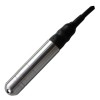
  • LMK307 Submersible Waste Water Level Sensor - Submersible waste water level sensor with optional intrinsic safety certification for monitoring the level of sewage and effluent in water treatment plants.
  • Water chiller wireless pressure and temperature monitoring - Wireless pressure and temperature sensors for providing efficient and flexible monitoring of water manifold cooling systems, and integrating seamlessly with HMI infrastructure.

Related Tools

  • Specific heat capacity units conversion
  • Heat units conversion
  • Mass units conversion
  • Temperature difference units conversion

Contents

Toggle
  • User Guide
    • Formulas
      • Symbols
    • Pressure Loss (ΔP)
    • Total Mass (m)
    • Temperature Change (ΔT)
    • Specific Heat Capacity (cm)

User Guide

This tool will calculate any parameter from the formula for the specific heat capacity of a substance c=Q/(mΔT), which includes  the amount of heat transferred from or to it, its total mass, the change in temperature, and its specific heat capacity.

Formulas

The formulas used by this specific heat capacity calculator to determine each individual parameter are:

Q = m · cm · ΔT

m = Q / (cm · ΔT)

ΔT = Q / (m · cm)

cm  = Q / (m · ΔT)

Symbols

  • Q = Heat energy transferred
  • m = Total mass
  • ΔT = Temperature difference
  • cm = Specific heat capacity

Pressure Loss (ΔP)

This is the total heat or thermal energy transferred to or from a substance.

Total Mass (m)

This is the total mass of the substance.

Temperature Change (ΔT)

This is the total change in temperature of the substance caused by the transfer of heat.

Specific Heat Capacity (cm)

Specific heat capacity (c, cp, cs, cm) is a measure of how much heat energy is required to be transferred to or from a solid, liquid or gas, in order to cause one unit of its mass, to change by one unit of temperature.
Featured temperature measurement products

  • Submersible water level and temperature probe with SDI-12/USB interface for freshwater monitoring - Versatile 10m water level and temperature probe with USB and SDI-12 connectivity, designed for hydrological studies and long-term environmental monitoring programs.
  • LMK307 Submersible Waste Water Level Sensor - Submersible waste water level sensor with optional intrinsic safety certification for monitoring the level of sewage and effluent in water treatment plants.

Primary Sidebar

Tools

  • Unit Converters
  • Pressure
  • Liquid Level
  • Temperature & Heat
  • Electrical & Electromagnetic
  • Flow
  • Force, Load & Torque
  • Mass & Weight
  • Dimensions
  • Density
  • Time & Frequency
  • Speed & Acceleration
  • Energy & Power
  • Sensors & Instrumentation
  • Shapes
  • Movement & Motion
  • Travel & Transportation
  • Pricing & Quantities
  • Chemical Quantities
  • Health & Fitness

Tool Feedback

Please provide feedback on using this Specific Heat Capacity Calculator.

Wirelessly Measure & Log Temperature

Use this battery powered wireless temperature probe to transmit readings to a receiver connected to USB, RS485, RS232, cellular network or analog output

Use this battery powered wireless temperature probe to transmit readings to a receiver connected to USB, RS485, RS232, cellular network or analog output
By clicking "OK" or continuing to use this website you are providing your consent to use cookies as described in our Privacy Policy

© 2025 SensorsONE Ltd, all rights reserved

  • Home
  • Products
  • Tools
  • Legal
  • Contact