
Robust 4-20mA pressure transmitters designed to resist seawater corrosion. Ideal for ship sytems, desalination plants, subsea & coastal monitoring.
Pressure transmitters designed for seawater service incorporate specialized materials like Titanium, engineered ceramics, or alloys such as Hastelloy for all wetted components to combat the highly corrosive effects of saltwater. This focus on material science ensures long-term reliability and accurate 4-20mA signal output in demanding marine, offshore, and coastal applications, preventing premature failure due to pitting or crevice corrosion common with standard materials. These robust instruments are essential for reliable measurements in applications ranging from shipboard systems and desalination plants to subsea equipment and environmental monitoring.
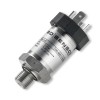 2 bar g sea water pressure transmitter for marine engine cooling system - 4-20mA (2 wire) transmitter for monitoring sea water pressure up to 2 bar gauge on the cooling system of a marine diesel engine.
- Pressure monitoring in corrosive brine transfer for water treatment - Seawater resistant pressure transmitter for pump control when transferring corrosive brine from a bulk salt saturator to water softener day tanks.
- DMK457 Marine Approved Pressure Transmitter
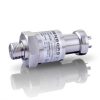 DMK 458 Seawater Low Range Pressure Transmitter
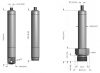 LMK 487 Submersible Ballast Tank and Draught Level Pressure Transmitter
- Monitoring high-pressure seawater pumps on merchant vessels with submersible pressure transmitters - Monitoring high-pressure seawater pump performance in marine washing systems. Submersible, corrosion-resistant pressure transmitters provide reliable measurements for both inlet and outlet pressures.
- Marine air lubrication system submersible seawater resistant air pressure transmitter - Measuring gauge air pressure inside a pipe near an underwater air injector for a ship's drag reduction system. Marine grade pressure sensors provide essential accuracy and seawater resistance for reliable component testing and performance tuning at depths down to 10 meters.
- Reverse osmosis desalination plant seawater pressure sensor with 1,500 psig range and 4-20mA output - Ensure efficient operation and prevent membrane damage in your reverse osmosis desalination system with this reliable pressure sensor designed for harsh seawater environments.
- High pressure sensing in containerized reverse osmosis systems - A robust pressure transmitter solution for monitoring high-pressure seawater in reverse osmosis (RO) systems. Learn how duplex stainless steel construction provides superior corrosion resistance for desalination applications.
- Marine fender air and seawater pressure sender and display - Monitor marine fender pressure with this IP68 marine bronze pressure sensor and high visibility display. Ideal for harsh seawater environments.
- Sea Water Resistant Ship Use Certified Pressure Transmitters - These pressure transmitters are specifically engineered to handle the harsh conditions found in shipboard and marine environments. Constructed with corrosion-resistant wetted parts suitable for seawater and certified for marine use
Find out more about Sea Water Resistant Pressure Transmitters to determine which product options and capabilities will best meet your application requirements.
Selecting pressure transmitters for applications involving seawater requires careful consideration of material compatibility due to the high salinity and inherent corrosivity of the medium. Standard industrial materials often succumb quickly to the aggressive nature of seawater, leading to premature sensor failure and unreliable measurements. Therefore, transmitters designed specifically for marine or coastal environments utilize specialized materials for all components exposed to seawater, commonly referred to as “wetted parts”. These typically include the sensing diaphragm, the process connection, and potentially the housing if the unit is submersible or frequently splashed.
The primary challenge stems from various forms of corrosion exacerbated by chlorides in seawater, including pitting, crevice corrosion, and galvanic corrosion, especially when dissimilar metals are present. Even materials like standard 316 stainless steel, often considered corrosion-resistant, can exhibit limited lifespans in warm or stagnant seawater conditions. To ensure long-term operational integrity and maintain the accuracy of the 4-20mA output signal, these transmitters often employ advanced materials. Robust options such as Titanium alloys offer exceptional resistance across a wide range of temperatures and salinity levels. Certain engineered ceramics, like high-purity Alumina (Al2O3), provide excellent chemical inertness, making them suitable for sensing diaphragms.
Special metal alloys like Hastelloy C276 or Monel 400 are frequently specified for their superior performance against pitting and crevice corrosion in chloride-rich environments. For specific components or lower-pressure applications, high-performance plastics such as PVDF (Polyvinylidene fluoride) or PEEK (Polyether ether ketone) might be used for their excellent chemical resistance, although mechanical strength and pressure ratings need careful evaluation. The choice of material often depends on the specific application parameters, including temperature, pressure range, flow conditions, and the potential presence of other chemicals or biological activity (biofouling), which can also influence corrosion rates.
These specialized transmitters find critical use in diverse marine and coastal applications. Examples include monitoring ballast tank levels on ships, measuring line pressure in seawater cooling systems for engines or industrial processes, instrumentation within desalination plants (particularly on intake and brine discharge lines), controlling systems in aquaculture facilities, monitoring pressure in subsea hydraulic control modules for offshore oil and gas platforms, deployment on oceanographic research buoys, and integration into coastal monitoring stations for tide and wave height measurement. The robust construction ensures dependable operation despite constant exposure to the harsh marine environment.