
Submersible leachate level transmitters are essential tools in environmental monitoring, especially in landfill and waste management applications. These robust devices are designed to withstand the harsh conditions found in leachate collection systems, providing accurate level measurements while fully submerged in the liquid. They play a crucial role in preventing overfilling, ensuring regulatory compliance, and protecting the surrounding environment.
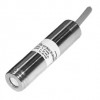 LMK307 Submersible Waste Water Level Sensor - Submersible waste water level sensor with optional intrinsic safety certification for monitoring the level of sewage and effluent in water treatment plants.
- Contaminated groundwater submersible plastic body 5 psi pressure transducer & display
- Raw leachate feed tank depth probe
- 1 barg IS certified 4-20mA submersible leachate pressure sensor for tank level gauging use
- Landfill Site Submersible Leachate Level Transmitters - Reliable leachate level measurement in landfill sumps & wells. Find corrosion-resistant submersible transmitters with durable cables & stable 4-20mA signals.
Send us your enquiry to discuss your Submersible Leachate Level Transmitters application with a product specialist, and they will help you select the best option to suit your specific requirements.
Submersible leachate level transmitters are specialized sensors designed to operate while fully immersed in leachate, a potentially corrosive and contaminated liquid generated from the decomposition of waste materials. These transmitters typically utilize a pressure-based measurement principle, where the hydrostatic pressure exerted by the leachate column is converted into a proportional 4-20mA current output signal. This signal can then be transmitted to remote monitoring and control systems for data logging, analysis, and automated pump control.
Product Advantages
Submersible leachate level transmitters offer significant engineering and operational benefits that ensure dependable performance in critical waste management applications. By combining ruggedized construction and hermetic sealing with wide dynamic measurement ranges, these instruments deliver high accuracy and seamless system integration. Together, these features provide a reliable foundation for continuous environmental protection, regulatory compliance, and automated monitoring.
Robust Construction
Submersible leachate level transmitters are constructed from durable materials such as high-grade 316L stainless steel, Hastelloy C-276, or specialized corrosion-resistant polymers like PVC and PVDF. This heavy-duty structural integrity allows them to directly withstand the aggressive chemical composition, high salinity, and organic solvents found in landfill leachate without undergoing material degradation or mechanical failure over long-term deployments.
Ingress Protection
These transmitters feature advanced hermetic sealing techniques, high-performance O-ring assemblies, and molded cable entry systems designed to achieve robust IP68 ingress protection ratings. This continuous waterproof barrier prevents moisture and hazardous fluid infiltration into the internal electronics, preserving signal accuracy and guaranteeing dependable continuous operations even under prolonged, high-pressure submersion.
Wide Measurement Range
Designed with versatility in mind, submersible leachate level transmitters offer customizable measurement ranges from shallow collection sumps to deep monitoring wells and industrial storage tanks. Their dynamic pressure-sensing capabilities ensure precise level tracking across varying liquid depths, accommodating sudden volume surges during rainfall events while maintaining high resolution across the entire operating span.
Remote Monitoring and Control
Utilizing standard 2-wire 4-20mA analog output signals or digital communication protocols, these devices integrate seamlessly with external PLCs, telemetry systems, and SCADA control panels. This connectivity enables real-time automated pump control, centralized data logging, alarm management, and remote diagnostic assessment, reducing the need for manual on-site inspection and lowering long-term maintenance costs.
Easy Installation and Maintenance
The self-contained, drop-in design of submersible transmitters simplifies site installation by eliminating the need for complex mounting brackets or external plumbing. Features such as flush ceramic diaphragms resist clogging and bio-fouling, making field cleaning, zero-point adjustments, and routine maintenance straightforward and cost-effective throughout the instrument’s operational lifespan.
Product Applications
Submersible leachate level transmitters are widely deployed across various industries to manage challenging liquid environments. From landfill sites and wastewater plants to industrial lagoons, mining basins, and agricultural storage facilities, these versatile instruments provide continuous, high-accuracy level monitoring. By offering reliable liquid measurement in harsh and corrosive environments, they help operators ensure environmental protection, optimize pumping systems, and comply with strict regulatory standards.
Landfill Leachate Management
Monitoring leachate levels within landfill cells, collection sumps, and storage tanks is critical to optimizing automated pump operations and preventing environmental contamination. Submersible transmitters installed in landfill sumps provide real-time hydrostatic pressure data that allows control systems to maintain liquid head within permitted regulatory boundaries. By withstanding aggressive chemical runoff, these sensors reduce overfilling risks and protect surrounding groundwater networks.
Wastewater Treatment Plants
Accurate level measurement in equalization tanks, aeration basins, and clarifiers is essential for maintaining efficient treatment processes in municipal and industrial municipal plants. Submersible leachate sensors deliver stable performance in fluid environments with high solid concentrations, bio-solids, and varying viscosities. Their reliable signals allow plant controllers to automate chemical dosing, manage sludge flow, and optimize energy use during peak hydraulic loads.
Industrial Waste Lagoons
Monitoring chemical runoff and leachate in industrial waste lagoons prevents hazardous overflow events and safeguards adjacent soil and surface water. Submersible transmitters featuring chemically resistant housing materials, such as Hastelloy or PVDF, withstand harsh acidic or alkaline industrial effluents. Continuous level tracking enables early detection of capacity limits and supports proactive emergency response planning.
Mining Operations
Measuring fluid levels in mine tailings ponds, settling basins, and acid mine drainage pits is critical for water management and environmental remediation. Heavy-duty submersible level sensors are built to withstand heavy slurry, abrasive particulates, and low pH levels typical of mining runoff. Accurate level tracking assists site operators in managing pond freeboard levels and ensuring structural containment integrity.
Agriculture
Agricultural operations utilize submersible sensors to monitor livestock effluent levels in manure storage lagoons and waste treatment basins. These transmitters provide continuous level measurements to prevent accidental spills and support efficient field spreading schedules. Robust construction prevents bio-fouling and chemical degradation, ensuring reliable performance in organic waste management applications.
Product Selection
Selecting the optimal submersible leachate level transmitter requires a thorough evaluation of the operational environment, liquid characteristics, and system integration needs. Key factors to consider include ensuring robust submersible design and ingress protection, matching the measurement range to dynamic liquid levels, specifying high accuracy and long-term stability, verifying material compatibility against aggressive leachate chemistry, and evaluating physical installation requirements such as cable length and mounting configurations.
Submersible Design
The transmitter must feature a fully hermetic, IP68-rated seal to prevent fluid ingress into sensitive internal electronics during continuous or deep submersion. Heavy-duty cable gland assemblies, potted electronics, and specialized strain-relief boots ensure long-term structural integrity and prevent moisture migration along the cable path in demanding sump or borehole environments.
Measurement Range
Selecting a transmitter calibrated to the expected liquid head range is vital for maximizing signal resolution and overall measurement sensitivity. Engineers should account for extreme low-water baseline conditions as well as potential surge levels during storm events or high hydraulic load periods to prevent sensor overpressure damage and ensure reliable continuous output.
Accuracy and Stability
High-precision ceramic or piezoresistive sensing elements provide exceptional accuracy with minimal signal drift over extended deployment periods. Temperature-compensated circuitry and thermal shock resistance are essential for maintaining measurement integrity in open-air sumps or deep storage tanks where ambient and liquid temperatures fluctuate significantly.
Material Compatibility
Because landfill leachate often contains volatile organic compounds, heavy metals, acids, and aggressive salts, body materials must be selected carefully. Options like 316L stainless steel, Hastelloy C, titanium, or specialized plastics (such as PVDF or PVC), along with chemical-resistant cable sheathings like PUR, FEP, or TPE, prevent premature chemical degradation and structural failure.
Installation Requirements
Physical site constraints dictate choice of cable lengths, integrated venting tubes for barometric reference, and mounting accessories such as suspension clamps, anchor weights, or protective stilling wells. Selecting flush non-clogging diaphragms or open-port designs further reduces bio-fouling and simplifies routine field cleaning and zero-point recalibration.