
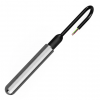
High-frequency sea level monitoring system in the Mediterranean and Red Seas, where extreme salinity and biofouling pose significant challenges to standard instrumentation. The solution focuses on delivering high-accuracy hydrostatic measurements via the SDI-12 protocol, ensuring seamless integration with existing low-power environmental data logging networks.
- Requirement: Simultaneous measurement of sea level and water temperature with ±0.1% full-scale accuracy.
- Environment: Permanent submersion in high-salinity seawater with a focus on long-term material stability.
- Communication: Use of the SDI-12 version 1.4 protocol for digital telemetry.
- Frequency: High-speed sampling at 1-second intervals to capture wave and tidal oscillations.
The project requires a specialized hydrostatic level monitoring solution for deployment in coastal regions characterized by some of the highest salinity levels globally. In these environments, standard stainless steel instrumentation often succumbs to pitting, galvanic corrosion, and rapid biofouling, which can compromise the integrity of the sensor diaphragm and the accuracy of the data. The monitoring system must provide continuous sea level and temperature readings to a central data logger, necessitating a digital output that can handle long cable runs—up to 60 meters—without signal degradation or loss of precision.
To meet these demanding environmental criteria, the solution utilizes the SLS-D Series configured with a housing made from Marine Bronze CA104. Unlike conventional alloys, Marine Bronze provides superior resistance to seawater corrosion and possesses natural antimicrobial properties that significantly reduce biofouling on the sensor body. The heart of the instrument features a ceramic piezo-resistive sensing element. The use of a ceramic Al2O3 diaphragm is particularly advantageous in saltwater applications because it is chemically inert and mechanically robust, offering greater protection against the abrasive nature of suspended solids in coastal waters compared to traditional silicon-based sensors.
The internal electronics of the SLS-D Series are driven by an onboard 16-bit microprocessor, which performs high-level linearization and temperature compensation. This processing power is critical for achieving the required ±0.1% accuracy and allows for density correction settings to be applied directly within the sensor’s firmware. With a response time of less than 10ms, the device easily supports the high-frequency 1 Hz sampling rates required for detailed tidal and wave analysis. The digital SDI-12 version 1.4 interface allows the sensor to operate on a low-power 9-28V DC supply, making it ideal for remote stations where power efficiency is paramount.
This combination of corrosion-resistant materials and sophisticated digital processing provides a reliable, low-maintenance solution for critical maritime research and flood defense infrastructure.

SLS-CD Submersible SDI-12 Interface Seawater Level Sensor
- Part Number: SLS-CD-A-B-A-060-M-V-6000-G-00
- Digital Output: SDI-12 (A)
- Accuracy: 0.10% FS (B)
- Cable Material: PUR Submersible Cable (A)
- Cable Length: 60 Meters (060)
- Housing Material: Marine Bronze CA104 (M)
- Seal Material: FKM (V)
- Pressure Range: 0-60mWG (6000)
- Pressure Reference: Gauge (G)
- Electrical Connection: Tail Ends (00)