
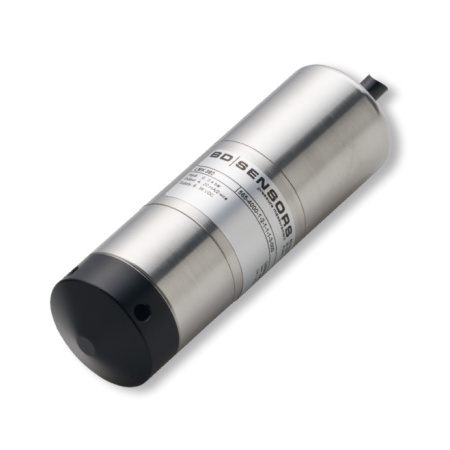
Discover how high-purity ceramic diaphragms and specialized TPE cabling ensure accurate hydrostatic level monitoring in fluid environments reaching 125 degrees Celsius, providing a robust solution for geothermal and industrial heat applications.
Managing the fluid levels within geothermal reservoirs and hot springs presents unique challenges for the process engineer, particularly regarding the longevity of sensing materials and the integrity of the signal path. The LMK382 is engineered to address the specific failure points found in these environments, where standard hydrostatic probes often succumb to thermal degradation of the outer jacket or chemical erosion of the sensing face. By utilizing a 99.9% high-purity ceramic Al2O3 diaphragm, this series provides an exceptionally hard and chemically inert interface that resists the scaling and mineral crystallization common in geothermal waters. Unlike traditional metallic diaphragms that may suffer from hydrogen embrittlement or pitting in the presence of dissolved minerals and gases, the ceramic element maintains its structural integrity and calibration stability over long-term immersion in fluids reaching up to 125°C.
A critical consideration for any process engineer integrating sensors into high-temperature pools is the survival of the transmission line. While standard submersible cables typically fail as their jacketing softens and loses its moisture-blocking properties at approximately 70°C, the LMK382 utilizes a specialized TPE signal cable. This material is specifically selected for its ability to maintain its mechanical properties and electrical insulation at near-boiling temperatures, ensuring that the internal capillary vent tube remains open. This venting is vital for accurate gauge pressure measurement, as it allows the sensor to compensate for barometric fluctuations, providing a precise level reading based solely on the hydrostatic head of the geothermal fluid.
Installation of the LMK382 in geothermal applications is typically achieved via the probe version with a protective nose cone, which guards the ceramic face against physical damage during deployment while facilitating a laminar flow of media across the sensor. This setup is particularly effective in thermal bath management systems, geothermal power plant cooling ponds, and volcanic research sites where the liquid density may vary with temperature. To ensure the highest degree of reliability, the internal electronics are thermally compensated to minimize signal drift throughout the -25 to +125°C operating range. The use of FKM seals further enhances the chemical compatibility of the transmitter, protecting the internal components from the aggressive sulfur compounds and salts often found in subterranean water sources.
LMK382 High Temperature Submersible Level Transmitter
- Pressure Range: 10
- Units: mH2O
- Reference Type: Gauge / Vented (atm to +P)
- Output Signal: 4-20mA, 2 wire
- Accuracy: 0.35% FS
- Installation Type: Probe version with nose cone
- Housing Material: Stainless Steel 316L
- Diaphragm Material: Ceramic Al2O3 99.9%
- Media Exposed Seals: FKM
- Cable Type: TPE (125degC max)
- Cable Length: 10
- Cable Length Units: Metres (m)