
Panel and bench mount digital controllers serve as the brains of industrial automation, offering versatile solutions for precision control of various actuators and processes. These devices accept a wide range of sensor inputs, converting them into variable or continuous control outputs to regulate essential components like pumps, valves, heaters, and motors. With their compact design and advanced functionality, these digital controllers are essential tools for optimizing efficiency and maintaining stability across diverse industrial settings.
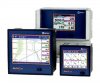 MultiCon Multichannel Controller and Datalogger - Multifunctional digital controller & datalogger for processing the signal from an extensive range of sensors for the purpose of controlling a process or recording data.
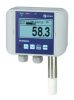 ProSens Environmental Monitor and Controller - The ProSens environmental monitor and controller is an industrial interface instrument which integrates a transmitter, display, meter and controller functions in one box.
- Vacuum testing PID controller and datalogger for pressure-flow measurement and regulating vacuum
- Differential pressure, temperature and humidity controller for multi-zone pharmaceutical cleanrooms
- Centralized control and monitoring solution for bitumen handling processes
- Water level controller and sensor with email notifications for multiple 4m high tanks
- Laboratory environment monitor for precise room pressure, temperature and humidity
Send us your enquiry to discuss your Digital Controllers application with a product specialist, and they will help you select the best option to suit your specific requirements.
Digital controllers designed for panel or bench mounting are compact yet powerful devices that are crucial in automating industrial processes. They translate sensor inputs into control outputs that precisely govern a range of equipment. Whether controlling the flow of liquids with pumps and valves, maintaining precise temperatures with heaters, or directing the motion of actuators and motors, these controllers are essential for efficient operation.
By understanding the capabilities and applications of panel and bench mount digital controllers, you can leverage their precision and versatility to optimize your industrial processes and achieve your operational goals.
Versatile Signal Inputs
A key strength of these controllers is their adaptability to various sensor inputs. They seamlessly interface with:
- Pressure sensors to monitor and regulate fluid or gas pressure
- Thermocouples and RTDs for precise temperature measurement and control
- Load cells to measure force and weight
- Position sensors to track linear or rotary displacement
- Potentiometers to measure angular or linear position
- Flowmeters to monitor the flow rate of liquids or gases
- Strain gauges to measure deformation and stress
This broad compatibility allows engineers to select the most appropriate sensor for the specific application, ensuring accurate data collection and effective control.
Precise Control Outputs
Panel and bench mount digital controllers generate variable or continuous control outputs, enabling nuanced adjustments to connected equipment. This flexibility allows for fine-tuning processes to optimize performance, reduce waste, and ensure product quality. Common control outputs include:
- Analog signals (e.g., 4-20 mA, 0-10 V) for continuous control
- Pulse width modulation (PWM) for variable control
- Relay outputs for on/off control
Product Advantages
Panel and bench mount digital controllers provide a suite of benefits designed to enhance industrial operations. By combining spatial efficiency with sophisticated technical capabilities, these devices offer a robust solution for managing complex automation tasks with ease and reliability.
Compact Design
The space-saving architecture of these digital controllers is specifically engineered to fit into tight panel layouts or crowded laboratory benches. This compact footprint allows for more equipment to be integrated into a single workstation or control cabinet, optimizing the physical layout of the facility without sacrificing processing power or functionality.
Easy Installation
Designed for rapid deployment, these controllers feature streamlined mounting mechanisms and accessible terminal connections. This simplicity reduces the time and technical expertise required to integrate the devices into existing systems, allowing for minimal downtime during upgrades or new installations in a variety of industrial environments.
User-friendly Interfaces
Equipped with clear, high-contrast displays and intuitive menu structures, these controllers make it easy for operators to monitor real-time data and adjust settings on the fly. The accessibility of information ensures that personnel can react quickly to changing process conditions, improving overall operational efficiency and safety.
Advanced Features
Beyond basic regulation, these units often include sophisticated tools such as PID control loops, internal data logging, and modern communication protocols like Modbus or Ethernet. These capabilities allow for precise automated management and detailed analysis of historical process data, facilitating better decision-making and performance optimization.
High Reliability
Built to withstand the rigors of industrial use, these controllers are constructed with durable components that ensure consistent performance even in demanding conditions. Their high MTBF (Mean Time Between Failures) ratings mean fewer interruptions and lower maintenance costs, providing long-term stability for critical production processes.
Product Applications
Panel and bench mount digital controllers are highly versatile, finding critical roles across diverse industrial sectors by enabling precise automation, monitoring, and regulation of key operational parameters.
Manufacturing
In the manufacturing sector, these controllers are essential for maintaining the consistency and quality of production lines. They provide real-time regulation of critical parameters such as temperature, pressure, and flow rates, ensuring that machinery operates within optimal specifications to minimize defects and maximize throughput.
Food & Beverage
The food and beverage industry relies on these devices to maintain strict control over processing and storage environments. By accurately managing thermal and pressure conditions, these controllers help ensure compliance with food safety standards, prevent spoilage, and maintain the precise environmental settings required for consistent product quality.
Pharmaceutical
Precision is paramount in pharmaceutical manufacturing, where even minor deviations can compromise product integrity. Digital controllers support this industry by providing the highly accurate and stable control needed for cleanroom environments and complex drug synthesis processes, ensuring rigorous compliance with regulatory quality and safety standards.
Energy
Within the energy sector, these controllers play a vital role in regulating power generation and distribution infrastructure. They manage complex processes such as fuel delivery, cooling systems, and grid load balancing, which are crucial for maintaining system stability, improving overall energy efficiency, and preventing costly operational failures.
HVAC
In heating, ventilation, and air conditioning (HVAC) systems, these controllers serve as the intelligence behind modern building management. They optimize climate control by precisely managing air handlers, heaters, and chillers to ensure consistent indoor comfort and air quality while simultaneously reducing energy consumption through smart, demand-based regulation.
Product Selection
Selecting the right digital controller is a critical step in ensuring the success of your industrial automation project. By carefully evaluating several key factors, you can identify a device that not only meets your technical specifications but also enhances the overall efficiency and reliability of your operations.
Input Types
Select a controller that is fully compatible with your specific sensors (e.g., pressure, temperature, flow). Ensure the device can accurately process the signal types and ranges required for your application to avoid data inaccuracies.
Output Types
Choose a model with output configurations that match your equipment’s control requirements, such as analog signals for continuous regulation, pulse width modulation (PWM), or relay outputs for simple on/off switching.
Control Algorithms
Identify whether your process requires simple on/off logic or sophisticated control strategies like PID (Proportional-Integral-Derivative) loops. Selecting the correct algorithm is essential for achieving the precision and stability needed for complex or sensitive tasks.
Display and Interface
Evaluate the user interface based on your operational needs. Consider factors such as display clarity, menu intuitiveness, and the ability to easily monitor real-time data or make rapid adjustments during operation.
Environmental Considerations
Confirm that the controller’s casing and components are rated for the environment where they will be installed. Check for requirements regarding temperature, humidity, dust, and vibration resistance to ensure long-term reliability in your specific workplace.